

Quick Answer: Two executives — Cory Lloyd and Steven Strong — were each sentenced to 20 years in federal prison for orchestrating a $233 million fraud that enrolled roughly 35,000 real people in fake ACA health insurance plans without their knowledge or consent. The government paid out $180 million in fraudulent subsidies. If you or someone you know was unknowingly enrolled in an ACA plan you never applied for, your identity and personal information may have been used illegally.
This is one of the largest Affordable Care Act fraud cases ever prosecuted — and the victims weren’t wealthy people trying to game the system. They were homeless individuals, unemployed workers, and people struggling with mental health or substance abuse issues who were sometimes paid small bribes just to hand over their personal information.
The Department of Justice announced the sentencing of Cory Lloyd, 47, of Stuart, Florida — president of an insurance brokerage firm — and Steven Strong, 43, of Mansfield, Texas — CEO of a marketing company. Both received 20-year federal prison sentences. They were also ordered to pay $180.6 million in restitution to the federal government.
How the Fraud Worked
The scheme exploited the ACA’s premium tax credit system, which provides subsidized health insurance to low-income Americans. Fully subsidized plans — where the government pays 100% of the premium — are available to people below certain income thresholds.
Each weekday I send one short email: one story that caught my attention, why it might matter to you, and one manageable thing you can do with it. A couple of minutes, and a dad joke.
In the latest issue (Nov 10): Prices rose again. What's your own number?
Free. I sell nothing. Unsubscribe any time.
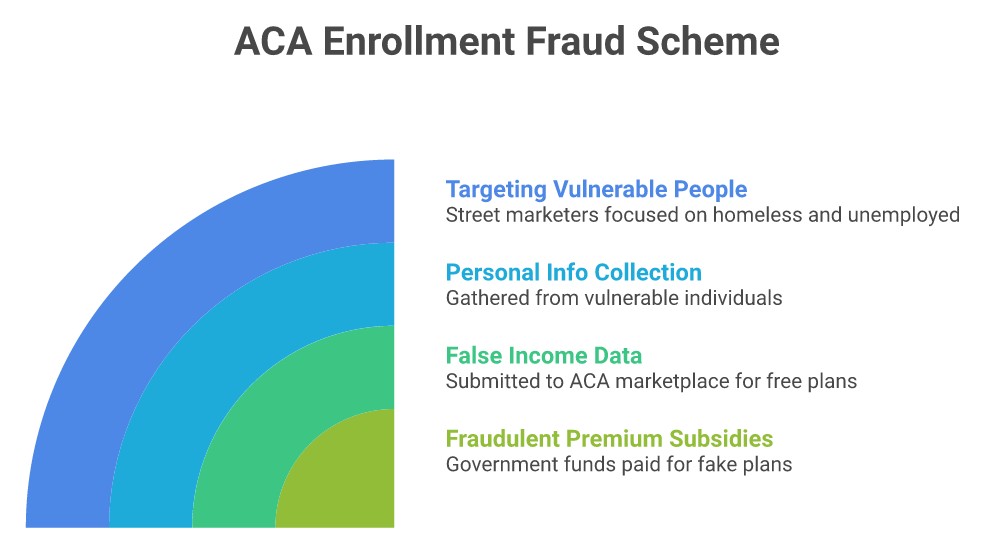
Here’s what Lloyd and Strong allegedly orchestrated:
- Street marketers recruited vulnerable targets — teams canvassed areas looking for homeless individuals, unemployed workers, and people dealing with mental health or substance abuse issues
- Personal information was collected — sometimes through small cash payments or other inducements to hand over identifying details
- False applications were submitted — fraudulent income information was entered to qualify victims for fully subsidized plans they never actually wanted or used
- The government paid — premium subsidies flowed to the insurance brokerage, generating commissions and fraudulent revenue
- Real people were left exposed — approximately 35,000 individuals had their personal information used without consent, potentially affecting their actual health coverage eligibility
Hidden Harm to Victims: Being enrolled in an ACA plan — even without your knowledge — can block you from enrolling in a legitimate plan you actually need. The ACA’s systems don’t allow duplicate enrollment, meaning real victims may have been locked out of health insurance they actually wanted while fraudulent plans were active in their names.
The Scale of the Fraud
The $233 million figure represents what the defendants sought in fraudulent subsidies. The government actually paid out $180.6 million before the fraud was detected and prosecuted — making this one of the most costly ACA fraud cases in the program’s history.
Why Targeting Vulnerable People Makes This Worse
I’ve spent years documenting how predatory schemes consistently target people who are least equipped to protect themselves. This case fits that pattern exactly.
The people recruited as unwitting victims — homeless individuals, those battling addiction or mental illness, the chronically unemployed — often have little stable housing or consistent contact information. They may not receive mail notifications. They may not have access to the HealthCare.gov portal to check whether plans are enrolled in their names. They’re targets precisely because they’re unlikely to notice or report what happened.
What “Fully Subsidized” Means in This Context: ACA plans for people with very low incomes can be 100% covered by government premium tax credits — meaning the insurer gets paid entirely by taxpayer money. The brokers who enroll these clients receive commissions. The scheme created an assembly line: find a name and Social Security number → submit a false income application → get paid a subsidy → collect a commission → repeat across 35,000 victims.
What This Means for ACA Fraud Victims
If you — or someone you know — may have been unknowingly enrolled in an ACA marketplace plan, here’s what to know:
- Check your enrollment status: Visit HealthCare.gov or call 1-800-318-2596 to confirm whether any health plans are active in your name
- Report unauthorized enrollment: If you find a plan you didn’t sign up for, report it to the ACA Marketplace via HealthCare.gov. You can request cancellation and potentially receive retroactive correction
- File an identity theft report: Unauthorized use of your personal information to enroll in a government program is identity theft. File a report at IdentityTheft.gov (FTC’s official identity theft portal)
- Check your credit reports: Fraudulent benefit claims can sometimes cascade into other identity fraud. Review all three credit reports at AnnualCreditReport.com — it’s free
- Contact the HHS Office of Inspector General: Report ACA fraud to oig.hhs.gov/fraud/report-fraud/ or call 1-800-HHS-TIPS
Before You Sign Anything: If you’re considering hiring any health insurance broker, debt relief company, or financial services firm, run their contract through the Contract Decoder first. It’s free — and it’s your last chance to spot red flags before you commit.
The Bigger Picture: ACA Fraud Is Ongoing
This case isn’t an outlier. The ACA marketplace has been a recurring target for fraudulent brokers and enrollment schemes, particularly since the American Rescue Plan expanded subsidies in 2021, making more plans available at zero cost to enrollees.
The DOJ and HHS Office of Inspector General have multiple ongoing investigations into similar broker fraud schemes. When a government benefit becomes very generous — and very accessible — it attracts criminal exploitation. The victims are always the most vulnerable people the program was designed to help.
These Sentences Send a Message: Twenty years is a serious federal sentence. The DOJ is treating ACA fraud with the same severity as large-scale wire fraud and financial crimes. But the $180.6 million in restitution is still a real loss — money that could have funded legitimate health coverage for low-income Americans.
Key Takeaways
- Cory Lloyd and Steven Strong received 20-year federal sentences for a $233M ACA enrollment fraud that defrauded the government of $180.6M
- Approximately 35,000 people — many homeless, unemployed, or dealing with mental health issues — had their identities used without consent to enroll in fraudulent health plans
- Victims were sometimes offered small cash payments to hand over their personal information to street marketers
- Being fraudulently enrolled in an ACA plan can block victims from getting real health coverage they actually need
- If you suspect unauthorized ACA enrollment, check HealthCare.gov, file an identity theft report at IdentityTheft.gov, and report fraud to oig.hhs.gov
Frequently Asked Questions
How do I know if my identity was used in an ACA enrollment fraud?
Check your enrollment status directly at HealthCare.gov or call the ACA marketplace at 1-800-318-2596. If you see an active health plan you didn’t enroll in, your information may have been used fraudulently. You can also check IRS records — fraudulent subsidy claims may generate tax forms (1095-A) in your name for coverage you never had. If you receive a 1095-A for a plan you don’t recognize, that’s a red flag.
What happens to the victims of this specific fraud scheme?
The approximately 35,000 people whose information was used in the Lloyd and Strong scheme may have been enrolled in ACA plans without their knowledge. The government is required to cancel those fraudulent enrollments. However, victims should still check their own enrollment status and credit reports to ensure no downstream harm occurred — such as being blocked from legitimate ACA enrollment during the time the fraudulent plan was active.
Can victims recover money from ACA enrollment fraud schemes like this one?
The defendants were ordered to pay $180.6 million in restitution, but restitution goes to the federal government (which paid the fraudulent subsidies), not individual victims. Individual victims who suffered direct financial harm — such as being billed for coverage, having taxes affected by false 1095-A forms, or experiencing identity theft downstream — may have separate civil claims. Consult an attorney who handles identity theft and consumer fraud cases if you experienced direct financial damage.
Is ACA enrollment fraud common?
Unfortunately, yes. Since the American Rescue Plan expanded ACA subsidies in 2021 — making many plans available at zero cost — fraudulent enrollment schemes have increased significantly. The HHS Office of Inspector General and DOJ have multiple ongoing investigations. The scheme typically involves brokers submitting false income information to qualify people for fully subsidized plans, then collecting commissions. Victims are often unaware any plan was enrolled in their name.
What should I do if I’m contacted by someone offering free health insurance?
Be very cautious. Legitimate ACA enrollment help is available for free through certified navigators and official marketplace resources — you should never need to pay a broker, and you should never hand over your Social Security number or other personal information to a street marketer or unsolicited caller. If someone approaches you offering “free” health coverage in exchange for your information, that’s a major red flag. Verify any broker through your state insurance department before providing personal data.
Sources: U.S. Department of Justice — Sentencing Announcement | HHS Office of Inspector General — Report Fraud | HealthCare.gov — Check Enrollment
Dealing With Debt? Understanding your options is the first step. See how all your debt relief options compare — including ones most sites won’t tell you about. The Find Your Path quiz gives a recommendation based on your actual numbers, and the Scam-O-Meter checks any company’s complaint history before you sign. Federal Reserve research shows bankruptcy filers recover faster than those who don’t file.



