

Quick Answer: I can’t tell you whether Nationwide Credit Inc is legitimate or not — that determination requires you to check the public records yourself, and this guide walks you through exactly how to do that.
Warning: The Fair Debt Collection Practices Act (FDCPA) gives you specific legal rights when dealing with any debt collector. You have the right to request debt validation in writing, dispute the debt, and demand that a collector stop contacting you. Know these rights before responding to any communication from Nationwide Credit Inc.
Community Note: If you have personal experience with Nationwide Credit Inc — good or bad — please share it in the comments below. Your firsthand account helps other consumers make informed decisions.
Who Is Nationwide Credit Inc?
Nationwide Credit Inc is a third-party debt collection agency headquartered in Atlanta, Georgia, at 1000 Abernathy Road, Suite 200, that has been in the collections business since 1982.
Each weekday I send one short email: one story that caught my attention, why it might matter to you, and one manageable thing you can do with it. A couple of minutes, and a dad joke.
In the latest issue (Nov 13): The shelf price isn't always what you pay
Free. I sell nothing. Unsubscribe any time.
“An educated consumer is our best customer.”— Sy Syms
Not sure how to handle a collections call? Use my free Find Your Path tool to understand all your options before responding to any debt collector.
Step 1: Check Their Credentials and Legal Compliance
Debt collectors in the United States must comply with the Fair Debt Collection Practices Act (FDCPA), which is enforced by the CFPB and FTC. State-level licensing requirements vary — many states require debt collectors to obtain a license before operating. Here is how to verify Nationwide Credit Inc:
- State licensing: Nationwide Credit Inc is incorporated in Georgia. Many states require third-party debt collectors to maintain active licenses. Search your state’s financial regulatory agency for Nationwide Credit Inc’s license status if you are being contacted.
- Georgia Secretary of State: Verify the company’s active registration at ecorp.sos.ga.gov.
- BBB Profile: Nationwide Credit Inc has a BBB file opened in 1984 and is not BBB Accredited. The company has received 5 complaints in the last three years, with 1 closed in the last 12 months. View their profile at bbb.org.
The company has been in business since March 1982 and was incorporated in May 1990. Their president is listed as Arindam Bose, with Erin Sellers serving as Compliance Manager.
The Dogma: “You have to pay a debt collector the moment they contact you.”
The Reality: Under the FDCPA, you have 30 days from the first contact to request written debt validation. The collector must cease collection efforts until they provide it. You also have the right to dispute the debt if you believe it is inaccurate or not yours. Paying immediately without validating the debt can waive important rights.
Step 2: Search the CFPB Complaint Database
The CFPB complaint database is one of the most important tools for researching a debt collector’s track record. Complaint narratives reveal specific patterns of alleged violations — things like calling at prohibited hours, refusing to validate debts, or misrepresenting amounts owed.
Go to consumerfinance.gov/data-research/consumer-complaints/ and search for “Nationwide Credit Inc.” Read the complaint narratives — not just the total count — to understand what specific problems consumers have reported.
Note: Multiple companies operate under the “Nationwide Credit” name. Make sure you are searching for the correct entity — the Atlanta, Georgia company at 1000 Abernathy Road — rather than unrelated companies with similar names.
Step 3: Check Trustpilot and Third-Party Reviews
Before trusting a third-party review platform for a debt collector, remember that debt collection is inherently adversarial. Reviews for collections agencies skew negative not because the company is necessarily illegal, but because nobody is happy to hear from a debt collector.
- Trustpilot: Search trustpilot.com for “Nationwide Credit Inc” to see if a profile exists with consumer reviews.
- Consumer Affairs: Search consumeraffairs.com for Nationwide Credit reviews.
- SoloSuit: SoloSuit tracks how debt collectors behave in court — useful if you are being sued.
- BBB complaints: The BBB shows 5 complaints in the last 3 years. Read the complaint details and the company’s responses at their BBB profile.
Step 4: Search for Enforcement History
Nationwide Credit Inc has documented enforcement history that is important to know.
1998 FTC Settlement: The Federal Trade Commission brought a case against Nationwide Credit Inc. The company settled with a $1 million civil penalty — at the time, a record for FDCPA violations — for charges of violating the Fair Debt Collection Practices Act. You can review the case at ftc.gov.
That enforcement action is nearly three decades old. Companies can change significantly over time. However, the existence of a formal FTC consent decree is public record and relevant context when evaluating any debt collector.
To check for more recent enforcement actions:
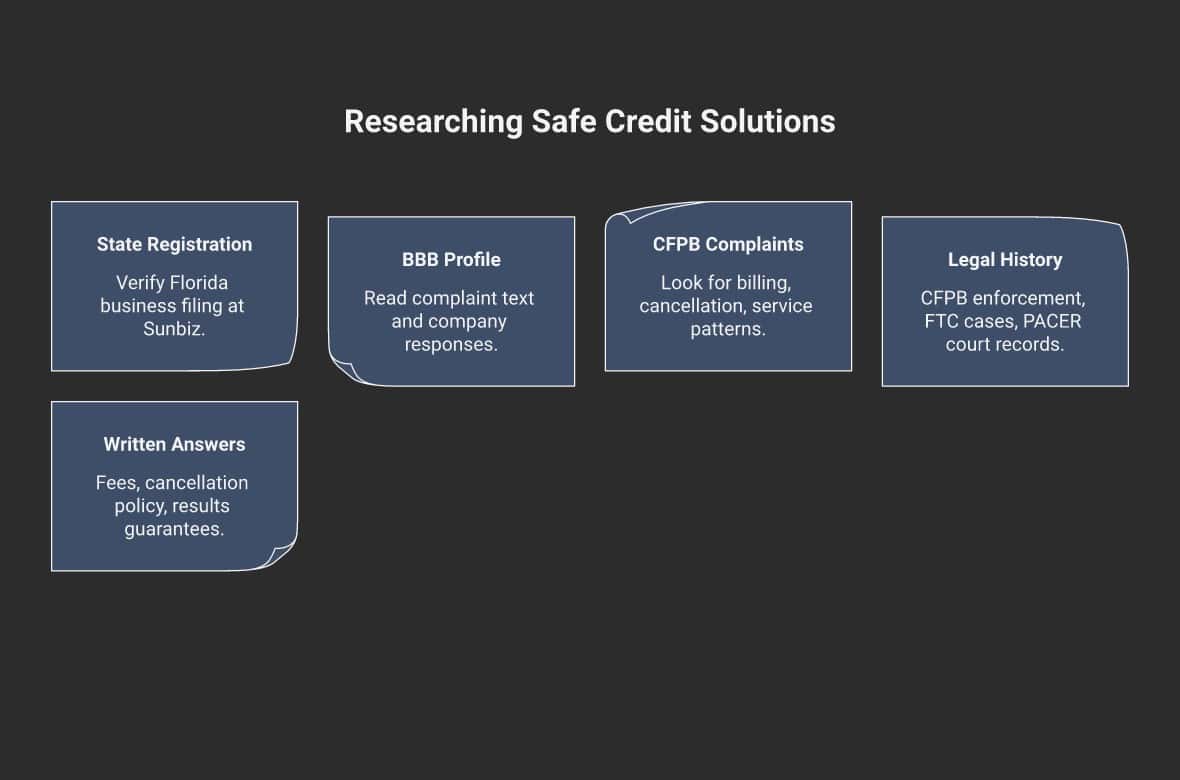
- FTC enforcement database: Search ftc.gov/enforcement/cases-proceedings for additional cases.
- CFPB enforcement actions: Search consumerfinance.gov/enforcement/actions/.
- PACER (federal court records): Search pacer.gov for any active or recent federal lawsuits.
Step 5: Questions to Ask and Rights to Assert
When contacted by Nationwide Credit Inc or any debt collector, these are the steps to take and questions to ask:
- Send a debt validation letter. Within 30 days of first contact, send a written request demanding they validate the debt — meaning they must provide proof the debt is yours and the amount is correct. Send it via certified mail with return receipt.
- “Can you provide the name of the original creditor?” Under the FDCPA, you have the right to know who originally held this debt and the full account history.
- “Is this debt within the statute of limitations for my state?” Each state sets a time limit on how long a creditor can sue to collect a debt. An out-of-statute debt is still legally owed but cannot be the basis for a lawsuit. Never acknowledge an old debt without checking the statute of limitations first — acknowledgment can restart the clock in some states.
- Send a cease-and-desist letter if you choose. Under FDCPA Section 805(c), you can send a written request demanding the collector stop contacting you. They may only contact you one more time to confirm they are stopping or to notify you of a specific action (like filing a lawsuit).
- Check your credit report. If Nationwide Credit Inc has added a collection account to your credit reports, verify the information is accurate. You can dispute inaccurate items directly with the credit bureaus at no cost.
Key Takeaways
- Nationwide Credit Inc is a debt collection agency based in Atlanta, Georgia, in business since 1982.
- The FTC took enforcement action against the company in 1998, resulting in a $1 million civil penalty for FDCPA violations — review that history at ftc.gov.
- The BBB shows 5 complaints in the last 3 years.
- Under the FDCPA, you have the right to request debt validation, dispute the debt, and demand the collector cease contact.
- Always verify whether a debt is within your state’s statute of limitations before making any payment or acknowledging the debt.
Before signing anything: Run their contract through my free Contract Decoder tool. Paste it in and get a plain-English breakdown of what you’re agreeing to.
Free Tool — Debt Validation Letter Generator: Being contacted by a debt collector? The free Debt Validation Letter Generator creates a personalized FDCPA validation letter in seconds — forcing the collector to prove the debt is real before they can continue. Generate My Letter →
Frequently Asked Questions
Free Tool — Statute of Limitations Checker: Dealing with old debt? The free Statute of Limitations Checker tells you if the collection clock has expired in your state — including the zombie debt and clock-restarting traps collectors use. Check My Status →
What is Nationwide Credit Inc and what do they collect?
Nationwide Credit Inc is a third-party debt collection agency based in Atlanta, Georgia, that has operated since 1982. They collect on behalf of original creditors and may purchase debt portfolios. Common accounts they collect on include credit card debt, medical debt, and other consumer obligations.
Did Nationwide Credit Inc violate the FDCPA?
In 1998, the Federal Trade Commission reached a settlement with Nationwide Credit Inc after charging the company with FDCPA violations. The company paid a $1 million civil penalty — a record at the time. That enforcement action is historical. For current compliance, check the FTC and CFPB enforcement databases for any more recent actions.
Can I make Nationwide Credit Inc stop calling me?
Yes. Under Section 805(c) of the Fair Debt Collection Practices Act, you can send a written cease-and-desist communication request via certified mail. Once received, the collector may only contact you one more time — to confirm they are stopping contact or to notify you of a specific action such as filing a lawsuit. This does not make the debt go away, but it does stop the calls.
What should I do if Nationwide Credit Inc sues me?
If you are served with a lawsuit, do not ignore it. Filing an answer — even a simple one denying the claims — preserves your rights and forces the collector to prove their case. Failure to respond results in a default judgment against you. Consider consulting a consumer rights attorney; many take FDCPA cases on contingency, meaning no upfront cost to you.
Share Your Experience
Have you dealt with Nationwide Credit Inc? Your firsthand account — whether positive or negative — helps other consumers understand what to expect. Share what happened in the comments below.
Before You Sign Anything: Run any debt relief contract through the free Contract Decoder to spot hidden fees and unfair terms. Check the company’s complaint history with the Scam-O-Meter.
Compare Your Real Options: Most debt relief companies won’t tell you about all your options — especially the ones they can’t profit from. Credit counseling has a 21-27% completion rate. Settlement resolves about 1% of enrolled debts fully. Chapter 7 bankruptcy generally ends in a discharge for individual filers in more than 99% of cases, excluding cases dismissed or converted (U.S. Courts) — and protects your retirement. Take the Find Your Path quiz for a recommendation based on your actual numbers.
Browse all Debt Collectors & Debt Buyers reviews, or see the full Company Reviews directory.



