

Quick Answer: The Federal Trade Commission and 11 states reached a $100 million settlement with Walmart over its Spark Driver delivery program. According to federal regulators, Walmart showed gig drivers inflated tip amounts, quietly cut pay on completed deliveries, and falsely claimed “100% of tips go to the driver.” The court order prohibits Walmart from changing pay offers after drivers accept them and requires an earnings verification program.
If you’ve ever accepted a Spark Driver delivery offer and found your actual payout didn’t match what you were shown — you weren’t imagining it. Walmart just agreed to pay $100 million to settle federal charges that it systematically deceived gig workers about how much they would earn.
The Federal Trade Commission, joined by 11 state attorneys general, filed a complaint and proposed order in U.S. District Court for the Northern District of California. The charges: Walmart showed drivers inflated earnings figures, split tips without telling them, quietly cut base pay after deliveries were completed, and denied incentive pay on hidden technicalities. According to the FTC, Walmart even publicly claimed that “100% of tips go to the driver” — and then kept some of those tips without refunding customers either.
“Labor markets cannot function efficiently without truthful and non-misleading information about earnings and other material terms,” said Christopher Mufarrige, Director of the FTC’s Bureau of Consumer Protection. (Source: FTC Press Release)
Claiming money you are owed is one good day. What you do over the following year is what actually changes your position.
In the latest issue (Nov 9): Check your power bank and your French press
Each weekday I send one short email: one story that caught my attention, why it might matter to you, and one manageable thing you can do with it.
Free. I sell nothing. Unsubscribe any time.
What Exactly Did Walmart Do?
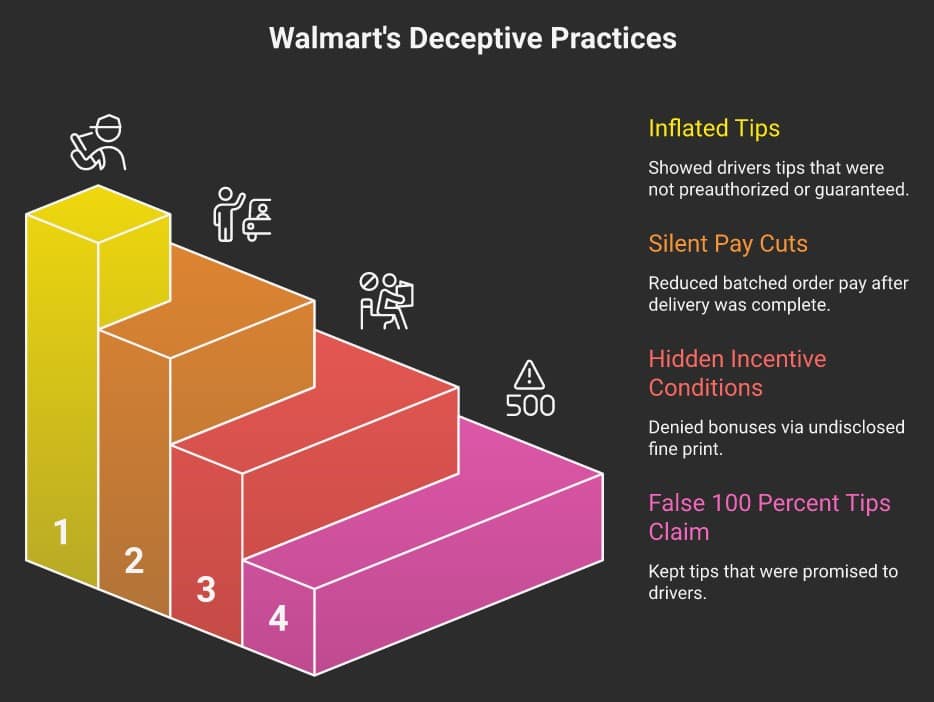
The FTC’s complaint outlines four specific deceptive practices. If you work in the gig economy — not just Spark — these are worth understanding in detail.
1. Inflated Tips That Weren’t Guaranteed
According to the FTC, Walmart showed drivers a tip amount that had not been preauthorized. If a customer’s payment later failed, or if Walmart split a delivery across multiple drivers, the displayed tip wasn’t what drivers actually received. Drivers made accept-or-reject decisions on offers based on numbers that the money behind hadn’t yet been confirmed.
2. Silent Pay Cuts on Batched Deliveries
Spark Driver offers sometimes involve “batched orders” — delivering to multiple customers in one trip. According to the complaint, when Walmart removed an order from a batch, it reduced the driver’s base pay and tips. In many cases, drivers weren’t notified of the pay change until after they’d already completed the delivery. In other cases, they weren’t notified at all.
What That Means in Practice: According to federal regulators, you accepted a delivery offer based on the pay shown, drove to the location, completed the work — and only then found out Walmart had already cut what it owed you. After the fact.
3. Incentive Pay Denied on Hidden Conditions
The FTC also alleged that Walmart promised incentive pay for completing certain tasks but buried conditions that made it difficult to collect. A referral bonus, for example, allegedly required the new driver you recruited to complete deliveries in a specific zone or from a specific store. That condition wasn’t disclosed upfront. According to the complaint, even when drivers met all the conditions, Walmart sometimes still failed to pay the promised incentive.
4. “100% of Tips Go to the Driver” — A False Claim
Perhaps the most direct allegation in the complaint: Walmart publicly promised that 100% of customer tips would go to drivers. According to the FTC, on multiple occasions Walmart failed to pass those tips to drivers — and didn’t refund them to customers either. The money simply disappeared.
Also a Consumer Issue: The FTC complaint covers both worker deception and customer deception. Customers were told their full tip was going to the driver. According to regulators, that wasn’t always true — and customers didn’t get their money back either.
What the $100 Million Settlement Requires Walmart to Do
As part of the proposed order, Walmart must:
- Implement an earnings verification program to ensure drivers are paid exactly what was promised
- Stop modifying base pay, tips, or incentives after making an initial offer (narrow exceptions: driver no-shows, customer cancellations)
- Stop misrepresenting earnings and other terms in delivery offers
The Commission voted 2-0 to authorize the complaint and proposed order. The settlement has the force of law once approved by the court.
Is Walmart Spark Worth It in 2026?
That’s the question a lot of drivers are asking right now. Here’s an honest look at the math.
Gig economy earnings are complicated before you even factor in pay deception. According to a national survey by the Economic Policy Institute, about 1 in 7 gig workers (14%) earn less than the federal minimum wage on an hourly basis once you account for unpaid wait time, vehicle costs, and unreimbursed expenses. Another 29% earn below their state minimum wage.
The Federal Reserve’s 2024 Report on the Economic Well-Being of U.S. Households confirms that gig work supplements income for many Americans but rarely replaces a full-time wage. That calculus gets worse when the earnings figures you’re basing your decisions on aren’t accurate — which is exactly what the FTC alleged about Spark.
The Pitch: “Earn on your own schedule. Keep 100% of your tips. Choose the offers you want.”
What the FTC Found: According to federal regulators, the pay shown when you accepted an offer wasn’t always what you’d receive. Tips could disappear if a customer’s payment failed. Batched order pay could be cut after you were already on the road. Incentive bonuses came with undisclosed conditions. And the “100% of tips” promise wasn’t honored.
If you’re a current Spark driver, the settlement’s earnings verification requirement is a meaningful change — Walmart is now legally required to pay what it promises. But “we now have to tell you the truth” isn’t exactly a glowing endorsement of the platform.
What This Means for Gig Workers Broadly
This case isn’t just about Walmart. According to a 2025 Human Rights Watch report on gig platform labor, six of seven major gig companies use opaque algorithms to assign jobs and determine wages — meaning workers often don’t know exactly how much they’ll earn until after completing the work. The Walmart settlement establishes that earnings opacity can cross from “confusing” into “illegal.”
The FTC’s Joint Labor Task Force, launched in February 2025, was specifically created to root out deceptive labor-market practices. This case is among its first major outcomes. More may follow — and one already has: the FTC’s Grubhub refunds to drivers and diners show what that enforcement looks like once the money actually starts moving, rather than sitting in a court order.
Math does not lie — but platforms sometimes do. Know what you’re actually earning before you accept the offer.— Steve Rhode
If You’re Doing Gig Work to Pay Off Debt
A lot of people pick up gig work specifically to throw extra income at debt. That can work — but only if the math actually works. Before you factor gig earnings into a debt payoff plan, track your actual net take-home (after gas, vehicle wear, and taxes) against what the app displays. The two numbers are often further apart than expected.
If debt is the bigger problem and you’re looking for a real path forward, the free Find Your Path quiz walks you through which options fit your actual situation — without a sales pitch attached.
Key Takeaways
- Walmart agreed to a $100 million FTC judgment over deceptive pay practices in its Spark Driver gig delivery program
- According to regulators, Walmart showed inflated tips, cut pay on completed deliveries without notice, and falsely claimed “100% of tips go to the driver”
- The settlement requires Walmart to verify driver earnings and prohibits changing pay after an offer is accepted
- About 14% of gig workers earn below the federal minimum wage — opaque pay makes that worse
- The FTC’s Labor Task Force is actively pursuing other gig economy pay deception cases
Frequently Asked Questions
Is Walmart Spark worth it in 2026?
That depends on your local market and your true hourly rate after expenses. The FTC settlement now requires Walmart to pay what it promises — a real change from what was alleged. But you’ll want to track actual net earnings (after vehicle costs, gas, and taxes) rather than relying solely on what the app shows. Many gig workers find their real hourly rate is significantly lower than the headline figure once expenses are counted.
How does Walmart Spark pay work?
Spark drivers accept delivery offers through the Spark Driver app. Each offer shows a base pay amount and an expected tip. According to the FTC’s complaint, those numbers were sometimes inflated or reduced after acceptance. Under the new court order, Walmart is prohibited from modifying pay offers after they’re made, except when a driver doesn’t complete the delivery or a customer cancels.
Will Spark drivers receive money from the $100 million settlement?
The FTC has not announced a driver claims process as of this writing. The $100 million is a judgment — how funds are distributed, if at all, would be determined by the court. Watch for updates at ftc.gov or your state attorney general’s office.
How do I become a Walmart delivery driver?
You can apply through the Spark Driver app. Requirements include a valid driver’s license, proof of insurance, and a background check. You work as an independent contractor — no benefits, no expense reimbursement, no minimum wage guarantee. Factor that in before deciding whether it pencils out for you.
What does the FTC’s Labor Task Force do?
The FTC’s Joint Labor Task Force, launched in February 2025, investigates deceptive and anticompetitive practices that harm workers. It draws on the FTC’s Bureau of Consumer Protection, Bureau of Competition, Bureau of Economics, and Office of Policy Planning. The Walmart case is among its first major settlements.
(Source: Federal Trade Commission, February 2026)
Dealing With Debt? Understanding your options is the first step. See how all your debt relief options compare — including ones most sites won’t tell you about. The Find Your Path quiz gives a recommendation based on your actual numbers, and the Scam-O-Meter checks any company’s complaint history before you sign. Federal Reserve research shows bankruptcy filers recover faster than those who don’t file.



