

Quick Answer: Credit card debt is not automatically forgiven if you become disabled, but several pathways exist that can reduce or eliminate it — including hardship programs, debt settlement, and bankruptcy. Your SSDI or SSI income is also protected from most creditor garnishment under federal law, which can put you in a stronger negotiating position than you realize.
Becoming disabled doesn’t just change your health — it changes your math overnight. Income drops. Medical bills arrive. And credit card debt that was manageable on a full salary becomes something else entirely.
I get questions about this regularly, and the answer most people expect is “yes, there’s a disability forgiveness program.” There isn’t — not a formal one. But that’s not the whole story. There are real options here, and understanding them may change your entire approach to the debt.
The Big Picture: Americans carry a record $1.28 trillion in credit card debt. Tens of millions of working-age Americans with disabilities are navigating this issue — often without knowing the protections they already have.
Each weekday I send one short email: one money story that caught my attention, why it might matter to you, and one manageable thing you can do with it. A couple of minutes, and a dad joke.
In the latest issue (Oct 16): The check that looks like a scam may be real
Free. I sell nothing. Unsubscribe any time.
Credit Card Debt Is Not Automatically Forgiven Due to Disability
No federal law requires credit card issuers to forgive your balance if you become disabled. Card issuers are businesses — they’ll collect what they’re owed unless you negotiate or take formal action.
That said, disability creates leverage that most people don’t know how to use. Here’s what actually works.
The Daily Money Brief — Free, at 10 AM
Money you may be owed, scams to dodge, and the fine print decoded — the consumer money news that affects your wallet, every weekday.
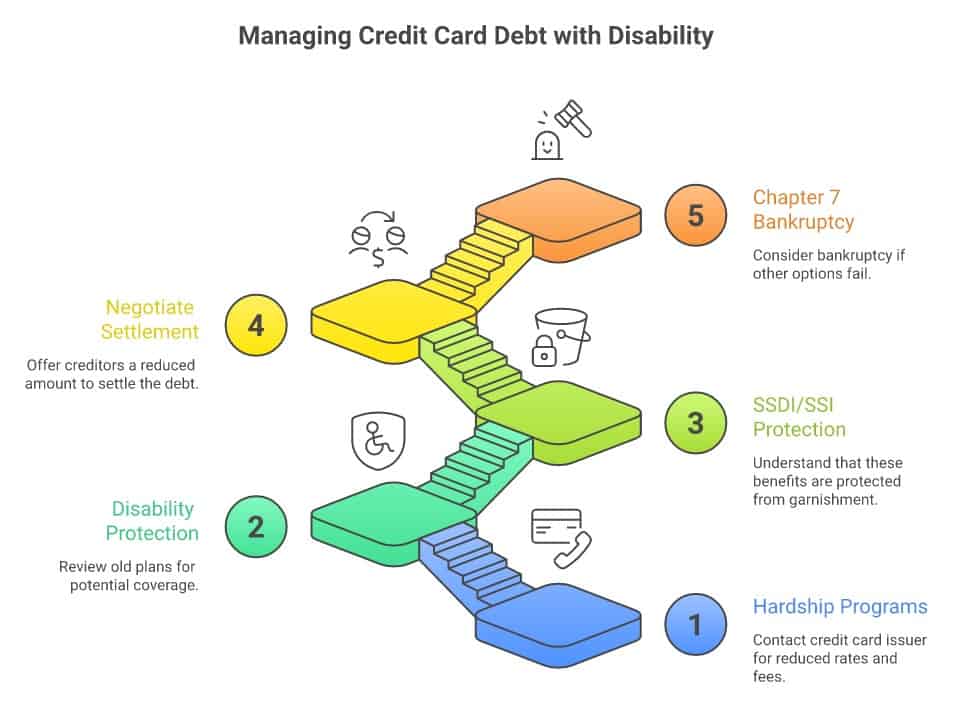
Option 1: Check if Your Card Had a Disability Protection Plan
Some credit cards — particularly older accounts — included disability protection or payment protection plans as add-on features. These plans could pause or cancel payments in the event of a qualifying disability. Many issuers have since discontinued them, but if you’ve had a card for years, it’s worth calling your issuer directly and asking whether any protection plan was ever attached to your account.
Don’t assume. Call and ask.
Option 2: Credit Card Hardship Programs
Most major credit card issuers maintain hardship programs — but they don’t advertise them. You have to ask. Depending on the issuer, these programs may offer:
- Temporarily reduced or 0% interest rates
- Waived late fees and penalties
- Modified payment plans or fixed monthly amounts
- Temporary payment deferrals
These programs typically don’t forgive the debt outright, but they can stop the bleeding while you figure out your next move. Call the customer service number on the back of your card and ask specifically about hardship or financial relief programs.
Option 3: Your SSDI and SSI Are Protected From Most Creditors
This is the one most people don’t know about — and it changes the equation.
Federal Protection: Federal law protects Social Security Disability Insurance (SSDI) and Supplemental Security Income (SSI) from garnishment by most private creditors. Credit card companies cannot legally garnish these benefits to satisfy a judgment.
Under Treasury Department rules, if Social Security benefits have been deposited into your bank account in the last two months, your bank must protect those funds before allowing a creditor levy. The bank calculates a “protected amount” — either the total of federal benefit deposits in the last two months or your current balance, whichever is lower — and that money is off limits.
Important exceptions: The federal government itself CAN garnish SSDI for debts like federal taxes, federal student loans, alimony, or child support. But private credit card debt? Generally protected.
What this means practically: if your only income is SSDI or SSI, a credit card company may win a judgment against you in court — but they may have nothing collectible. That’s called being judgment-proof. Knowing this changes how you negotiate.
Option 4: Negotiate a Settlement Directly
If your accounts are already delinquent — meaning you’ve missed payments — creditors may be willing to settle for less than the full balance. According to CBS News, settlement offers typically range from 50% to 70% of the outstanding balance.
You can do this yourself. Call the creditor, explain your situation, and ask what they’ll accept as a lump-sum settlement. If you can offer something — even a fraction of what’s owed — they may take it over collecting nothing from someone on a fixed disability income.
If you have multiple accounts, a debt relief company can negotiate on your behalf — but understand the costs and risks before signing anything. Run any contract through the Contract Decoder first.
Before You Sign Anything: If you’re considering hiring a debt relief or settlement company, run their contract through the Contract Decoder first. It’s free — and it’s your last chance to spot red flags before you commit.
Option 5: Chapter 7 Bankruptcy
This is the option most financial advisors won’t mention first — but I will, because it’s often the most powerful tool available.
Chapter 7 bankruptcy can eliminate qualifying unsecured debt, including credit card balances, entirely. It’s not a failure. It’s a legal tool that exists for exactly this kind of situation — when your income has been reduced through no fault of your own and the math no longer works.
On Fixed Disability Income: Chapter 7 bankruptcy may be more accessible if you’re on SSDI or SSI than you think. The means test used to qualify for Chapter 7 is based on your income — and disability income is often low enough to qualify automatically. Consult a bankruptcy attorney for a free evaluation.
Credit scores recover faster from bankruptcy than most people expect. And you protect your future rather than grinding for years trying to repay debt on income that won’t grow.
Learn about all your options through the Find Your Path quiz — it’s designed for exactly this kind of situation.
Debt is what is left over when the math is broken. Disability didn’t break your character — it broke the math. Fix the math.— Steve Rhode
Free Tool — Bankruptcy Means Test: Wondering if you qualify for Chapter 7 bankruptcy? The free Bankruptcy Means Test checks eligibility based on your state, household size, and income — including state exemptions. Check My Eligibility →
What to Do Right Now
- Call each credit card issuer and ask specifically about hardship programs and disability protections on your account
- If your income is primarily SSDI/SSI, talk to a bankruptcy attorney about whether you’re judgment-proof
- If accounts are delinquent, consider negotiating settlements directly before paying a company to do it
- Before filing bankruptcy, take the means test — many people on disability income qualify for Chapter 7
- Never cash out retirement accounts to pay credit card debt. Retirement funds are generally protected in bankruptcy.
Key Takeaways
- No automatic forgiveness exists for disability — but multiple relief pathways do
- SSDI and SSI are federally protected from most private creditor garnishment
- If disability income is your only income, you may be judgment-proof — a powerful negotiating position
- Settlement, hardship programs, and Chapter 7 bankruptcy are all legitimate options worth exploring
- Address this early to prevent compounding financial damage
(Source: CBS News — Can credit card debt be forgiven due to disability?)
If You’re Disabled, You May Already Be Judgment Proof. SSDI, SSI, and VA disability benefits are federally protected from most debt collection. The free Judgment Proof Checker explains exactly which income and assets are protected in your state — and what it means if a collector gets a judgment anyway.
Dealing With Debt? Understanding your options is the first step. See how all your debt relief options compare — including ones most sites won’t tell you about. The Find Your Path quiz gives a recommendation based on your actual numbers, and the Scam-O-Meter checks any company’s complaint history before you sign. Federal Reserve research shows bankruptcy filers recover faster than those who don’t file.



