
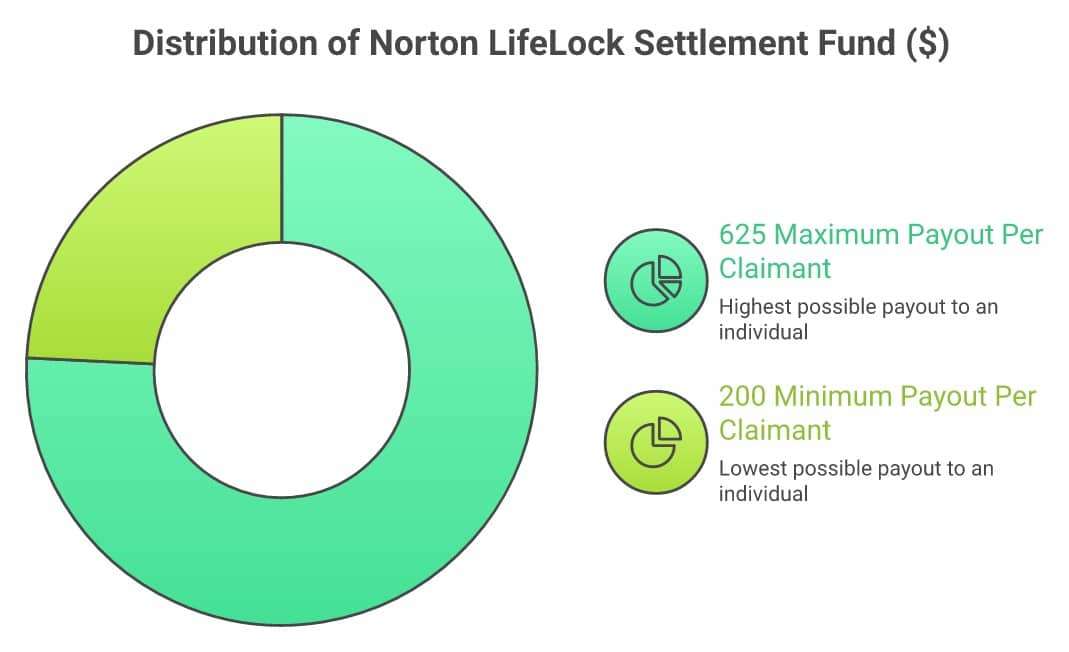
Quick Answer: The Norton LifeLock settlement — officially Jackson v. Gen Digital Inc. — is a $9.95 million class action payout for consumers who received prerecorded robocalls about a Norton or LifeLock account they never had. Each claimant is estimated to receive between $200 and $625. The deadline to file a claim is April 13, 2026. File at JacksonIVRSettlement.com.
Expert Context: I’ve been helping people navigate settlement claims since launching GetOutOfDebt.org in 2008. The mistake I see most often: people don’t file because they assume the process is complicated or they won’t qualify. This one is straightforward — if you got the call and weren’t a customer, you likely qualify. Don’t leave $200–$625 on the table because you didn’t take five minutes to file.
Gen Digital — the company behind Norton antivirus and LifeLock identity theft protection — has agreed to pay $9.95 million to settle a federal class action lawsuit alleging it made hundreds of thousands of illegal prerecorded robocalls to people who were never its customers.
Claiming money you are owed is one good day. What you do over the following year is what actually changes your position.
In the latest issue (Nov 13): The shelf price isn't always what you pay
Each weekday I send one short email: one story that caught my attention, why it might matter to you, and one manageable thing you can do with it.
Free. I sell nothing. Unsubscribe any time.
Key Terms Defined
TCPA (Telephone Consumer Protection Act): The federal law that restricts unwanted telemarketing calls, robocalls, and prerecorded messages. Violators can owe $500–$1,500 per illegal call — which is why companies settle class actions for millions when they’ve called thousands of people.
Prerecorded/Artificial Voice Call: Any call that plays a recorded message rather than connecting you to a live person. Covered under TCPA — companies need prior written consent to make them to cell phones.
IVR (Interactive Voice Response): The automated phone system technology Gen Digital used for these calls. “IVR” appears in the settlement website name (JacksonIVRSettlement.com).
Class Period: February 19, 2021 through October 30, 2025. If you received a call during this window, you’re potentially covered.
What Did Norton and LifeLock Do Wrong?
According to the settlement agreement, Gen Digital placed prerecorded voice calls to approximately 300,000 cell phone numbers that had been disconnected and later reassigned to new subscribers. The calls were intended for former Norton or LifeLock customers — but they went to completely different people who had no account with either service.
The problem: the recipients hadn’t given consent to receive these calls. Under the Telephone Consumer Protection Act (TCPA), calling a cell phone with a prerecorded message without prior written consent is illegal. At $500 per violation — up to $1,500 for willful violations — 300,000 calls could represent massive liability. The $9.95 million settlement resolves those claims for everyone in the class.
The named plaintiff, Michelle Jackson, received one of these wrong-number calls and filed suit in Arizona federal court. The case received preliminary court approval on January 28, 2026.
Who Qualifies for the Norton LifeLock Settlement?
You qualify if ALL of the following are true:
- You are a U.S. resident
- You received a prerecorded or artificial voice call from Gen Digital (on behalf of Norton or LifeLock) between February 19, 2021 and October 30, 2025
- The call was about a Norton or LifeLock account
- You did not have a Norton or LifeLock account at the time
Not sure if you qualify? If you received a robocall from Norton or LifeLock during this period, you likely received a settlement notice in the mail with a Class Member ID. If you didn’t get a notice but believe you qualify, you can still file — you’ll need to provide your phone number and attest that you weren’t a customer. The settlement administrator will review your claim.
How to File Your Norton LifeLock Settlement Claim
Filing takes about five minutes. Here’s exactly how:
- Online (fastest): Go to JacksonIVRSettlement.com and submit the claim form electronically. If you have a Class Member ID from your mailed notice, have it ready.
- By mail: Send your completed claim form to: Jackson v. Gen Digital Inc., c/o Kroll Settlement Administration, P.O. Box 225391, New York, NY 10150-5391
- Questions? Call the settlement administrator at (833) 319-6685 or use the contact form at JacksonIVRSettlement.com
Checks expire 120 days after issuance. Once your settlement check arrives, cash it promptly. Expired checks are gone for good.
How Much Will You Get From the LifeLock Robocall Settlement?
The court estimates each valid claimant will receive between $200 and $625. The exact amount depends on how many people file valid claims — the $9.95 million fund is split equally among all claimants after attorneys’ fees, administrative costs, and a service award to the named plaintiff are deducted.
Fewer claimants file
- Larger share per person (up to ~$625)
- More of the fund distributed to each claimant
More claimants file
- Smaller share per person (down to ~$200)
- More of the total fund gets returned to consumers
Either way, $200–$625 for five minutes of your time is worth doing. Payment will only begin after the court grants final approval at the July 14, 2026 hearing in Phoenix, Arizona, and after any appeals are resolved.
Key Dates for the Norton LifeLock TCPA Settlement
- April 13, 2026: Deadline to file a claim, request exclusion, or file an objection
- July 14, 2026, 10:00 AM: Final approval hearing, Phoenix, Arizona (U.S. District Court)
- After final approval: Payments mailed; checks expire 120 days from issuance
The Myth: “I’ll get around to it — there’s plenty of time before April 13.”
The Reality: April 13 is a hard cutoff. Miss it and you’re locked out entirely — and you lose the right to sue Gen Digital separately over these calls. File today. It takes five minutes and there’s nothing to lose.
Key Takeaways
- Gen Digital (Norton/LifeLock’s parent) made ~300,000 prerecorded robocalls to wrong-number recipients — people who were never customers
- The $9.95M TCPA settlement pays $200–$625 per claimant with no proof required if you received a mailed notice
- File at JacksonIVRSettlement.com online or by mail to Kroll Settlement Administration
- Deadline: April 13, 2026 — no extensions expected
- Payment arrives after final court approval (July 14, 2026 hearing) — cash the check within 120 days
The Bottom Line
The Norton LifeLock settlement is a legitimate $9.95 million payout for people who received prerecorded wrong-number calls from Gen Digital between 2021 and 2025. If you got a robocall about a Norton or LifeLock account you never had, you likely qualify for $200–$625 with no complicated proof process — just file at JacksonIVRSettlement.com by April 13, 2026. The TCPA exists specifically to protect people from this kind of unwanted contact, and class actions like this one are how that law gets enforced. The money is there. Go get it.
Frequently Asked Questions
How do I file a claim in the Norton LifeLock settlement?
File online at JacksonIVRSettlement.com or by mail to Jackson v. Gen Digital Inc., c/o Kroll Settlement Administration, P.O. Box 225391, New York, NY 10150-5391. If you received a settlement notice in the mail, use the Class Member ID on that notice for the online form. The deadline for all claims is April 13, 2026.
Who qualifies for the Gen Digital TCPA settlement?
U.S. residents who received a prerecorded or artificial voice call about a Norton or LifeLock account from Gen Digital between February 19, 2021 and October 30, 2025, and who did not have a Norton or LifeLock account at the time. If you weren’t a customer and received one of these calls, you likely qualify. Call (833) 319-6685 if you’re unsure.
How much will I get from the Norton LifeLock settlement?
Each valid claimant is estimated to receive between $200 and $625. The exact amount depends on how many people file valid claims — the $9.95 million fund is divided equally after attorneys’ fees and administrative costs are deducted. Payment begins only after the court grants final approval at the July 14, 2026 hearing.
What is the deadline to file a Norton LifeLock settlement claim?
April 13, 2026 is the hard deadline for all actions — filing a claim, requesting exclusion from the settlement, or filing an objection. Miss this date and you lose both your right to a settlement payment and your right to sue Gen Digital separately over these calls.
What is TCPA and why did Norton LifeLock settle?
The Telephone Consumer Protection Act (TCPA) prohibits companies from calling cell phones with prerecorded messages without prior written consent. Gen Digital made roughly 300,000 prerecorded calls to wrong-number recipients — people whose phone numbers had been disconnected and reassigned, meaning they never consented to the calls. TCPA violations carry statutory damages of $500–$1,500 per call, creating enormous potential liability that made a $9.95 million settlement more practical than going to trial.
Dealing With Debt? Understanding your options is the first step. See how all your debt relief options compare — including ones most sites won’t tell you about. The Find Your Path quiz gives a recommendation based on your actual numbers, and the Scam-O-Meter checks any company’s complaint history before you sign. Federal Reserve research shows bankruptcy filers recover faster than those who don’t file.



