
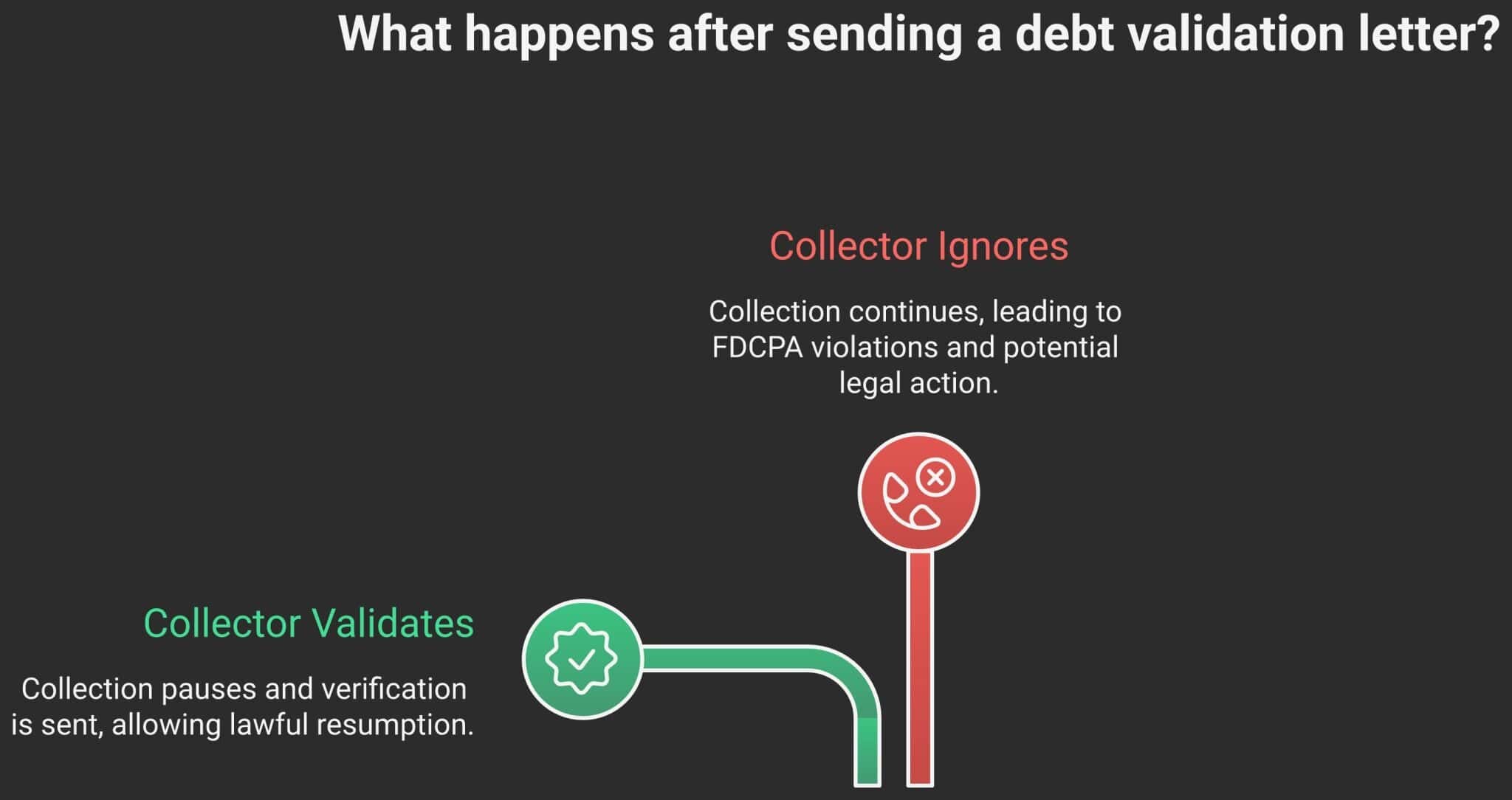
Quick Answer: If a debt collector ignores your validation letter, they are not allowed to continue collection activities — calls, letters, reporting to credit bureaus — until they provide validation of the debt. If they ignore your request and keep collecting anyway, that’s a violation of the FDCPA, and you have the right to sue them in federal court. But here’s the part most people miss: you need to take action. A validation letter you sent and forgot about doesn’t enforce itself.
Expert Context: I’ve studied debt collector tactics since the 1990s — including as someone who was on the receiving end after my own bankruptcy in 1990. The pattern is consistent: collectors know that most people who send a validation letter never follow through. That’s exactly why ignoring it is their default strategy.
This question came through the Ask Steve chat — and it’s one of the most important ones I get, because the answer isn’t just “nothing happens.” Something very specific happens when a collector ignores a validation request. The question is whether you’re going to act on it.
The Question That Came In:
Each weekday I send one short email: one money story that caught my attention, why it might matter to you, and one manageable thing you can do with it. A couple of minutes, and a dad joke.
In the latest issue (Oct 14): Do you want the money back you left behind?
Free. I sell nothing. Unsubscribe any time.
“I sent a debt validation letter to a collector about six weeks ago — certified mail, they signed for it — and I haven’t heard a word back. No response, no validation, nothing. But they haven’t stopped either. I got another collection letter last week. What do I do now?”
What this person did was correct. What the collector is doing may be illegal. And the difference between “this goes nowhere” and “you have a real legal case” is what you do next.
The weakest link in the entire debt collection chain is the person who takes the right first step and then stops. You sent the letter. That’s more than most people do. Don’t let that work go to waste.
Based on recent CFPB complaint narratives, ignored validation requests are one of the most frequently reported debt collection violations — and one of the most actionable. Here’s what the law says and what you can do with it.
What the FDCPA Says About Validation Requests
Under FDCPA § 809 (15 U.S.C. § 1692g), when you send a written dispute or validation request within 30 days of the collector’s initial contact, the collector must:
The Daily Money Brief — Free, at 10 AM
Money you may be owed, scams to dodge, and the fine print decoded — the consumer money news that affects your wallet, every weekday.
- Stop all collection activity until they obtain verification of the debt and mail it to you
- Provide the name and address of the original creditor if you requested it
- Send you written verification — a copy of a judgment, or the name and address of the original creditor
“Cease collection activity” means exactly that. No calls. No letters. No credit reporting updates intended to pressure you. No lawsuits. Until they validate, all of that is off the table.
Common Assumption: “I sent the validation letter, so now I just wait and the problem goes away.”
The Reality: A validation request doesn’t make the debt disappear. It puts the collector’s collection activity on hold and requires them to prove they have the right to collect. If they don’t respond and stop collecting, you have a legal claim. But that claim expires — and it’s only valuable if you pursue it. Waiting passively gives them time to correct their behavior, restart collection, and eventually outlast you.
Free Tool — Debt Validation Letter Generator: Being contacted by a debt collector? The free Debt Validation Letter Generator creates a personalized FDCPA validation letter in seconds — forcing the collector to prove the debt is real before they can continue. Generate My Letter →
When They Ignore It and Keep Collecting Anyway
This is the situation in the question above — and it’s a textbook FDCPA violation. Sending a collection letter after receiving a written validation request, before providing verification, violates § 809(b). Each collection attempt after your request and before validation is a separate violation.
That matters because FDCPA violations are per-violation. If they sent you two collection letters after ignoring your validation request, that’s potentially two violations at up to $1,000 each in statutory damages — plus actual damages, attorney’s fees, and court costs. Many FDCPA attorneys take these cases on contingency precisely because the math can work in your favor.
The 30-Day Window: The full validation rights under § 809(b) apply when you send your written request within 30 days of the collector’s first contact. If you sent it later, you still have general dispute rights under the FDCPA and FCRA — but the automatic “cease collection” requirement is tied to that initial 30-day window. If you’re past it, the path forward involves disputing directly with the credit bureaus and the furnisher, not just the collector. For a step-by-step plan when the window is already behind you, see I missed my 30 days to dispute a debt.
Free Tool — Debt Collector Rights Lookup: Being contacted by a debt collector? The free Debt Collector Rights Lookup shows your state-specific protections — statute of limitations, garnishment limits, and what collectors are legally prohibited from doing. Look Up Your Rights →
My Take: The Weakest Link Is the Person Who Stops
I’ve watched this play out hundreds of times. A consumer does exactly the right thing — sends the validation letter, certified mail, keeps a copy. And then nothing. No response from the collector, so they assume it worked and the problem resolved itself.
Then six months later, there’s a collection lawsuit in their name. Or the debt shows up with a new collector who’s never heard of the validation letter.
Here’s what I know after decades in this space: the weakest link in the entire debt collection chain is the person who takes the right first step and then does nothing with it. Collectors count on that. They ignore validation letters because they’ve learned that most people who send them don’t follow through. Your job is to be the exception.
You sent the letter. Now use it. An ignored validation request is a legal violation, not a minor inconvenience — but only if you act on it.— Steve Rhode
What to Do Right Now
- Document everything. Pull out your certified mail receipt and the delivery confirmation. Note the date they signed for it. Log every collection contact that happened after that date — letters, calls, credit reporting updates. Each one is potentially a separate FDCPA violation. This documentation is your case.
- Send a follow-up demand letter. In writing, certified mail again. State the date of your original validation request, confirm they received it (provide the delivery confirmation number), note that they have continued collection activity in violation of § 809(b), and demand they either provide written validation or cease all collection activity immediately. Keep a copy.
- File a CFPB complaint. Go to CFPB.gov/complaint and file a complaint against the collector. The CFPB forwards complaints to the company and requires a response. More importantly, your complaint is documented — which matters if you pursue legal action. CFPB complaints create a paper trail the collector can’t easily make disappear.
- Contact your state attorney general. Most state AGs have a consumer protection division. Many states have their own debt collection laws that run parallel to the FDCPA — some with stronger remedies. Filing with the state AG puts the collector on notice at the regulatory level, not just the federal complaint level.
- Consult an FDCPA attorney. This is the most important step if they continued collecting after your validation request. FDCPA cases don’t require a large upfront investment — many consumer attorneys take them on contingency because the statute awards attorney’s fees when you win. The National Association of Consumer Advocates (NACA) is the best place to find one who handles these cases.
Not sure whether you’re still in the 30-day window or what your specific situation looks like? Bring the details to the Ask Steve chat — when they contacted you first, when you sent the letter, what’s happened since — and I’ll help you figure out the right next step. If a judgment has already been entered on an account you don’t think is yours, see my guide to a judgment on the wrong account.
Key Takeaways
- FDCPA § 809(b) requires collectors to stop all collection activity after a written validation request until they provide verification — calls, letters, credit reporting all must pause
- If a collector ignores your validation request and continues collecting, that is a violation of the FDCPA — potentially one violation per collection attempt
- Each willful violation can trigger up to $1,000 in statutory damages plus actual damages and attorney’s fees, which is why FDCPA attorneys often take these cases on contingency
- An ignored validation letter doesn’t enforce itself — the weakest link is the person who sends it and never follows up
- Document everything, file a CFPB complaint for the record, and consult an FDCPA attorney if collection continued after your request
No Article Replaces an Attorney Licensed in Your State: What I’ve covered here is educational — it gives you the framework to understand your rights, but it is not legal advice. If a debt collector continued collection activity after receiving your written validation request, you may have a federal court case worth pursuing.
How to find a consumer law attorney who handles FDCPA cases:
- NACA — National Association of Consumer Advocates — The best starting point for FDCPA cases. Member attorneys specialize in consumer protection law and many take cases on contingency, meaning no upfront cost if they believe you have a case.
- Your state bar’s lawyer referral service — Search “[your state] bar association lawyer referral” for a low-cost initial consultation.
- LawHelp.org — Free and reduced-cost legal aid organized by state and legal issue.
- HelpIsHere.org — If you are a senior or have a disability, free or low-cost legal help may be available here.
Have a similar situation? Every debt collection case has its own timeline and details. Ask Steve directly in the chat — describe what happened and when, and I’ll help you figure out which step to take first.
The Bottom Line
When a debt collector ignores your written validation request, they are violating the FDCPA — specifically § 809(b), which requires them to stop all collection activity until they verify the debt. Every collection attempt they make after receiving your request is a potential separate violation, carrying up to $1,000 in statutory damages each. But the law only protects you if you act on it. Document every contact after your request date, file a CFPB complaint to create a record, and consult an FDCPA attorney — many take these cases on contingency because the statute awards attorney’s fees. The weakest link in debt collection is the person who does nothing. Don’t be that person.
Frequently Asked Questions
What counts as “collection activity” that must stop after a validation request?
Under FDCPA § 809(b), collection activity includes phone calls, written letters demanding payment, threats of lawsuit, and any attempt to collect or enforce the debt. It also includes reporting the debt to a credit bureau as a collection account when that reporting is done to pressure payment. Once you’ve sent a proper written validation request within 30 days of first contact, all of this must pause until the collector provides written verification.
Does a debt collector have to respond to my validation request within a specific time?
The FDCPA doesn’t set a specific deadline for how quickly the collector must respond — it only says they must stop collecting until they do. In practice, if they haven’t responded within 30-60 days, they are either violating the law by continuing to collect, or they’ve decided not to validate and should be ceasing all collection activity. Continued collection silence paired with continued collection attempts is what creates the legal claim.
What if the debt is legitimate — does ignoring my validation letter still give me rights?
Yes. The FDCPA doesn’t care whether the underlying debt is real or not. Your right to request validation and have collection activity stop is procedural — it exists regardless of whether you actually owe the money. If the collector ignores your request and keeps collecting, they’ve violated the FDCPA whether or not the debt is valid. The validation process is about verifying the collector has the right to collect, not about whether you owe anyone anything.
My 30 days have passed — can I still send a validation request?
You can still send a written dispute or request information after 30 days, but the automatic “cease collection activity” protection under § 809(b) is tied specifically to the initial 30-day window. After that window, collectors aren’t legally required to stop collecting while they investigate. You still have rights under the FDCPA and FCRA — including the right to dispute inaccurate information on your credit report — but the strongest procedural protection under § 809(b) no longer applies.
Can I sue a debt collector myself for ignoring my validation letter?
Yes — the FDCPA is a private right of action, meaning you can file in federal or state court without the government’s involvement. You can sue for actual damages, statutory damages up to $1,000 per violation, and attorney’s fees if you win. Many people work with an FDCPA attorney on contingency for exactly this reason — no upfront cost, the attorney’s fees come from the settlement or judgment if the case succeeds. NACA (naca.net/find-an-attorney) is the best place to start.
Know Your Rights: If a debt collector is contacting you, you have legal protections. See the complete list of FDCPA violations collectors commit most often. Use the free Debt Validation Letter Generator to demand proof of the debt, or check this collector’s complaint history with the Scam-O-Meter.
Dealing With Debt? Before you pay a collector, understand all your debt relief options — including ones the collector won’t tell you about. If the debt feels unmanageable, take the 2-minute bankruptcy quiz to see if the math favors a fresh start. Federal Reserve research shows filers recover faster than those who don’t file.