

Quick Answer: Old debts surfacing after you’ve paid off others are usually being collected by a new buyer or collector who purchased the portfolio — it doesn’t mean your payment restarted any clocks. Each debt has two separate deadlines: a statute of limitations (how long someone can sue you, set by state law) and a credit reporting window (how long it stays on your credit report, set by federal law). Before paying or panicking, check how old each debt actually is — some may be legally uncollectible, some may be past their credit reporting deadline, and some may be legitimately owed. Don’t assume. Research each one individually.
Expert Context: I ran a nonprofit credit counseling organization with staff credit counselors for over a decade. We reviewed thousands of credit reports, and the situation of old debts surfacing in waves is one I saw constantly — especially after a consumer starts paying down their report and creditors who were watching see movement.
This question came through the Ask Steve chat — and it’s one of the most disorienting situations people describe to me. You do the right thing, knock out a bunch of old accounts, feel some momentum — and then more debts appear like you stirred something up. Let me explain what’s actually happening and how to handle each one correctly.
The Question That Came In:
Each weekday I send one short email: one money story that caught my attention, why it might matter to you, and one manageable thing you can do with it. A couple of minutes, and a dad joke.
In the latest issue (Oct 16): The check that looks like a scam may be real
Free. I sell nothing. Unsubscribe any time.
“I spent the last year paying off all my old collection accounts. Now suddenly even older debts are popping up that I’ve never seen before — accounts that are 8 or 9 years old. Some of them I barely remember. Is this normal? Do I have to pay all of these too? I feel like I’m playing whack-a-mole.”
This is genuinely common, and it’s not bad luck or punishment for paying. It’s a predictable feature of how debt portfolios are bought and sold — and many of the debts now appearing may be unenforceable.
Based on CFPB complaint narratives, confusion about old debt resurfacing after payments is one of the most common credit-related concerns consumers bring forward — and the most important thing to know is that each debt deserves individual analysis, not a blanket response.
Why Old Debts Surface After You Start Paying
When a consumer starts resolving collections, a few things happen in the background. Collection agencies and debt buyers often flag accounts with activity — when they see payments hitting related accounts, they may begin contacting on other accounts in the same portfolio. Old debts don’t disappear just because they’ve been sitting quietly; they sit in portfolios owned by debt buyers, and those buyers can attempt collection at any time within the legal window.
Here’s what “popping up” usually means:
The Daily Money Brief — Free, at 10 AM
Money you may be owed, scams to dodge, and the fine print decoded — the consumer money news that affects your wallet, every weekday.
- A new collector purchased an old portfolio — Debt buyers sell and resell old debt. A portfolio that went quiet for years may have just changed hands again, triggering a new collection attempt.
- A dormant collector became active — Some collectors hold accounts and periodically restart collection cycles based on internal criteria, including when they see related activity.
- A credit bureau tradeline was added or re-reported — New collection tradelines can appear when a new collector buys the debt, even if the underlying debt is old. (This is where the law matters.)
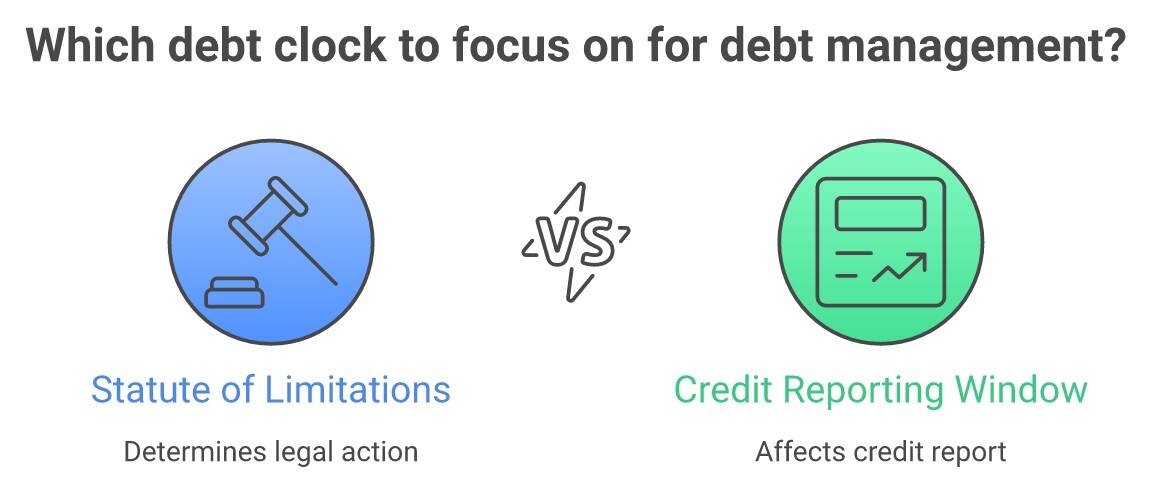
The Two Clocks: Statute of Limitations vs. Credit Reporting Window
This is the most important framework for evaluating any old debt. There are two completely separate legal limits — and people confuse them constantly.
Common Misconception: “Paying one old debt somehow resets the clocks on the others, or makes the newly appearing ones collectible again.”
The Reality: Paying one debt has zero effect on other debts. Each account has its own original delinquency date, its own statute of limitations clock, and its own credit reporting deadline. The accounts now appearing are running on their own timelines — unaffected by what you paid.
Free Tool — Statute of Limitations Checker: Dealing with old debt? The free Statute of Limitations Checker tells you if the collection clock has expired in your state — including the zombie debt and clock-restarting traps collectors use. Check My Status →
Clock 1: The Statute of Limitations — Can They Sue You?
The statute of limitations (SOL) is how long a creditor or collector legally has to sue you in court to collect the debt. Once it expires, the debt is “time-barred” — they can still try to collect, but they cannot get a court judgment against you. The SOL is set by state law and varies by debt type (credit card, medical, contract) — anywhere from 3 to 10 years. The clock generally starts from your last payment or the date of first delinquency.
For a debt that’s 8 or 9 years old, the SOL has expired in most states for most types of debt. That means attempting to sue you would likely fail — and collectors know this. They’re banking on you not knowing it.
Use the free Statute of Limitations Checker to look up your state’s specific window for each debt type. Don’t guess — the difference between 3 years and 6 years matters a lot.
Clock 2: The Credit Reporting Window — Is It Still on Your Report?
The credit reporting window is governed by federal law — the Fair Credit Reporting Act (FCRA), specifically 15 U.S.C. § 605. Most negative items must come off your credit report 7 years from the date of first delinquency. This clock is fixed — it cannot be restarted by a new collector buying the debt, by the account being sold, or by any collection activity. If a collector is reporting a newer start date on an 8-year-old debt, that’s a potential FCRA violation.
What to Do With Each Debt That Surfaces
Don’t panic and don’t assume you owe everything that appears. Here’s how to evaluate each one:
- Get everything in writing first: Under the FDCPA (Fair Debt Collection Practices Act), you have the right to request written validation of any debt. Send a written request and the collector must stop collection activity until they verify it.
- Find the original date of first delinquency: This is the key date — not when it was sold, not when the collector contacted you. Pull your full credit reports from AnnualCreditReport.com to find this.
- Check the SOL for your state: Use the Statute of Limitations Checker to see if this debt is still within the legal window for lawsuits. If it’s time-barred, a collector cannot successfully sue you.
- Check the credit reporting deadline: If the debt is more than 7 years old from the date of first delinquency and still appearing, it should be removed. Dispute it directly with the credit bureau showing it.
- Don’t make a payment on time-barred debt without thinking it through: In some states, a payment — even a small one — can restart the SOL clock and give the collector a new window to sue. Know your state’s rules before you do anything.
Warning — Zombie Debt Collectors: Some collectors specifically target old, time-barred debt. They purchase these portfolios for almost nothing and contact consumers hoping they don’t know the debt is uncollectible or past its credit reporting window. They may not tell you the debt is time-barred — they’re not always required to. Some states require disclosure; most don’t. The CFPB’s guidance on time-barred debt is a useful starting point for understanding what collectors can and can’t do.
My Take
The whack-a-mole feeling is real — but the game is rigged in your favor if you know the rules. An 8-year-old debt is almost certainly past the statute of limitations in your state. That doesn’t mean the collector can’t contact you — it means they can’t take you to court and win. That’s a fundamentally different situation than a fresh, active debt.
For debts past the 7-year credit reporting window, they shouldn’t even be on your report — and if they are, that’s a dispute you should be filing, not a bill you should be paying. Every account that surfaces deserves individual scrutiny, not an automatic payment. Don’t let the appearance of a bill trick you into treating it like a current obligation.
Research each debt individually. Don’t assume, don’t panic, and don’t pay until you know whether the clock has run out.— Steve Rhode
Free Tool — Statute of Limitations Checker: Use the free Statute of Limitations Checker to look up your state’s SOL for each debt type. It’s the first thing to check before paying any old debt that surfaces.
No Article Replaces an Attorney Licensed in Your State: What I’ve covered here is educational — it gives you the framework to understand your rights, but it is not legal advice and cannot account for the specifics of your situation. If a collector is pursuing a time-barred debt, reporting an expired account on your credit report, or threatening legal action on a debt past the statute of limitations, you may have legal remedies worth pursuing.
How to find a consumer law attorney who handles these cases:
- NACA — National Association of Consumer Advocates — Best starting point for FDCPA and FCRA cases. Many member attorneys take cases on contingency.
- Your state bar’s lawyer referral service — Search “[your state] bar association lawyer referral” to find low-cost initial consultations.
- LawHelp.org — Free and reduced-cost legal aid organized by state and issue.
Have a similar question? Every debt situation is different — what matters is how old each specific debt is, what state you’re in, and whether anyone has taken legal action. Ask Steve directly in the chat and I’ll help you figure out what each account actually means for you.
The Bottom Line
Old debts surfacing after you’ve paid off others is a normal feature of how debt portfolios are bought and sold — paying one account doesn’t restart or affect the timelines on others. Each debt has two separate clocks: the statute of limitations (how long collectors can sue you, set by state law) and the credit reporting window (how long it stays on your report, set by federal law under the FCRA at 7 years). For 8-9 year old debts, the SOL is likely expired and the credit reporting window may be too. Use the free Statute of Limitations Checker, pull your credit report, verify the original delinquency date on each account, and dispute any items past their 7-year window. Don’t pay anything until you know what clock it’s on. I’ve covered this in more depth in What Does “This Will Remain Until” on My Credit Report Actually Mean?.
Frequently Asked Questions
How long do collections stay on my credit report?
Most negative items — including collection accounts, charge-offs, and late payments — must be removed from your credit report 7 years from the date of first delinquency under the Fair Credit Reporting Act (FCRA). That clock runs from your original missed payment on the original account, not from when it was sold to a collector or when a new collector started contacting you. Chapter 7 bankruptcy stays up to 10 years; Chapter 13 stays 7 years.
Can a debt collector collect a debt that’s past the statute of limitations?
They can try — but they cannot sue you and win in court once the SOL has expired. Collectors can still call and send letters on time-barred debt. In some states, they’re required to disclose that the debt is time-barred; in most, they’re not. Paying a time-barred debt in some states can restart the SOL clock, giving collectors a fresh window to sue — so check your state’s rules before making any payment on old debt.
Does paying off one collection affect other old debts I owe?
No. Each account has its own independent timeline. Paying one collection doesn’t restart, extend, or change the SOL or credit reporting window on any other account. The old debts appearing now are running on their own clocks — unaffected by your payments on other accounts. The only reason they’re surfacing is that new collectors purchased those portfolios or existing collectors became active again.
What’s a zombie debt collector and should I be worried?
Zombie debt refers to old, often time-barred debt that gets purchased for pennies on the dollar and aggressively collected. Collectors targeting zombie debt are betting you don’t know the debt is too old to be legally enforceable in court. They’re not illegal — they just rely on consumer confusion. If you receive contact on a very old debt, request written validation, check the original delinquency date, and verify the SOL for your state before you do anything.
What should I do if an old collection account past 7 years is still on my credit report?
Dispute it directly with the credit bureau(s) showing it — you can do this online, by mail, or by phone through Equifax, Experian, and TransUnion. Pull your report first at AnnualCreditReport.com to confirm the original delinquency date. The bureau has 30 days to investigate and must remove the item if it can’t be verified as timely. If the bureau fails to remove a genuinely expired item, you may have a claim under the FCRA — consult a consumer law attorney.
Dealing With Debt? Understanding your options is the first step. See how all your debt relief options compare — including ones most sites won’t tell you about. The Find Your Path quiz gives a recommendation based on your actual numbers, and the Scam-O-Meter checks any company’s complaint history before you sign. Federal Reserve research shows bankruptcy filers recover faster than those who don’t file.
If you paid a collection and it is still sitting on your report, here is why paying does not remove it — and which scoring models actually reward you for paying.



