

Quick Answer: DebtRx is a for-profit debt consolidation and credit counseling company based in Frederick, Maryland. To evaluate whether they’re right for your situation, I’d encourage you to check their complaint history with the CFPB, read consumer reviews, and check their legal and enforcement history. Here’s how to do each of those.
Before You Read This: I want to be upfront about what this page is and isn’t. I’m not rendering a verdict on DebtRx. This is a research guide — I’m showing you where to look so you can reach your own conclusions based on current information.
If you find something in the public record that concerns you, post it in the comments below. If you’re evaluating their enrollment agreement or any contract, use my free Contract Decoder tool.
If you represent DebtRx and something here is inaccurate, contact me and I’ll review it promptly.
Each weekday I send one short email: one money story that caught my attention, why it might matter to you, and one manageable thing you can do with it. A couple of minutes, and a dad joke.
In the latest issue (Oct 9): Does Financial Literacy Make Financial Sense?
Free. I sell nothing. Unsubscribe any time.
If you have inside information you feel you need to share with me privately: don’t. Whatever you want to share should be posted in the comments — by you, with your name attached. I’m not willing to be anyone’s conduit for information they won’t stand behind themselves.
The most valuable thing on this page may not be what I’ve written — it’s the comments section below. People who’ve actually worked with DebtRx share their experiences there. I’d encourage you to read them and add your own.
Who Is DebtRx?
An educated consumer is our best customer.— Sy Syms
New here? My Ultimate Consumer Guide to Checking Out a Debt Relief Company walks through how to vet any debt relief company before you sign anything.
DebtRx is a for-profit debt consolidation and financial services company. Rather than repeat what they say about themselves here, I’d encourage you to read their own website and Maryland state business filings — that way you’re seeing it directly from primary sources, not filtered through me.
Step 1: Check Their Credentials
Before anything else, verify what credentials they hold. Here’s what to check:
- Maryland Licensing: Financial services companies operating in Maryland must be licensed with the Maryland Office of the Commissioner of Financial Regulation. Check their licensing status in the state where you live.
- AFCC Membership: If they offer debt settlement services, check whether they are a current member of the American Fair Credit Council — membership status can change.
- State Licensing in Your State: Debt relief companies must be licensed in each state they operate in. Check with your state’s department of consumer affairs or financial regulation before you enroll.
- BBB Profile: Check their Better Business Bureau profile — look at the rating, years in business, and especially the complaint history and how they responded to each one.
A Note on BBB Grades: A high BBB grade doesn’t necessarily mean a company is right for you — it means they respond to complaints filed through the BBB. Read the actual complaint text and the company’s responses. That’s the useful part. See my full guide to what BBB letter grades actually mean →
Step 2: Check Consumer Complaints
The Consumer Financial Protection Bureau maintains a public database of complaints filed against financial companies. You can search for DebtRx directly:
The Daily Money Brief — Free, at 10 AM
Money you may be owed, scams to dodge, and the fine print decoded — the consumer money news that affects your wallet, every weekday.
Search DebtRx’s complaint history in the CFPB database →
When you’re reading complaints, look for:
- What the complaints are about — fees, program performance, communication problems?
- How the company responded — did they resolve issues or just close them?
- Whether the same issue appears repeatedly — a pattern matters more than a single complaint
- The ratio of complaints to the number of clients they serve
Step 3: Read What Others Have Experienced
DebtRx doesn’t appear to have a Trustpilot profile, but there are other places to find consumer experiences:
How to evaluate reviews: Look beyond the star rating. What matters most is whether reviews describe actual outcomes — debts resolved, fees as quoted, program completed as promised. Outcome reviews tell you far more than experience reviews.
- BBB reviews: The BBB profile includes both ratings and complaint text — read the actual complaints, not just the summary
- Google reviews: Search “DebtRx reviews” or “Debt Rx Frederick MD reviews” — Google reviews often surface more candid accounts from people who’ve been through the program
- Consumer forums: Reddit’s r/personalfinance and r/debtfree often have threads from people who’ve worked with specific companies. Search by name.
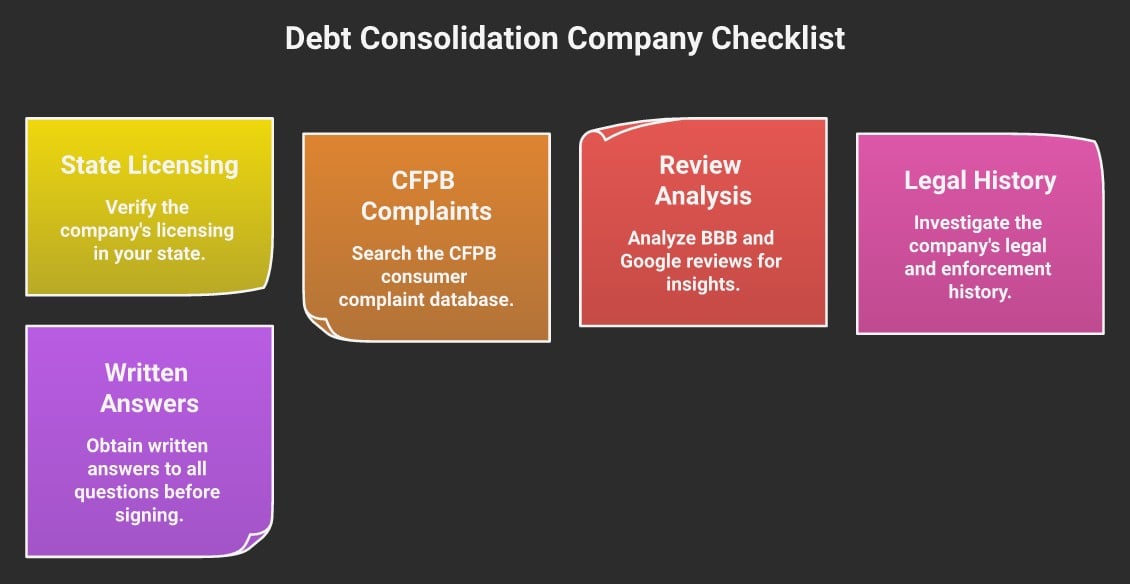
Step 4: Check Their Legal and Enforcement History
For-profit debt relief companies are subject to enforcement from federal and state regulators. Here’s where to look:
- CFPB Enforcement Actions: Search the CFPB’s enforcement action database for “DebtRx” and “Debt Rx” and related names
- FTC Actions: The FTC publishes all enforcement cases — search for the company and its principals
- Maryland AG: Search “DebtRx Maryland attorney general” — Maryland has active consumer protection enforcement
- Federal Court Records: CourtListener searches 1.3 billion federal court documents for free — search for cases where DebtRx is a party. For the official PACER system, see my guide to using PACER.gov.
Context Matters: A company that has faced enforcement action isn’t automatically disqualified — what matters is what the action was for, whether they resolved it, and whether the behavior continued. A company that’s never faced any scrutiny in a highly regulated industry may just not have been looked at yet.
Step 5: Ask the Right Questions Before You Enroll
Before signing anything: Run their enrollment agreement through my free Contract Decoder tool. Paste it in and get a plain-English breakdown of what you’re agreeing to.
Before you commit to any program, get clear answers — in writing — to these questions:
- What is the total cost — all fees — over the full length of the program?
- What specific service are they providing — debt consolidation, debt settlement, credit counseling?
- When are fees collected — before or after results are delivered?
- What happens if a creditor sues me during the program?
- What is the realistic timeline and outcome for my specific debt situation?
- What happens to my payments or deposits if I cancel?
Before You Commit: Debt relief options vary significantly. Run your situation through my Find Your Path tool to see whether debt consolidation, settlement, bankruptcy, a debt management plan, or another option fits your situation better. The retirement cost most people never calculate is worth understanding before you enroll in any multi-year program.
Key Takeaways
- Verify state licensing in your state before enrolling
- Read CFPB complaints for patterns in fees, program performance, and communication
- No Trustpilot profile — use BBB reviews and Google reviews as alternatives
- Check CFPB and FTC enforcement actions for any actions against the company
- Get total program cost, timeline, and specific services in writing before you sign
- The comments section below contains real experiences from real clients — read them
Want the full research playbook? My Ultimate Consumer Guide to Checking Out a Debt Relief Company covers every tool and source in this guide — plus detailed walkthroughs for reading BBB profiles and searching federal court records on CourtListener.
Frequently Asked Questions
What is DebtRx?
Based on their public website and BBB profile, DebtRx is a for-profit debt consolidation and financial services company based in Frederick, Maryland. The specific services they offer, their fees, and realistic outcomes for your situation are something you need to verify directly with them before enrolling.
How do I file a complaint against DebtRx?
You can file a complaint with the CFPB at consumerfinance.gov/complaint, with the Maryland Attorney General’s Consumer Protection Division, and with the BBB. Filing with the CFPB creates a public record and triggers a required company response.
Is DebtRx a legitimate company?
DebtRx is a registered for-profit company with a BBB profile. Whether debt consolidation is the right approach for your specific situation — and whether this specific company delivers on its promises — is what their complaint history, reviews, and a direct consultation can help you evaluate.
What is debt consolidation and how does it work?
Debt consolidation typically refers to combining multiple debts into a single payment — either through a consolidation loan with a lower interest rate, a debt management plan through a nonprofit credit counselor, or a similar arrangement. The term is sometimes used loosely to describe other debt relief services. Get a specific explanation of exactly what service you’re being enrolled in before signing anything.
Should I use DebtRx to get out of debt?
That depends entirely on your situation. I’d encourage you to run your situation through my Find Your Path tool before committing to any program — it helps you compare your options based on your specific income, debts, and goals.
Share Your Experience with DebtRx
If you’ve worked with DebtRx — as a client, a former employee, or someone who evaluated them and decided not to enroll — I’d encourage you to share your experience in the comments. Your perspective helps others make a more informed decision.
To share your experience: Scroll to the bottom of this page — the comments box is there.
Before You Sign Anything: Run any debt relief contract through the free Contract Decoder to spot hidden fees and unfair terms. Check the company’s complaint history with the Scam-O-Meter.
Compare Your Real Options: Most debt relief companies won’t tell you about all your options — especially the ones they can’t profit from. Credit counseling has a 21-27% completion rate. Settlement resolves about 1% of enrolled debts fully. Bankruptcy has a 95% discharge rate — and protects your retirement. Take the Find Your Path quiz for a recommendation based on your actual numbers.
Browse all Debt Settlement Companies reviews, or see the full Company Reviews directory.



