

Quick Answer: Linx Legal is a for-profit timeshare cancellation law firm based in Charlotte, North Carolina. To evaluate whether they’re right for your situation, I’d encourage you to check their complaint history with the CFPB, read their Trustpilot reviews, and check their legal and enforcement history. Here’s how to do each of those.
Before You Read This: I want to be upfront about what this page is and isn’t. I’m not rendering a verdict on Linx Legal. This is a research guide — I’m showing you where to look so you can reach your own conclusions based on current information.
If you find something in the public record that concerns you, post it in the comments below. If you’re evaluating their engagement agreement or any contract, use my free Contract Decoder tool.
If you represent Linx Legal and something here is inaccurate, contact me and I’ll review it promptly.
Each weekday I send one short email: one story that caught my attention, why it might matter to you, and one manageable thing you can do with it. A couple of minutes, and a dad joke.
In the latest issue (Nov 9): Check your power bank and your French press
Free. I sell nothing. Unsubscribe any time.
If you have inside information you feel you need to share with me privately: don’t. Whatever you want to share should be posted in the comments — by you, with your name attached. I’m not willing to be anyone’s conduit for information they won’t stand behind themselves.
The most valuable thing on this page may not be what I’ve written — it’s the comments section below. People who’ve actually worked with Linx Legal share their experiences there. I’d encourage you to read them and add your own.
Who Is Linx Legal?
An educated consumer is our best customer.— Sy Syms
New here? My Ultimate Consumer Guide to Checking Out a Debt Relief Company walks through how to vet any debt relief company before you sign anything.
Linx Legal is a for-profit timeshare cancellation law firm. Rather than repeat what they say about themselves here, I’d encourage you to read their own website and North Carolina state business filings — that way you’re seeing it directly from primary sources, not filtered through me.
What Timeshare Exit Companies Do: Timeshare exit companies — including those operating as law firms — help clients exit timeshare contracts. Approaches vary widely: some negotiate directly with the resort developer, some use litigation, and some use attorney demand letters. Before paying any company, check whether your timeshare developer has a deed-back or voluntary surrender program — some resorts will take the timeshare back directly, at low or no cost, if you ask. The American Resort Development Association (ARDA) maintains a list of resort exit resources at arda.org.
Step 1: Check Their Credentials
Before anything else, verify what credentials they hold. Here’s what to check for a timeshare exit law firm:
- North Carolina Bar Admission: Verify the attorneys are licensed through the North Carolina State Bar — look up each attorney individually and check their standing and any disciplinary history.
- Multi-State Licensing: If they represent clients in other states, the attorneys or law firm may need to be admitted in those states as well. Ask specifically whether they’re licensed in your state.
- State Licensing in Your State: Some states require timeshare exit companies to register or obtain specific licenses. Check with your state’s consumer protection agency before enrolling.
- BBB Profile: Check their Better Business Bureau profile — look at the rating, years in business, and especially the complaint history and how they responded to each one.
A Note on BBB Grades: A high BBB grade doesn’t necessarily mean a company is right for you — it means they respond to complaints filed through the BBB. Read the actual complaint text and the company’s responses. That’s the useful part. See my full guide to what BBB letter grades actually mean →
Step 2: Check Consumer Complaints
The Consumer Financial Protection Bureau maintains a public database of complaints filed against financial companies. You can search for Linx Legal directly:
Search Linx Legal’s complaint history in the CFPB database →
When you’re reading complaints, look for:
- What the complaints are about — large upfront fees, lack of results, communication problems, or clients still bound to timeshare contracts after paying?
- How the company responded — did they resolve issues or just close them?
- Whether the same issue appears repeatedly — a pattern matters more than a single complaint
- Complaints from clients whose timeshare wasn’t cancelled and who couldn’t get a refund
Step 3: Read Their Trustpilot Reviews
You can find Linx Legal’s Trustpilot reviews here. A few things to keep in mind as you read:
How to read Trustpilot like a pro: My complete guide to spotting red flags in Trustpilot reviews breaks down exactly what to look for — including how to identify review solicitation campaigns and reputation management tactics.
- Focus specifically on reviews from people who completed the process — was their timeshare actually cancelled, and at what total cost?
- Look at the gap between 5-star reviews (often written at intake or early in the process) and lower-star reviews (often written after the process stalled or failed)
- Look at how the company responds to negative reviews — particularly ones about fees paid without timeshare exit
- Check the review dates — a sudden spike of 5-star reviews can indicate a solicitation campaign
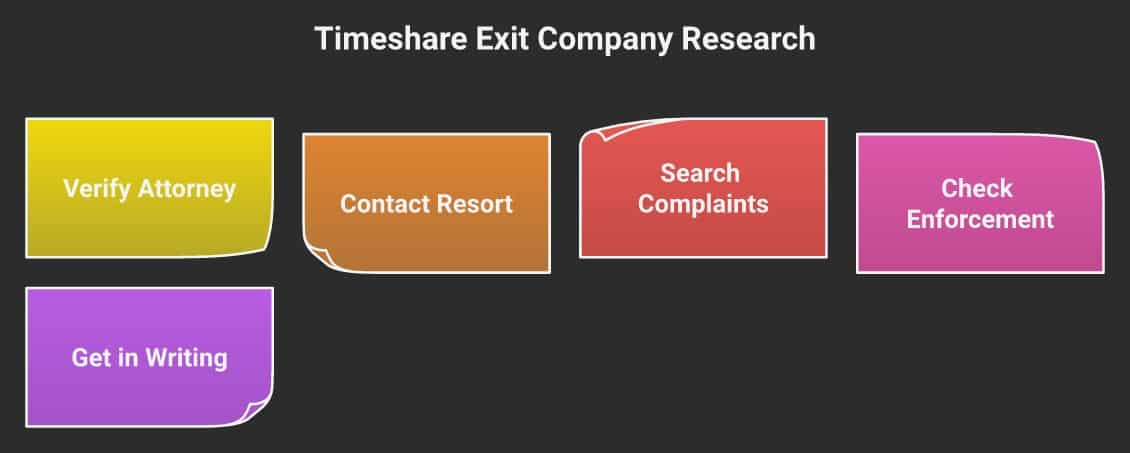
Step 4: Check Their Legal and Enforcement History
For-profit timeshare exit companies and law firms are subject to enforcement from federal and state regulators. Here’s where to look:
- FTC Actions: The FTC publishes all enforcement cases — the FTC has taken action against timeshare exit companies that collected large fees and failed to deliver results. Search for Linx Legal and its principals.
- CFPB Enforcement Actions: Search the CFPB’s enforcement action database for “Linx Legal” and related names
- North Carolina AG and Bar: Search “Linx Legal North Carolina attorney general” — North Carolina has active consumer protection enforcement. Also check the NC State Bar for any attorney discipline records.
- Federal Court Records: CourtListener searches 1.3 billion federal court documents for free — search for cases where Linx Legal is a party. For the official PACER system, see my guide to using PACER.gov.
The Timeshare Exit Risk Nobody Talks About: Timeshare exit is a largely unregulated industry with a history of consumer complaints. Companies often collect large upfront fees — sometimes $4,000 to $15,000 — before doing meaningful work. If the exit attempt fails, refunds are rare. Meanwhile, some exit companies advise clients to stop paying their timeshare maintenance fees, which can damage credit and result in collections. Ask specifically what happens to your fees if the exit is unsuccessful.
Step 5: Ask the Right Questions Before You Engage
Before signing anything: Run their engagement agreement through my free Contract Decoder tool. Paste it in and get a plain-English breakdown of what you’re agreeing to — including what they’ll do, when fees are charged, and what happens if they can’t exit your timeshare.
Before you commit to any timeshare exit service, get clear answers — in writing — to these questions:
- What is the total fee — and when is it collected?
- What specific exit method will they use for your specific resort and contract?
- What happens if the exit attempt fails — do you get a full refund?
- Should you stop paying maintenance fees during the process? What are the credit consequences if you do?
- What is the realistic timeline for your specific resort and contract type?
- Have you first contacted your resort directly about a deed-back or surrender program?
Before You Pay Anyone: Contact your timeshare developer directly first. Many resorts have deed-back or voluntary surrender programs that cost nothing or very little — especially if you’re current on maintenance fees. An exit company should be a last resort after direct resort negotiations have failed, not the first call you make.
Key Takeaways
- Verify attorney bar admission through the North Carolina State Bar before paying anything
- Read CFPB complaints for patterns about fees paid without timeshare exit results
- On Trustpilot, look for reviews from people whose timeshares were actually cancelled — not just intake experiences
- Check FTC and state AG enforcement actions — timeshare exit fraud is an active enforcement area
- Contact your resort directly about deed-back programs before paying any exit company
- Get total fee, refund policy, and what happens on failure — in writing before you sign
- The comments section below contains real experiences from real clients — read them
Want the full research playbook? My Ultimate Consumer Guide to Checking Out a Debt Relief Company covers every tool and source in this guide — plus detailed walkthroughs for reading BBB profiles, spotting Trustpilot red flags, and searching federal court records on CourtListener.
Before You Commit: Run your situation through my Find Your Path tool to see whether this option, debt settlement, bankruptcy, or another approach fits your situation better.
Frequently Asked Questions
What is Linx Legal?
Linx Legal is a for-profit timeshare cancellation law firm based in Charlotte, North Carolina. They help clients exit timeshare contracts through legal representation. The specific approaches they use, their fees, and realistic outcomes for your specific resort and contract are something you need to verify directly with them before engaging.
How do I file a complaint against Linx Legal?
You can file a complaint with the CFPB at consumerfinance.gov/complaint, with the North Carolina Attorney General’s Consumer Protection Division, with your own state’s consumer protection agency, and with the BBB. For attorney conduct concerns, contact the North Carolina State Bar. Filing with the CFPB creates a public record and triggers a required company response.
Is Linx Legal a legitimate company?
Linx Legal is a registered for-profit law firm with a BBB profile and Trustpilot reviews. Whether legal timeshare exit services are the right approach for your specific situation — and whether this firm delivers results — is what their complaint history, attorney bar records, and a direct consultation can help you evaluate.
Should I stop paying my timeshare maintenance fees during the exit process?
Be very careful here. Stopping maintenance fee payments can damage your credit, result in collections, and potentially complicate the exit process. Some exit companies advise clients to stop paying as a negotiating tactic — understand the credit and legal consequences before following that advice. Ask any exit firm specifically what their position is on maintenance fee payments during the process, and what happens to your credit if you follow their guidance.
Can I exit my timeshare without paying a company?
Possibly. Many timeshare developers have deed-back or voluntary surrender programs that allow owners to exit — often for free or a small administrative fee — if they’re current on maintenance fees. Contact your resort directly before paying any exit company. If direct negotiation fails, you can also contact a nonprofit housing counselor or consumer attorney for a second opinion on your options.
Share Your Experience with Linx Legal
If you’ve worked with Linx Legal — as a client, a former employee, or someone who evaluated them and decided not to engage — I’d encourage you to share your experience in the comments. Your perspective helps others make a more informed decision.
To share your experience: Scroll to the bottom of this page — the comments box is there.
Before You Sign Anything: Run any debt relief contract through the free Contract Decoder to spot hidden fees and unfair terms. Check the company’s complaint history with the Scam-O-Meter.
Compare Your Real Options: Most debt relief companies won’t tell you about all your options — especially the ones they can’t profit from. Credit counseling has a 21-27% completion rate. Settlement resolves about 1% of enrolled debts fully. Chapter 7 bankruptcy generally ends in a discharge for individual filers in more than 99% of cases, excluding cases dismissed or converted (U.S. Courts) — and protects your retirement. Take the Find Your Path quiz for a recommendation based on your actual numbers.
Browse all Legal Services reviews, or see the full Company Reviews directory.



