

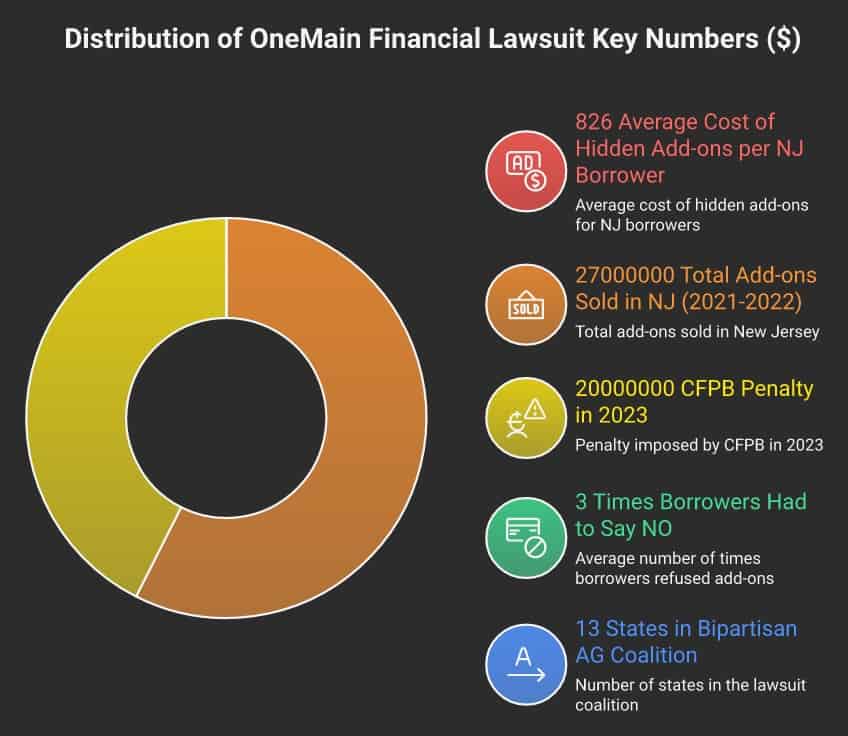
Quick Answer: On March 16, 2026, a bipartisan coalition of 13 state attorneys general filed a multistate lawsuit against OneMain Financial, one of the nation’s largest subprime installment lenders, accusing the company of secretly packing loans with add-on products — including credit “insurance” and roadside assistance memberships — that borrowers didn’t understand they were buying, at an average cost of $826 per borrower. The lawsuit seeks refunds for affected consumers, penalties, and a halt to the practice. If you have or had a OneMain loan, you may be owed money back.
Expert Context: I ran a nonprofit credit counseling organization starting in 1994 and spent years helping people understand why their loans cost so much more than they expected. Add-on product packing — credit insurance, membership programs, ancillary fees buried in loan documents — was one of the most common reasons borrowers came to us confused about why their monthly payment didn’t match what they thought they’d agreed to. This lawsuit describes exactly what I watched happen to borrowers for decades.
The complaint filed today by New Jersey Attorney General Jennifer Davenport, leading a 13-state coalition, lays out a pattern that goes well beyond a few isolated mistakes: OneMain Financial allegedly built a system designed to add expensive products to borrowers’ loans without their genuine, informed consent — and trained employees to keep pushing until a borrower said “no” three times before the sale was removed.
This is the second time in three years federal or state regulators have taken formal action over OneMain’s add-on product practices. The Consumer Financial Protection Bureau ordered OneMain to pay $20 million in 2023 for nearly identical conduct. The fact that 13 state AGs are suing in 2026 suggests the behavior didn’t stop.
Every weekday I read the enforcement actions, filings and fine print the outlets skip, and turn them into the one or two moves that actually improve your position — a rate worth moving for, a fee you can refuse, a deadline to beat before it costs you.
In the latest issue (Oct 6): When fear picks your debt plan
I write Your Money Actually most weekdays — actionable money information you will not find anywhere else, and the small decisions that compound. It is free, I sell nothing, and I take no money from any company I write about.
The CFPB Already Fined OneMain $20 Million for This in 2023 — and It Continued: The CFPB’s 2023 consent order found OneMain had deceived borrowers into believing add-ons were required to get a loan, charged interest during a promised refund window without disclosing it, and in some cases added products to paperwork without telling consumers — a practice OneMain employees internally called “pre-packing.” The company paid $10 million in consumer redress and $10 million in civil penalties. Today’s 13-state lawsuit indicates the conduct continued after that order.
What OneMain Is Accused of Doing
According to the complaint filed March 16, 2026, OneMain Financial’s loan-packing scheme worked like this:
- Add-ons buried in fine print: Expensive optional products — credit insurance, “Auto Plus” membership programs, and others — were embedded in dense loan documents that borrowers were given little time to review, especially during remote closings where disclosures were displayed in small, hard-to-read text
- Misrepresentation of terms: Despite advertising “clear, up-front terms,” OneMain allegedly obscured the cost and nature of add-ons behind confusing disclosures
- The “three nos” policy: If a borrower spotted the add-ons and tried to remove them, OneMain’s alleged policy was to continue pressuring them until they explicitly said “no” three times — a tactic designed to wear down resistance rather than honor a clear opt-out
- Employee pressure: OneMain allegedly exerted financial pressure on its own employees to maximize add-on sales, creating an internal incentive structure to keep packing loans regardless of borrower need or understanding
- Limited consumer benefit: The add-ons provided little value to borrowers while generating substantial profits for OneMain through commissions, insurance business profits, and default protection
What “Loan Packing” Actually Is: Loan packing means adding optional products — credit insurance, membership programs, warranty products — to a loan in a way that hides the cost inside the principal. Instead of paying $5,000 for a loan, you’re paying $5,826, but the $826 in add-ons looks like part of the loan, not a separate charge. Because you’re paying interest on the full amount, the real cost is even higher than the sticker price of the add-ons. Academic research has identified this as a core predatory lending tactic targeting subprime borrowers for decades — and the FTC took action against nearly identical practices at Associates First Capital as far back as 2001.
Who’s Involved and What Relief Is Being Sought
The lawsuit was filed by New Jersey (lead), joined by Pennsylvania, New York, Colorado, Maryland, Nevada, New Hampshire, North Dakota, Oklahoma, South Dakota, Virginia, Washington, and Wisconsin — 13 states in total, described as a bipartisan coalition.
The Daily Money Brief — Free, at 10 AM
Money you may be owed, scams to dodge, and the fine print decoded — the consumer money news that affects your wallet, every weekday.
The attorneys general are seeking:
- Refunds for consumers who were unlawfully charged for add-on products
- Civil penalties for violating state consumer protection laws
- Disgorgement of profits from the scheme
- A court order compelling OneMain to stop the illegal practices
- Removal of negative credit reporting tied to the add-on products
- Dismissal of any lawsuits or collection actions against customers related to these products
What This Means If You Had a OneMain Loan
If you currently have or previously had an installment loan from OneMain Financial, particularly between 2021 and 2025, you may have been charged for products you didn’t knowingly agree to purchase.
The complaint covers conduct in all 13 states involved. OneMain operates more than 1,400 branches across 44 states, so even borrowers in states not named in this lawsuit may have been affected by the same practices documented in the 2023 CFPB order.
What to Do Now: If you believe you were charged for add-on products on a OneMain loan without your informed consent, file a complaint with the CFPB consumer complaint database and with your state attorney general’s office. The volume of consumer complaints on record influences both the scope of enforcement relief and how refunds are distributed. You can also use the Find Your Path tool to understand whether your debt situation has been affected by this type of lending practice.
Why the Pattern Keeps Repeating
What strikes me about this lawsuit isn’t just the conduct — it’s the timeline. The CFPB identified the same practices, issued a formal consent order, collected $20 million, and required changes. Three years later, 13 state AGs filed a multistate lawsuit over what the complaint describes as substantially the same behavior.
This isn’t unique to OneMain. The FTC charged Associates First Capital with nearly identical loan-packing practices in 2001. The tactic survives because subprime borrowers — who often have fewer lending alternatives and more financial stress — are less likely to scrutinize loan documents at closing or to complain afterward. The math works for lenders even when regulators periodically intervene.
Predatory lenders don’t hide their practices because they think they’re legal. They hide them because they know borrowers under financial stress are less likely to push back.— Steve Rhode
If you’re in a OneMain loan now and feel like your payments are higher than what you agreed to, the complaint document is public — you can review it and compare the products listed to what appears on your loan agreement.
Before You Sign Any Loan: If you’re considering a personal loan from any lender, run the contract through the Contract Decoder first. It’s free, and it flags exactly the kind of add-on language that borrowers in this lawsuit missed.
Bottom Line
Thirteen state attorneys general filed a bipartisan lawsuit against OneMain Financial on March 16, 2026, accusing the company of systematically packing subprime installment loans with hidden add-on products that borrowers neither wanted nor understood — at an average cost of $826 per New Jersey borrower alone. This is the second major enforcement action over nearly identical conduct in three years; the CFPB ordered OneMain to pay $20 million in 2023 for the same practices. The lawsuit seeks consumer refunds, penalties, and a halt to the conduct. If you have or had a OneMain loan and were charged for credit insurance or other add-on products you don’t remember agreeing to, file a complaint with the CFPB and your state attorney general — it directly affects the size and distribution of any consumer relief ordered by the court.
Frequently Asked Questions
What is OneMain Financial being sued for?
OneMain Financial is being sued by a coalition of 13 state attorneys general for allegedly packing subprime installment loans with expensive add-on products — including credit insurance and roadside assistance memberships — without borrowers’ genuine informed consent. The complaint alleges the products were buried in fine-print documents, that OneMain pressured employees to maximize add-on sales, and that borrowers were required to say “no” three times before add-ons would be removed.
How do I know if I was affected by OneMain’s add-on products?
Review your original loan agreement and look for line items beyond the principal loan amount — particularly products labeled as credit insurance, “Auto Plus” membership, roadside assistance, or any other optional program with a separate cost. If these appear and you don’t remember agreeing to them, you may have been affected. File a complaint with the CFPB at consumerfinance.gov/complaint and with your state attorney general’s office.
Will OneMain borrowers receive refunds?
The lawsuit seeks refunds for consumers who were unlawfully charged for add-on products, but refunds depend on the court’s ruling and any settlement reached. The 2023 CFPB consent order resulted in $10 million in consumer redress. This multistate action involves far more states and a broader scope of conduct, so relief — if ordered — could be larger. No claims process exists yet; stay informed through your state AG’s office.
OneMain Financial reviews show complaints about fees — is that related?
Yes. OneMain Financial reviews and complaints have long referenced unexpected charges, products borrowers say they didn’t request, and confusion about loan costs — consistent with the add-on product practices described in both the 2023 CFPB order and the 2026 multistate AG complaint. The CFPB received approximately 880 complaints about OneMain in 2024 alone, many focused on unexpected fees and add-on product issues.
What states are part of the OneMain Financial class action lawsuit?
The multistate attorney general lawsuit (technically a regulatory enforcement action, not a class action) includes New Jersey, Pennsylvania, New York, Colorado, Maryland, Nevada, New Hampshire, North Dakota, Oklahoma, South Dakota, Virginia, Washington, and Wisconsin. The complaint was filed March 16, 2026, led by New Jersey AG Jennifer Davenport.
Recent Federal Lawsuits:
Dealing With Debt? Understanding your options is the first step. See how all your debt relief options compare — including ones most sites won’t tell you about. The Find Your Path quiz gives a recommendation based on your actual numbers, and the Scam-O-Meter checks any company’s complaint history before you sign. Federal Reserve research shows bankruptcy filers recover faster than those who don’t file.



