

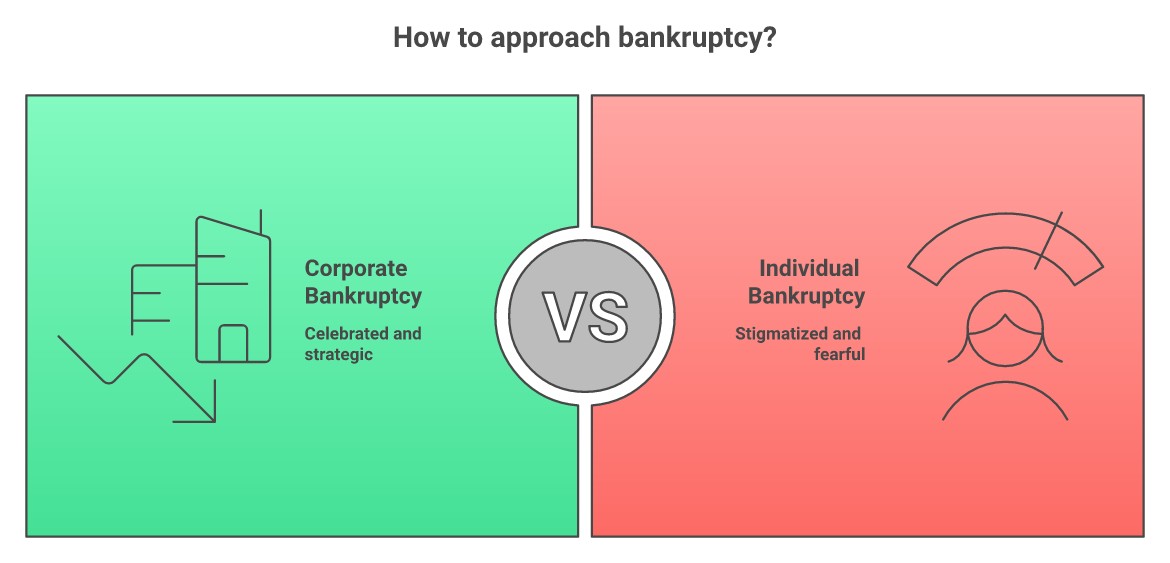
Quick Answer: The LYCRA Company, maker of Spandex and some of the most recognized fabric brands in the world, just filed for Chapter 11 bankruptcy to eliminate more than $1.2 billion in debt. Their press release calls it “decisive action” to “position the business for long-term financial stability and growth.” When a corporation does this, it’s a strategic milestone. When you consider the same legal tool, people tell you it’s a moral failure. That double standard needs to end.
Part of the Chapter 7 Hub: This post is one piece of my complete Chapter 7 Bankruptcy Guide — everything you need to know about filing, who qualifies, what gets discharged, and what happens to your credit after.
Expert Context: I filed bankruptcy myself in 1990 after my real estate business collapsed in an economic downturn. It wasn’t my proudest moment at the time, but it turned out to be one of the smartest financial decisions I ever made. Watching how corporations celebrate the same tool that individuals are shamed for using has been one of the defining observations of my 30-year career in debt education.
On March 17, 2026, The LYCRA Company filed a voluntary prepackaged Chapter 11 case in the U.S. Bankruptcy Court for the Southern District of Texas. The company’s goal: wipe out $1.2 billion in long-term debt, secure new financing, and emerge in roughly 45 days as a stronger business. Their press release reads like a celebration.
Each weekday I send one short email: one story that caught my attention, why it might matter to you, and one manageable thing you can do with it. A couple of minutes, and a dad joke.
In the latest issue (Nov 9): Check your power bank and your French press
Free. I sell nothing. Unsubscribe any time.
Key Terms Defined
Prepackaged Chapter 11: A streamlined form of bankruptcy where the debtor negotiates a reorganization plan with creditors before filing. Because most creditors have already agreed, the court process takes weeks instead of months. U.S. Courts: Chapter 11 Basics.
DIP Financing (Debtor-in-Possession): A special type of loan available to companies in Chapter 11 that lets them keep operating during the bankruptcy process. LYCRA secured $75 million in DIP financing.
What LYCRA Is Doing and Why It Matters to You
You probably know LYCRA even if you don’t realize it. The company makes the Spandex fiber in your workout clothes, the COOLMAX fabric in your athletic wear, and the THERMOLITE insulation in your winter gear. They’re headquartered in Wilmington, Delaware, and they employ about 2,000 people worldwide.
Here’s what happened: LYCRA accumulated more than $1.2 billion in long-term debt, including senior secured notes carrying interest rates of 7.5% and 16%. The math stopped working. So they did what smart businesses do when the math stops working: they used the legal system designed for exactly this situation.
CEO Gary Smith called it “a significant milestone” and “decisive action to meaningfully reduce our debt and strengthen our financial foundation.”
Read that language again. Decisive action. Significant milestone. Strengthen our foundation.
Now imagine a person drowning in $40,000 of credit card debt saying those same words about filing Chapter 7 bankruptcy. Society would call them irresponsible. Their family might disown them. Their coworkers would whisper.
The Double Standard Nobody Wants to Talk About
LYCRA’s press release is a masterclass in how corporations frame bankruptcy. Every word is designed to project strength:
- “Positioning business for long-term financial stability and growth”
- “Customers, suppliers, and employees to be unimpacted”
- “Overwhelming support” from creditors
- “Decisive action to meaningfully reduce our debt”
Now here’s the language people hear when they consider bankruptcy:
- “You should pay what you owe”
- “Bankruptcy is a last resort”
- “Your credit will be ruined for 10 years”
- “What kind of person doesn’t honor their debts?”
Same legal tool. Same court system. Same federal law. Completely different framing.
The Claim: “Bankruptcy means you failed. Responsible people pay their debts.”
The Reality: LYCRA isn’t apologizing for using Chapter 11. They’re not calling it a failure. They’re calling it a strategic decision to “strengthen their financial foundation.” When a billion-dollar corporation uses bankruptcy, the market calls it smart. When you use it, culture calls it shameful. The law makes no such distinction, and neither should you.
LYCRA Is Not Alone: Corporate Bankruptcy Is at a 10-Year High
LYCRA joins a growing list of major companies using bankruptcy strategically. According to the U.S. Courts, total bankruptcy filings rose 11% in 2025, reaching 574,314 cases. Chapter 11 filings hit 9,201, the highest level in a decade.
Business filings rose 7.1% in 2025, and commercial Chapter 11 filings surged 67% in February 2026 compared to February 2025, according to American Bankruptcy Institute data.
Companies across every industry are using the bankruptcy system exactly as it was designed: to restructure unsustainable debt, protect operations, and emerge stronger. Nobody tells these companies to “just try harder” or “cut back on lattes.”
Why Companies Treat Bankruptcy Like a Tool (and Why You Should Too)
Here’s what LYCRA did that I want you to notice:
- They assessed the math — $1.2 billion in debt at rates up to 16% was unsustainable
- They negotiated with creditors before filing — the plan had “overwhelming support”
- They secured new financing — $75 million in DIP financing plus $75 million+ in exit financing
- They protected what mattered — employees, customers, and suppliers are unaffected
- They moved quickly — expecting to emerge in 45 days
This is exactly what I tell individuals to do. Assess the math. Explore your options. Protect what matters (especially your retirement). Make a decision based on facts, not shame. And move forward.
When I filed bankruptcy in 1990, I didn’t know any of this. I felt like a failure. It took me years to realize that bankruptcy was the catalyst that let me rebuild everything, including founding a credit counseling organization that grew to 70 employees. The fresh start wasn’t the end of my story. It was the beginning.
What the Research Actually Shows
New York Fed research found that within a year of filing, Chapter 7 filers had higher credit scores and more access to new credit than people who had fallen seriously behind and didn’t file. Their credit scores recover. Their financial stability improves. The data contradicts everything the shame narrative tells you.
Meanwhile, as legal scholar Abigail Faust documented in her analysis of consumer bankruptcy reform, the political narrative around individual bankruptcy was built by creditor lobbying. Congressmen argued that rising bankruptcy rates were caused by “loss of personal responsibility among consumers,” while portraying consumer creditors as simply providing choices, “wholly innocent with respect to the results.”
In other words: when individuals file bankruptcy, it’s a character flaw. When corporations file bankruptcy, it’s a strategic decision. The creditor industry built that narrative deliberately over decades, and it resulted in laws like BAPCPA that made individual bankruptcy harder to access while corporate bankruptcy remained a boardroom planning tool.
Important: None of this means bankruptcy is always the right answer for everyone. It means bankruptcy should be evaluated on the math of your specific situation, not on shame. If a billion-dollar company can use it as a tool for a fresh start, you can at least consider it without feeling like a failure.
Not Sure Where You Stand? Take the Find Your Path quiz. It takes two minutes and gives you a clear picture of which options actually fit your situation, including whether bankruptcy deserves a closer look.
The Bottom Line
The LYCRA Company just filed Chapter 11 bankruptcy to eliminate $1.2 billion in debt and expects to emerge in 45 days as a stronger business. Their CEO called it “decisive action” and a “significant milestone.” Nobody is calling LYCRA irresponsible. Nobody is telling them to cut back on expenses for five years. The same federal bankruptcy law that protects LYCRA protects you. If the math doesn’t work, deal with it and look to the future rather than spend years repairing the past. Treat yourself like a business and make decisions like a boardroom, not a panic room.
Frequently Asked Questions
Did the LYCRA Company go out of business?
No. LYCRA filed a prepackaged Chapter 11 bankruptcy, which is a restructuring process, not a liquidation. The company continues to operate normally throughout the process. Customers, suppliers, and all 2,000 employees are unaffected. LYCRA expects to emerge from Chapter 11 within 45 days with over $1.2 billion less debt.
What is prepackaged bankruptcy?
A prepackaged bankruptcy is when a company negotiates its reorganization plan with creditors before actually filing in court. Because the plan already has creditor support, the court process is much faster, often weeks instead of months or years. LYCRA’s creditors gave “overwhelming support” before the filing.
Can individuals file for bankruptcy like LYCRA did?
Individuals use the same federal bankruptcy system. Most individuals file under Chapter 7 (debt discharge, typically completed in 3-4 months) or Chapter 13 (repayment plan over 3-5 years). The legal tool works the same way: it eliminates or restructures unsustainable debt so you can move forward. New York Fed research found that within a year of filing, Chapter 7 filers had higher credit scores and more access to new credit than people who had fallen seriously behind and didn’t file.
Will this bankruptcy affect LYCRA products like Spandex?
No. LYCRA’s operations continue without interruption during the restructuring. The company secured $75 million in financing to support normal operations and has commitments for more than $75 million in additional financing when it exits Chapter 11. Products including LYCRA, COOLMAX, THERMOLITE, and SUPPLEX fibers remain available to manufacturers.
Why do people feel ashamed about bankruptcy when companies celebrate it?
The shame around individual bankruptcy is largely manufactured. Research shows that creditor-backed lobbying efforts, particularly in the lead-up to the 2005 BAPCPA reform, deliberately framed individual bankruptcy as a character flaw while corporate bankruptcy remained a normal business strategy. In reality, bankruptcy is a legal tool written into federal law for both businesses and individuals. The U.S. Courts reported 574,314 bankruptcy filings in 2025, and the system exists because sometimes debt becomes unsustainable through no moral failing of the debtor.
Dealing With Debt? Understanding your options is the first step. See how all your debt relief options compare — including ones most sites won’t tell you about. The Find Your Path quiz gives a recommendation based on your actual numbers, and the Scam-O-Meter checks any company’s complaint history before you sign. Federal Reserve research shows bankruptcy filers recover faster than those who don’t file.



