
If you just had your car repossessed and are considering bankruptcy to stop the auction, see what to do immediately after repossession.
Quick Answer: The automatic stay is a federal court order that takes effect the instant you file for bankruptcy. It immediately stops wage garnishment, collection lawsuits, creditor phone calls, bank levies, utility shutoffs, and most other collection actions. It’s the most powerful and immediate form of debt relief available under US law — and it works on day one, not months later.
Table of Contents
Each weekday I send one short email: one money story that caught my attention, why it might matter to you, and one manageable thing you can do with it. A couple of minutes, and a dad joke.
In the latest issue (Oct 16): The check that looks like a scam may be real
Free. I sell nothing. Unsubscribe any time.
Part of the Chapter 7 Hub: This post is one piece of my complete Chapter 7 Bankruptcy Guide — everything you need to know about filing, who qualifies, what gets discharged, and what happens to your credit after.
The moment I filed bankruptcy in 1990, the phone stopped ringing. Not gradually — immediately. That silence was the first peace I’d felt in months.— Steve Rhode
I remember the day I filed bankruptcy. It was 1990. My real estate business had crashed in the economic downturn, and I’d spent months in a fog of collection calls, legal threats, and the kind of 2am anxiety that makes you question everything about yourself.
Then my attorney filed the petition. And the calls stopped. Not the next week. Not gradually. That day.
That’s the automatic stay. It’s not a negotiation, not a request, not a promise from a debt relief company. It’s a federal court order, and violating it is contempt of court. Every creditor, every collector, every lawsuit — frozen in place the moment the bankruptcy case number is assigned.
Free Tool — Wage Garnishment Calculator: Worried about your paycheck being seized? The free Wage Garnishment Calculator shows exactly how much creditors can legally take in your state — and some states prohibit garnishment entirely. Calculate My Risk →
What the Automatic Stay Stops (Immediately)
Just been served? See the emergency crisis guide: I Was Just Served with a Debt Lawsuit — your 5-step action plan for the next 48 hours, including how to stop the case the same day you file bankruptcy.
The automatic stay halts:
- Wage garnishment — your full paycheck is yours again, starting with the next pay period
- Collection lawsuits — any pending lawsuit for debt is frozen; no new ones can be filed
- Creditor phone calls and letters — all direct contact must stop immediately
- Bank account levies — creditors cannot freeze or seize your bank accounts
- Utility shutoffs — your electric, gas, and water cannot be disconnected for 20 days (giving you time to arrange payment)
- Repossession — a creditor cannot repossess your car or other property
- Foreclosure proceedings — the sale of your home is paused (though this is temporary in Chapter 7)
- Eviction proceedings — in some circumstances, eviction is paused
Free Tool — I'm Being Sued for Debt Guide: Being sued by a creditor or debt collector? The free I'm Being Sued Guide gives you a personalized action plan — deadlines, defenses, and options based on your state. Most states require a response within 20–30 days. Get My Action Plan →
What the Automatic Stay Does NOT Stop
- Criminal proceedings — if you’re facing criminal charges, those continue
- Child support and alimony collection — domestic support obligations are not stayed
- Tax audits — the IRS can still audit you (though tax liens and levies are stayed)
- Certain pension loan repayments — if your employer deducts pension loan payments, this may continue
- Prior bankruptcy abuse — if you filed bankruptcy within the past year, the stay may be limited to 30 days or not apply at all
What It Actually Feels Like
I want to tell you what they don’t put in the legal textbooks.
When you’re drowning in debt, your nervous system is in constant fight-or-flight. Every phone ring is a collector. Every piece of mail is a threat. You develop a physical flinch response to your own mailbox.
The automatic stay doesn’t just stop the legal process of collection. It stops the psychological assault. The phone goes quiet. The mailbox is just a mailbox again. You can open your email without your heart rate spiking.
That relief — that sudden absence of pressure — is what gave me the mental space to start rebuilding. And it’s what I’ve watched give thousands of people their first clear-headed day in months.
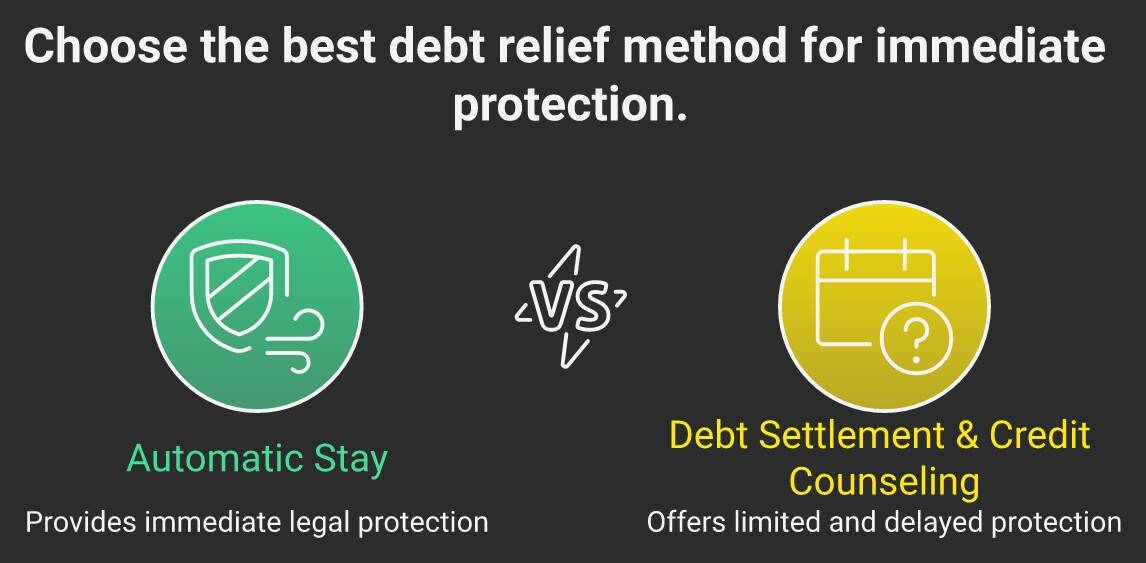
Key Insight: The automatic stay creates a breathing room that no other debt relief option provides. Debt settlement takes months of negotiation. Credit counseling takes years. Bankruptcy’s automatic stay works on day one. For someone whose wages are being garnished or who’s about to lose their car, that immediacy isn’t just convenient — it’s life-changing.
How It Works (The Mechanics)
Filing Day
Your bankruptcy attorney files the petition electronically with the bankruptcy court. The court assigns a case number. At that instant — not when the paperwork is processed, not when creditors are notified, but at the moment of filing — the automatic stay takes effect under 11 U.S.C. Section 362.
Creditor Notification
The court notifies all creditors listed in your petition. This takes a few days. In the meantime, if a creditor contacts you, tell them: “I filed bankruptcy on [date]. My case number is [number]. Please contact my attorney.” That’s it. They are legally required to stop.
If a Creditor Violates the Stay
If a creditor continues to collect after being notified of your bankruptcy, they are in contempt of federal court. Your attorney can file a motion for sanctions, and the creditor may be required to pay your attorney fees plus damages. This is one of the most powerful consumer protection tools in American law. For the full step-by-step — including what to do if you’re a repeat filer with a shortened stay — see my complete crisis guide.
Warning: Even though the stay is automatic, you should still tell your attorney immediately if a creditor continues to contact you after filing. Some creditors test the boundaries — your attorney can shut that down fast with a court motion.
The Automatic Stay vs. Other Debt Relief
How Fast Does Relief Come?
Automatic Stay (Bankruptcy)
- Stops garnishment: DAY 1
- Stops lawsuits: DAY 1
- Stops calls: DAY 1
- Legally enforceable: YES
Debt Settlement
- Stops garnishment: NO (until settled)
- Stops lawsuits: NO
- Stops calls: MAYBE (after months)
- Legally enforceable: NO
Credit Counseling / DMP
- Stops garnishment: NO
- Stops lawsuits: NO
- Stops calls: Partially (enrolled creditors only)
- Legally enforceable: NO
Common Myths About the Automatic Stay
The Dogma: “Filing bankruptcy is giving up and won’t actually stop anything right away.”
The Reality: The automatic stay is the single most immediate and powerful debt relief tool in American law. It stops more collection actions, faster, with more legal force, than any other option available. And it leads to a discharge that permanently eliminates the debt — not a payment plan that lasts years.
One high-cost online lender’s own SEC filing confirms this protection gets tested in the real world — Virginia accused NetCredit of collecting from borrowers during active bankruptcy stays before the case ended in an $87 million debt-forgiveness settlement.
When to Use the Automatic Stay as an Emergency Tool
If any of these are happening RIGHT NOW, the automatic stay can help immediately:
- Your wages are being garnished and you can’t make rent
- You’ve been served with a debt collection lawsuit
- A creditor is threatening to freeze your bank account
- Your car is about to be repossessed
- Your utilities are about to be shut off
- You’re facing foreclosure on your home
In these emergency situations, a bankruptcy attorney can often file within 24-48 hours. Some file the same day. The stay takes effect immediately upon filing.
Key Takeaways
- The automatic stay works on day one — not weeks or months later
- It stops garnishment, lawsuits, collections, repossession, and foreclosure the instant bankruptcy is filed
- It’s federal law — violating it is contempt of court, and creditors can be sanctioned
- No other debt relief option provides this level of immediate, enforceable protection
- It creates breathing room — the psychological relief of stopping the collection assault is what lets you think clearly again
- Emergency filing is possible — if you’re facing imminent garnishment or repossession, attorneys can file within 24-48 hours
Related: Want to know exactly what a bank levy can do to your account — and how the automatic stay stops it? Read Bank Levy by a Debt Collector: What It Means and How to Stop It.
The Bottom Line
I filed bankruptcy in 1990. The automatic stay gave me back my sanity before it gave me back my finances. It was the moment everything shifted — from drowning to standing on solid ground. If you’re being garnished, sued, or harassed by collectors, the automatic stay can do the same thing for you. Starting today.
Read the complete Chapter 7 Bankruptcy Guide
Related: Wage Garnishment: The Complete Guide to Your Rights and Options — all your options in one place.
Frequently Asked Questions About the Automatic Stay
What is the automatic stay in bankruptcy?
The automatic stay is a federal court order under 11 U.S.C. Section 362 that takes effect instantly when a bankruptcy petition is filed. It prohibits most creditors from continuing any collection activity, including wage garnishment, lawsuits, phone calls, bank levies, repossession, and foreclosure. It applies to all creditors listed in the bankruptcy petition and remains in effect until the bankruptcy case is resolved.
The automatic stay stops wage garnishment immediately. If your wages are being garnished right now, see the step-by-step crisis guide.
How quickly does the automatic stay take effect?
The automatic stay takes effect the instant the bankruptcy petition is filed with the court — not when creditors receive notice, but at the moment of filing. In practice, it takes a few days for creditors to learn about the filing, but the legal protection begins immediately. If a creditor takes action after the filing date, that action is voidable.
Can a creditor ignore the automatic stay?
No. Violating the automatic stay is contempt of federal court. If a creditor continues collection activity after being notified of the bankruptcy filing, your attorney can file a motion for sanctions. The creditor may be ordered to pay your attorney fees, actual damages, and in some cases punitive damages. The automatic stay is one of the most strictly enforced protections in consumer law.
Does the automatic stay stop wage garnishment?
Yes, immediately. Once your bankruptcy petition is filed, your employer must stop all garnishment on the next payroll cycle. Your attorney will typically notify your employer directly. If garnishment continues after the filing date, those funds may need to be returned to you, and the creditor may face sanctions for violating the stay.
How long does the automatic stay last?
In a Chapter 7 case, the automatic stay generally lasts until the case is closed or the debt is discharged — typically 90-120 days. In a Chapter 13 case, it lasts throughout the 3-5 year repayment plan. If you’ve filed bankruptcy multiple times, the stay may be limited to 30 days or may not apply at all without a court motion.
Dealing With Debt? Understanding your options is the first step. See how all your debt relief options compare — including ones most sites won’t tell you about. The Find Your Path quiz gives a recommendation based on your actual numbers, and the Scam-O-Meter checks any company’s complaint history before you sign. Federal Reserve research shows bankruptcy filers recover faster than those who don’t file.



