

Quick Answer: LVNV Funding — one of the nation’s largest debt buyers — has filed more lawsuits in St. Louis City and County courts than any other entity, including original creditors, according to data from the Princeton Debt Collection Lab. A review of 100 recent cases found 44 were for debts under $1,000, with some as low as $426. The company sometimes files hundreds of cases in a single month, and judges are seeing dockets of nearly 300 cases in a single morning. If you’ve been sued by LVNV Funding, you have rights — and not responding is the worst thing you can do.
Expert Context: I’ve studied debt collector tactics since the 1990s — including as someone who was on the receiving end after my own bankruptcy in 1990. LVNV Funding is a debt buyer I’ve covered extensively. They purchase old debts for pennies on the dollar, then sue to collect. The strategy is volume: file hundreds of lawsuits, bet that most people won’t show up, and collect default judgments. It’s legal. It’s also a system designed to exploit people who don’t know their rights.
A single St. Louis judge had nearly 300 LVNV cases on the docket in one morning. When a debt buyer can file lawsuits faster than courts can hear them — and most people never show up to defend themselves — something in the system is broken.
What’s Happening in St. Louis
Just been served? See the emergency crisis guide: I Was Just Served with a Debt Lawsuit — your 5-step action plan for the next 48 hours, including how to stop the case the same day you file bankruptcy.
Each weekday I send one short email: one money story that caught my attention, why it might matter to you, and one manageable thing you can do with it. A couple of minutes, and a dad joke.
In the latest issue (Oct 15): The ones who need the Social Security raise the most keep the least of it
Free. I sell nothing. Unsubscribe any time.
A First Alert 4 investigation found that LVNV Funding — a subsidiary of Resurgent Capital Services — is flooding St. Louis courts with lawsuits over debts that are getting smaller and smaller. Of 100 recent cases reviewed, 44 were for amounts under $1,000.
The strategy works because of math, not merit: computerization has made it so cheap to file lawsuits that suing someone over a $500 debt is now profitable. The company files hundreds of cases per month, and the vast majority of defendants never appear in court — resulting in automatic default judgments.
Lashonda Baker, one defendant profiled in the investigation, was sued over a $507 credit card debt from 2022. She agreed to a settlement of $30 per month — which, with interest rates averaging nearly 30% in the reviewed cases, means she could be paying for years on what started as a $507 balance.
The Daily Money Brief — Free, at 10 AM
Money you may be owed, scams to dodge, and the fine print decoded — the consumer money news that affects your wallet, every weekday.
Free Tool — I'm Being Sued for Debt Guide: Being sued by a creditor or debt collector? The free I'm Being Sued Guide gives you a personalized action plan — deadlines, defenses, and options based on your state. Most states require a response within 20–30 days. Get My Action Plan →
Why This Matters — Even If You Don’t Live in St. Louis
St. Louis is the canary in the coal mine. What LVNV is doing there, other debt buyers are doing — or will be doing — everywhere. According to the Princeton Debt Collection Lab, LVNV filed more lawsuits in St. Louis from 2020-2024 than any other entity, including the original creditors.
Consumer attorney Jimmy Daher, who has handled more than 2,000 cases filed by LVNV, described the pattern: elderly and limited-income people being sued for $500-$700 — amounts so small that hiring an attorney seems irrational, but large enough to destroy someone living on a fixed income.
Creditors are businesses making calculated risks. When it costs $50 to file a lawsuit and the defendant never shows up 90% of the time, a $500 debt becomes a $500 guaranteed judgment. That’s not justice — that’s an assembly line.— Steve Rhode
Common Belief: “If the debt is only a few hundred dollars, they won’t actually sue me.”
The Reality: LVNV Funding is suing people over debts as low as $426 — and filing hundreds of cases per month. Computerization has made small-dollar lawsuits profitable. If you owe ANY amount to a debt buyer, assume they will sue. The question isn’t whether they’ll file — it’s whether you’ll show up.
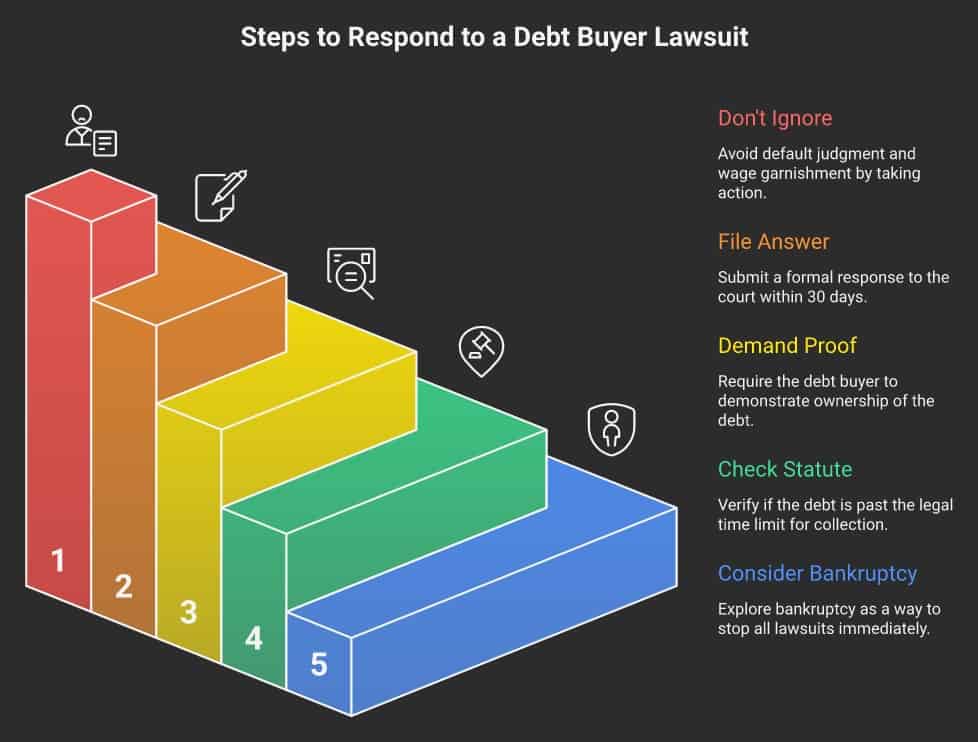
What to Do If LVNV Funding (or Any Debt Buyer) Sues You
- DO NOT ignore the lawsuit. If you don’t respond, the court enters a default judgment — and then they can garnish wages, freeze bank accounts, and put a lien on your property. This is the #1 mistake people make.
- Respond within the deadline. In Missouri, you typically have 30 days to file an answer. SoloSuit offers a guided tool for filing an answer without an attorney.
- Demand they prove they own the debt. LVNV buys debts in bulk portfolios. They often lack the original agreement, account statements, or chain of title to prove they have the right to collect. Make them prove it — many can’t.
- Check the statute of limitations. In Missouri, the statute of limitations for credit card debt is 5 years. If the debt is older than that, you may have a complete defense. Check your state’s statute.
- Consider bankruptcy if debts are piling up. If you’re being sued over multiple small debts, Chapter 7 bankruptcy can discharge all of them in 90-120 days — and the automatic stay stops all lawsuits the day you file.
For a complete guide to dealing with LVNV Funding specifically, read: LVNV Funding Bought Your Debt for Pennies on the Dollar — Here’s What That Means for You.
Not sure what your best option is? Take the Find Your Path quiz — it walks through your specific situation and shows you ALL your options, including the ones nobody else mentions. Or ask Steve directly.
No Article Replaces an Attorney Licensed in Your State: If you’ve been served with a lawsuit from LVNV Funding or any debt collector, you may have defenses. NACA — National Association of Consumer Advocates can connect you with consumer law attorneys who handle debt collection cases, many on contingency. Your state bar’s referral service and LawHelp.org also offer low-cost or free options.
The Bottom Line
If you just got served with a lawsuit from LVNV Funding over a debt you thought was too small for anyone to bother with — you’re not alone. They’re filing hundreds of cases a month in St. Louis alone, many for under $1,000, and the strategy works because most people don’t show up. That’s what they’re counting on. Show up. File an answer. Make them prove they own the debt. And if the debts are stacking up and the lawsuits keep coming, know this: bankruptcy stops every lawsuit the day you file and discharges the debts in 90 days. I filed bankruptcy in 1990. The lawsuits stopped. The debt disappeared. And I rebuilt everything. You can too — but only if you don’t let a default judgment take that option away.
Free Tool — Statute of Limitations Checker: Dealing with old debt? The free Statute of Limitations Checker tells you if the collection clock has expired in your state — including the zombie debt and clock-restarting traps collectors use. Check My Status →
Frequently Asked Questions
Who is LVNV Funding?
LVNV Funding is a debt buyer — a company that purchases old, charged-off debts from original creditors (credit card companies, medical providers, etc.) for pennies on the dollar, then attempts to collect the full amount. They are a subsidiary of Resurgent Capital Services. For a full breakdown, read LVNV Funding Bought Your Debt for Pennies on the Dollar.
Can LVNV really sue me over $500?
Yes. A First Alert 4 investigation found lawsuits filed for as low as $426. Computerization has made it cheap enough to file small-dollar suits in bulk. The filing cost is minimal compared to the default judgment they win when defendants don’t respond.
What happens if I don’t respond to the lawsuit?
The court enters a default judgment against you. Once LVNV has a judgment, they can garnish your wages (up to 25% of disposable income in most states), freeze your bank accounts, and place liens on your property. This turns a $500 debt into a financial crisis. Always respond.
Can I fight the lawsuit myself?
Yes, especially for small amounts where hiring an attorney doesn’t make financial sense. SoloSuit offers guided tools for filing an answer. The key defense: demand they prove they own the debt with original documentation. Many debt buyers lack the chain-of-title paperwork to prove their case.
Is the debt too old to collect?
In Missouri, the statute of limitations for most consumer debt is 5 years from the last payment or acknowledgment. If the debt is older, you may have a complete time-bar defense. Be careful not to make a payment or acknowledge the debt in writing — either can restart the clock.
(Source: First Alert 4 / KMOV)
Recent Federal Lawsuits:
Dealing With Debt? Understanding your options is the first step. See how all your debt relief options compare — including ones most sites won’t tell you about. The Find Your Path quiz gives a recommendation based on your actual numbers, and the Scam-O-Meter checks any company’s complaint history before you sign. Federal Reserve research shows bankruptcy filers recover faster than those who don’t file.



