
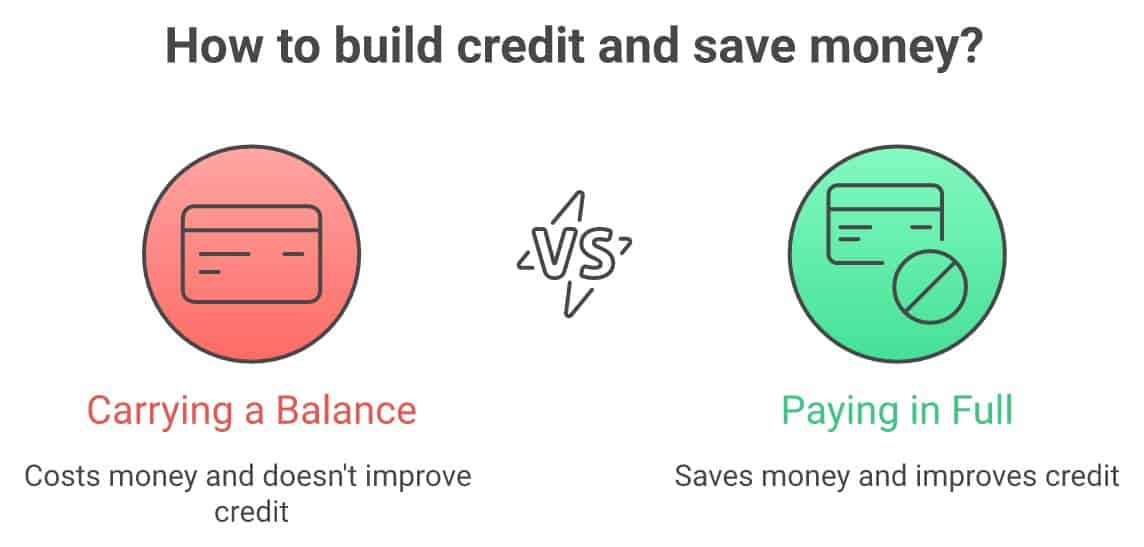
Quick Answer: Carrying a credit card balance does not build your credit score — this is one of the most expensive myths in personal finance. The Consumer Financial Protection Bureau says it directly: “Paying off your credit cards in full every month is the best way to improve a credit score or maintain a good one.” Carrying a balance just costs you interest — at today’s average APR above 24%, that’s pure profit for the card issuer and pure loss for you.
Expert Context: I ran a credit counseling organization with certified counselors who reviewed thousands of credit reports. The number of people who walked in carrying balances “to build credit” while paying 20%+ interest was staggering. Not one of them had a better score for it. This myth has cost Americans billions in unnecessary interest payments, and the credit card industry has zero incentive to correct it.
Part of the Chapter 7 Hub: This post is one piece of my complete Chapter 7 Bankruptcy Guide — everything you need to know about filing, who qualifies, what gets discharged, and what happens to your credit after.
Part of the Credit Cards Hub: This post is one piece of my complete Credit Cards: The Complete Guide — how credit cards actually work, what they cost, how they affect your score, and every option when the debt gets out of hand.
Each weekday I send one short email: one story that caught my attention, why it might matter to you, and one manageable thing you can do with it. A couple of minutes, and a dad joke.
In the latest issue (Nov 6): Owed money on an Amazon return? Check by Dec. 1
Free. I sell nothing. Unsubscribe any time.
Nearly half of Americans — 48%, according to a U.S. News & World Report survey cited by myFICO — incorrectly believe that carrying a credit card balance improves their credit score. It doesn’t. It never has. And at today’s average APR above 24%, this single misconception is quietly draining thousands of dollars from the people who can least afford to lose it.
What the CFPB Actually Says
This isn’t my opinion — it’s the official position of the federal agency that oversees the credit industry. The CFPB’s credit score myths page explicitly lists “Carrying a balance on my credit cards will improve my credit score” as a myth and states the fact: paying off your credit cards in full every month is the best approach.
myFICO — the company that created the FICO score — is equally blunt: “Not paying off in full the credit card balance reported on your credit card statement will likely cost you money as interest accrues — and it doesn’t help your FICO Scores.”
When both the federal regulator AND the company that invented the scoring model agree, the debate is over.
The Claim: “You need to carry a small balance on your credit card to show activity and build your credit score.”
The Reality: Credit scoring models care about usage, not debt. Using your card and paying it off in full generates the exact same positive signals — on-time payment history, active account, low utilization — without costing you a penny in interest. The myth confuses “using credit” with “owing money.” They are not the same thing.
How Credit Utilization Actually Works
Credit utilization — the percentage of your available credit you’re using — accounts for 30% of your FICO score, making it the second-largest factor after payment history. Here’s what matters:
- Best range: 1-9% utilization — use your card for a small purchase, pay it off
- Good: under 30% — the threshold where negative impact begins
- 0% is fine — marginally less optimal than 1%, but the difference is negligible
- Carrying a balance does NOT improve utilization — it increases it, which hurts your score
- High utilization (above 30%) actively damages your score — and carrying a balance pushes you there
Here’s the part that trips people up: your credit card issuer reports your balance to the bureaus on your statement closing date — not your payment due date. So even if you pay in full by the due date, the reported balance might show higher utilization. The fix? Pay down your balance before the statement closes, not after.
Who Benefits From This Myth?
Ask yourself: who profits when you carry a balance? The credit card company. At 24% APR, a $5,000 balance generates over $1,200 per year in interest income for the issuer.
As bankruptcy scholar Mechele Dickerson documented, credit card issuers “prefer not to receive full payment on the outstanding balance in most cases, as income is primarily derived from the substantial interest received on minimum monthly payments.” And creditors “actively seek out undisciplined spenders who carry large unpaid balances from month to month.”
The credit card industry has no financial incentive to correct this myth. Every person who carries a balance “to build credit” is a profit center. Every person who pays in full is using the product for free.
Think about it this way: Would a bank tell you that you DON’T need to keep paying them interest? This myth survives because correcting it costs the industry billions. It’s not a conspiracy — it’s a business model.
What Actually Builds Your Credit Score
If you want to build credit without paying a dime in interest, here’s the formula:
The Free Way to Build Credit
- Use your card for one small recurring charge (streaming service, phone bill)
- Set up autopay to pay the full statement balance
- Keep utilization under 10%
- Never close old cards (length of history matters)
- Cost: $0 in interest
What “Carrying a Balance” Costs You
- $3,000 balance at 24% APR = $720/year in interest
- $5,000 balance at 24% APR = $1,200/year
- $10,000 balance at 24% APR = $2,400/year
- Credit score benefit: zero additional
- Interest paid: 100% wasted
After Bankruptcy: How to Rebuild Without This Trap
I see this myth cause the most damage with people rebuilding credit after bankruptcy. They’re told to get a credit card and “carry a small balance” to rebuild. So they take a secured card with a $500 limit and a 25% APR, carry a $200 balance, and pay $50/year in interest for nothing.
The right approach after bankruptcy:
- Get a secured credit card (deposit = your limit)
- Put one small charge on it monthly ($20-50)
- Pay the full balance every single month
- After 6-12 months, your score will reflect consistent on-time payments
- As Federal Reserve research shows, credit scores typically begin recovering within 12-18 months after discharge
Not sure what approach is right for your debt situation? Take my Find Your Path quiz — it gives you a personalized recommendation based on your actual numbers, not myths.
Key Takeaways
- Carrying a credit card balance does NOT build your credit — the CFPB and myFICO both confirm this
- 48% of Americans believe this myth, costing them billions in unnecessary interest
- Credit utilization (30% of your FICO score) is best kept under 10% — carrying a balance pushes it higher, hurting your score
- Using your card and paying in full generates the same positive credit signals as carrying a balance — at zero cost
- The credit card industry profits from this myth — every balance-carrier is a revenue source
The Bottom Line
If someone told you to carry a credit card balance to build credit, they gave you expensive advice that benefits the credit card company, not you. I’ve watched thousands of people walk into my credit counseling office paying 20-25% interest on balances they thought were “building their score.” Not one of them had a better credit score for it — but every one of them had less money. The truth is beautifully simple: use your card, pay it off, repeat. That’s it. You never need to pay interest to prove you’re creditworthy. The fact that nearly half of Americans believe otherwise is the most profitable myth the credit card industry has ever produced.
Frequently Asked Questions
Does carrying a credit card balance build credit?
No. The Consumer Financial Protection Bureau explicitly identifies this as a myth. Paying your balance in full every month builds credit just as effectively — and saves you all the interest you’d otherwise pay. The credit scoring models reward on-time payments and low utilization, not carrying debt.
Does a zero balance hurt your credit score?
A true 0% utilization (no balance reported at all) is marginally less optimal than 1-9% utilization, but the difference is minimal. If you use your card for even one small purchase per month and pay it off, you’ll show healthy usage. The important thing is that your account stays active — a card you never use may eventually be closed by the issuer, which could hurt your average account age.
What credit utilization ratio is best for my FICO score?
According to Experian and myFICO, keeping your utilization between 1-9% is ideal. Under 30% is acceptable. Above 30% starts to noticeably hurt your score. Credit utilization accounts for 30% of your FICO score — the second-largest factor after payment history.
Why do so many people believe this myth?
Because it sounds logical on the surface — “showing you can manage a balance proves responsibility.” But credit scores don’t measure debt management. They measure payment reliability and credit usage patterns. The myth persists partly because the credit card industry has no financial incentive to correct it. Every person carrying a balance “to build credit” is paying interest the issuer wouldn’t otherwise collect.
How should I rebuild credit after bankruptcy?
Get a secured credit card, put one small recurring charge on it monthly ($20-50), and pay the full balance every month. Do not carry a balance. As Federal Reserve research shows, credit scores typically begin recovering within 12-18 months after discharge. The key is consistent on-time payments, not carrying debt.
Dealing With Debt? Understanding your options is the first step. See how all your debt relief options compare — including ones most sites won’t tell you about. The Find Your Path quiz gives a recommendation based on your actual numbers, and the Scam-O-Meter checks any company’s complaint history before you sign. Federal Reserve research shows bankruptcy filers recover faster than those who don’t file.



