
Quick Answer: Jamie Dimon’s April 28, 2026 warning that a credit recession will be “worse than people think” isn’t a Wall Street abstraction — it’s a signal that lenders are about to get pickier about who they approve, and anyone carrying heavy credit card balances or planning to refinance needs to act before the window narrows. SoFi’s same-day decision to hold its forecast flat despite record earnings confirms the shift is already underway.
Related: Big Tech shed 80,000 jobs in early 2026 — here is the real 30-day plan
Expert Context: I’ve been helping people navigate debt since 1994, and I filed bankruptcy myself in 1990 after my real estate business collapsed when credit dried up overnight. I watched the 2008 credit crunch from inside a credit counseling organization I was running — I saw what happened to real people when lenders suddenly decided they were too risky. What Dimon is describing isn’t hypothetical to me. I lived it, and I helped thousands of people survive it.
The CEO of America’s largest bank just told a room full of investors in Oslo that a credit recession is coming and “it’ll be worse than people think.” On the same day, SoFi posted record revenue of $1.1 billion but refused to raise its 2026 forecast — and the stock dropped 12%. When the biggest bank warns and a major lender won’t commit to its own good news, something is shifting underneath the consumer credit market.
Each weekday I send one short email: one story that caught my attention, why it might matter to you, and one manageable thing you can do with it. A couple of minutes, and a dad joke.
In the latest issue (Nov 6): Owed money on an Amazon return? Check by Dec. 1
Free. I sell nothing. Unsubscribe any time.
What Dimon Actually Said — and What It Means at Your Kitchen Table
At the Norges Bank Investment Management conference on April 28, Dimon was blunt: “We haven’t had a credit recession in so long, so when we have one, it will be worse than people think.” He pointed to a $1.8 trillion private credit market with over 1,000 firms and said credit standards have been “modestly weakening pretty much across the board.”
He also warned about a potential “bond crisis” driven by rising government debt, geopolitics, and oil prices. Put together, it’s the most direct warning from a sitting bank CEO about the consumer credit environment since 2007.
But here’s what Dimon is telling Wall Street that you need to hear translated into plain English: when lenders get scared, they don’t announce it. They just quietly move the goalposts.
The SoFi Signal You Shouldn’t Ignore
On the exact same day Dimon warned about credit, SoFi Technologies posted record first-quarter revenue of $1.1 billion — up 42.8% year over year — added over a million new members, and still refused to raise its full-year guidance. The stock promptly dropped 12%.
A William Blair analyst noted that SoFi “uncharacteristically did not flow through first-quarter revenue and EBITDA upside.” When a lender posts the best quarter in its history and won’t raise its outlook, it’s telling you something about what its credit models are showing ahead.
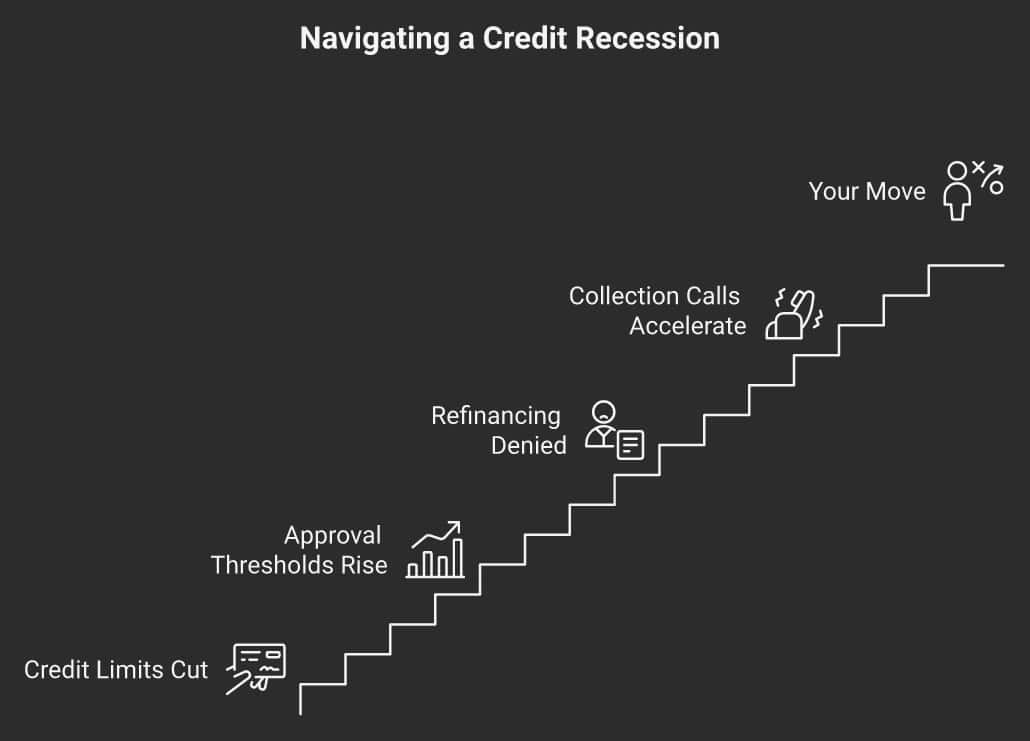
What This Pattern Means for Borrowers: When lenders get cautious, approval criteria tighten within 30-60 days. Higher minimum credit scores, lower debt-to-income thresholds, more income verification, sudden credit limit reductions. The people who get hurt most are the ones who wait another month to apply — by then, the invisible bar has moved higher.
I’ve Seen This Movie Before
I ran a credit counseling organization for over a decade before shutting it down in 2006 — so when the 2008 credit crunch hit, I watched it unfold knowing exactly what was happening inside the lending machine. One month, people were getting approved for consolidation loans and balance transfers. The next month, people with the same income and same credit scores were getting denied. Credit card companies started slashing limits from $8,000 to $2,000 with no warning. Collection calls went from starting at 90 days late to 30 days late.
The credit didn’t disappear because consumers changed. It disappeared because lenders changed their risk appetite. And that’s exactly what Dimon is signaling right now.
“When lenders are forced to tighten their lending standards, switch to secured lending, eliminate certain types of loans, or exit the consumer credit market altogether… high-risk borrowers are left with fewer credit sources.”
— Abigail Faust, The Acoustic Separation of Consumer Bankruptcy and Consumer Credit Laws (2021)
With $1.277 trillion in credit card debt — the highest ever recorded by the Federal Reserve — a lot of Americans are more exposed than they realize.
What to Think About Doing Right Now
This isn’t a “sell everything and hide under the bed” moment. Dimon himself said he’s “not forecasting anything” — he’s saying JPMorgan has to be prepared. You should be too.
Check your credit utilization this week. Pull your free reports at AnnualCreditReport.com. If you’re using more than 50% of any credit line, that card is a candidate for a sudden limit cut. Dispute any errors now — a 20-point credit score difference that didn’t matter last quarter might matter next quarter. And while you’re at it, make sure you’ve filed all your tax returns — the IRS just kept $1.2 billion in unclaimed refunds from people who didn’t file on time.
- If you’re planning to refinance or consolidate: Apply now, not in three months. SoFi’s cautious guidance suggests online lenders are already preparing to tighten. The approval window for borderline applicants is narrowing.
- If you’re only making minimum payments: You’re exactly who Dimon is talking about. A credit tightening makes your situation worse, not better — reduced limits mean higher utilization, which tanks your score, which means worse terms on everything else.
- If you’re considering your options: Schedule a free consultation with Damon Day, an independent debt coach and my co-host on the Get Out of Debt Guy podcast (I receive no payment for this referral), to build a debt triage plan before lenders start getting defensive. Don’t wait for the recession to start — prepare while you still have options.
- If your debt feels unmanageable: Take the Find Your Path quiz to see which approach fits your actual numbers. Federal Reserve research shows that people who file bankruptcy recover faster than those who grind through payments for years.
Key Terms Defined
Credit recession: A period when lenders collectively tighten lending standards, reduce credit availability, and increase denial rates — not because of a single event, but because risk models across the industry shift simultaneously.
Private credit: Loans made by non-bank investment firms (not traditional banks). Dimon noted there are now over 1,000 of these firms managing $1.8 trillion, and many have weaker underwriting standards.
Credit utilization: The percentage of your available credit you’re actually using. Above 30% hurts your score; above 70% makes you a target for limit cuts during tightening cycles.
Key Takeaways
- Jamie Dimon warned on April 28 that a credit recession will be “worse than people think” — the most direct warning from a major bank CEO since before the 2008 crisis
- SoFi’s refusal to raise guidance despite record results confirms lenders are already getting cautious about what’s ahead
- When lenders tighten, they don’t announce it — they quietly raise approval thresholds, cut credit limits, and deny refinancing applications
- If you’re carrying heavy balances or planning to borrow, the window to act is now — not after the headlines get worse
The Bottom Line
If you’re reading this with a knot in your stomach because you’re carrying balances you can’t pay down, I want you to hear this: the warning Dimon just issued is actually useful to you. It’s advance notice. Most people in 2008 didn’t get a warning — they found out when their credit card limit got slashed and their consolidation loan got denied on the same day. You’re reading this before that happens. Use the time. Check your credit, know your numbers, and talk to someone who can help you build a plan. Your debt doesn’t define you, and a bad credit cycle doesn’t have to be your story. I filed bankruptcy in 1990 and rebuilt everything. Whatever comes next, you have more options than you think — but only if you act while you still have them.
Frequently Asked Questions
What is a credit-led recession and how is it different from a regular recession?
A credit-led recession starts in the lending market rather than the job market. Instead of layoffs triggering loan defaults, lenders collectively tighten standards — reducing credit limits, raising approval thresholds, and denying refinancing. This makes existing debt harder to manage, which then causes defaults and job losses. The 2008 financial crisis was a credit-led recession.
Should I pay off my credit cards before a credit recession hits?
Focus on getting your utilization below 50% on every card. If you can’t pay them off entirely, prioritize the cards closest to their limit — those are most likely to get cut first. And protect your retirement accounts above all. Cashing out a 401(k) to pay credit cards is almost never the right move, even with a recession looming.
Will banks actually cut my credit limit without warning?
Yes. Banks can reduce your credit limit at any time with little or no notice. During the 2008-2009 credit crunch, millions of Americans had limits slashed — sometimes by 50% or more — even when they were making payments on time. Your good payment history doesn’t protect you when the lender’s risk model changes.
Is now a good time to apply for a debt consolidation loan?
If you’ve been considering it, apply sooner rather than later. SoFi’s flat guidance and Dimon’s warning both signal that underwriting standards are about to tighten. A consolidation loan you’d qualify for today might not be available in 60-90 days under tighter criteria. Check your credit report first and dispute any errors before applying.
What should I do if my debt already feels unmanageable?
Don’t wait for a recession to force the decision. Schedule a free consultation with Damon Day, an independent debt coach and my co-host on the Get Out of Debt Guy podcast, to understand your options (I receive no payment for this referral), or take the Find Your Path quiz. Bankruptcy isn’t failure — it’s a legal tool that Federal Reserve research shows helps people recover faster than grinding through payments for years.
This is what I’m seeing after 30 years of watching credit cycles come and go. Take it as one informed perspective from someone who’s been on both sides — as a debtor who filed bankruptcy and as someone who ran a credit counseling organization during the last crisis. Only you know your full situation. Use this as a signal to prepare, not a reason to panic. Nobody gets to tell you what to do with your money — not Jamie Dimon, not SoFi, and not me.
Next step: If you’re reading this and thinking “what do I actually do now?” — I wrote a 30-day recession prep checklist with the exact calls to make and numbers to run this week.
Dealing With Debt? Understanding your options is the first step. See how all your debt relief options compare — including ones most sites won’t tell you about. The Find Your Path quiz gives a recommendation based on your actual numbers, and the Scam-O-Meter checks any company’s complaint history before you sign. Federal Reserve research shows bankruptcy filers recover faster than those who don’t file.



