

“A foreclosure notice isn’t a life sentence. It’s a math problem. And math problems have more than one solution.”
Table of Contents
Each weekday I send one short email: one story that caught my attention, why it might matter to you, and one manageable thing you can do with it. A couple of minutes, and a dad joke.
In the latest issue (Oct 16): The check that looks like a scam may be real
Free. I sell nothing. Unsubscribe any time.
What You Need to Know
Foreclosure filings just hit their highest level in six years. In the first quarter of 2026, 118,727 properties entered foreclosure proceedings — up 26% from last year. That’s not a typo.
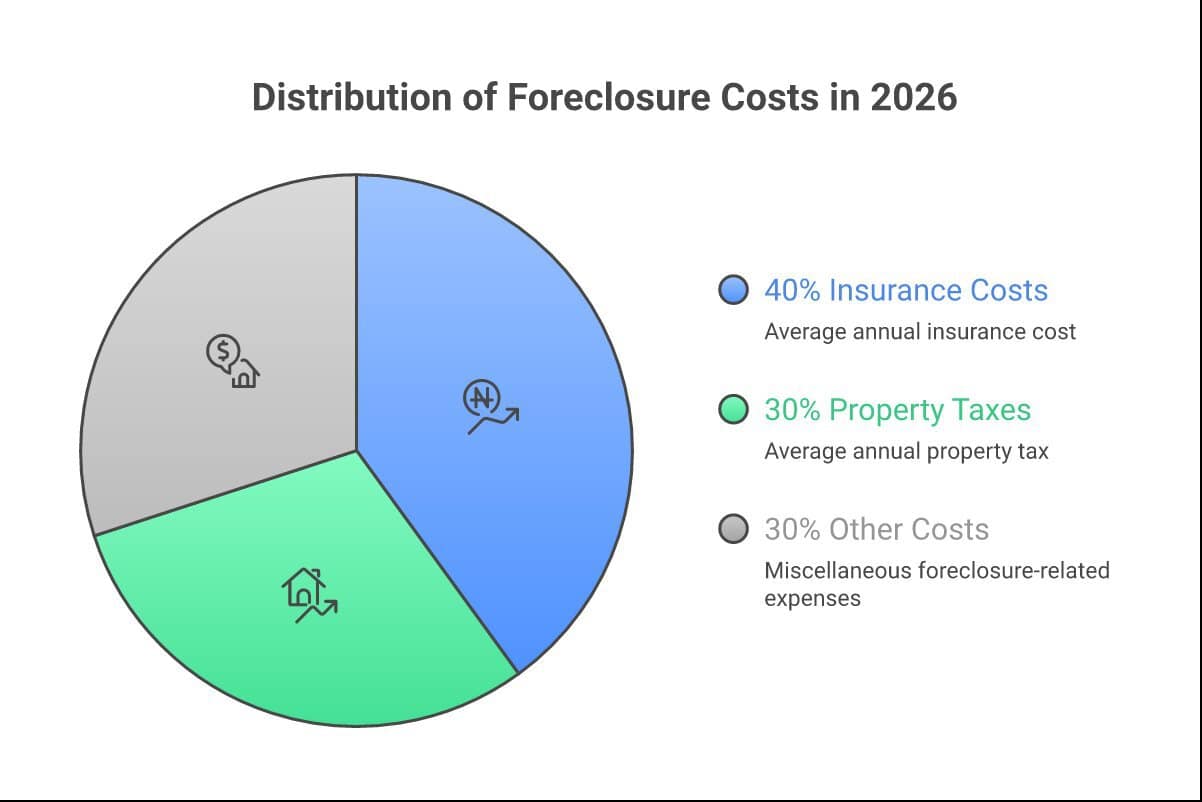
Two forces are driving this at the same time:
And the federal safety net just got smaller. The FHA’s “partial claim” program — which let homeowners tack missed payments onto a no-interest loan — just tightened its rules significantly. Borrowers now can only access it once every two years and must first make three consecutive on-time payments. That’s a catch-22 for someone already behind.
Why You Need to Know It
Here’s what 30 years of watching this tells me: the people losing homes right now aren’t irresponsible. They bought a house they could afford, and then the carrying costs changed around them.
Not every foreclosure comes from a mortgage lender. A homeowners association can foreclose over a few hundred dollars in unpaid dues, and in many states without ever going before a judge — here’s what to do if your HOA is foreclosing.
The hidden foreclosure trap: You can own a home outright and still go broke. Insurance premiums, property taxes, HOA fees, and maintenance costs don’t care about your mortgage payoff date. I’ve seen people with $200,000 in equity lose their home over a $15,000 insurance bill they couldn’t cover. I also wrote about your hurricane deductible and the money calls I’d make first after a storm.
The states getting hit hardest tell you who’s most vulnerable:
- Delaware — 1 in every 1,612 housing units affected
- Nevada — 1 in every 1,983
- Florida — 1 in every 2,067
- South Carolina — 1 in every 2,351
- Maryland — 1 in every 2,430
Notice anything? These are states where insurance costs have been skyrocketing — Florida, the Carolinas, coastal states. It’s not mortgage payments doing this. It’s the bills around the mortgage.
The Federal Safety Net Is Getting Smaller
Three things happened at once:
- FHA partial claim tightened (October 2025) — The program that let you roll missed payments into a no-interest loan is now restricted to once every two years, with a 30% lifetime cap. Many borrowers who already used it during COVID have no more room.
- VA loan rescue program killed — The VASP program that prevented veteran foreclosures ended in May 2025. More than 10,000 veterans have lost homes since.
- Homeowner Assistance Fund running out — The $9.96 billion HAF program ends September 2026 or when the money’s gone, whichever comes first. Many states have already exhausted their allocation.
Listen: Steve and Damon discuss this topic in detail on the latest podcast episode — AI Layoffs, Student Loans, and Social Security.
If you have an FHA loan and you’re behind: About 11.6% of FHA borrowers were delinquent as of March 2026. Analysts project roughly 250,000 distressed sales over the next 12-18 months. If you’re in this group, the window to access help is narrowing — not expanding.
Things to Consider
First — and this might sound counterintuitive — don’t panic-sell into a down market just because you got a scary notice. Foreclosure proceedings take months. You have time to think, but not time to waste.
Second, understand that home equity isn’t the same as financial security. If you have equity but can’t cover the carrying costs, that’s a different problem than being underwater. And it has different solutions. If you are underwater and need to sell, this crisis guide walks through the short-sale and deed-in-lieu path step by step.
Third, if unsecured debt is what’s making the mortgage impossible — credit cards, medical bills, personal loans eating the money that should go to housing — that’s exactly the scenario where bankruptcy can save the house rather than lose it. A Chapter 13 can stop foreclosure proceedings and restructure what you owe while you keep the property.
What to Think About Doing
- If you’re behind on your mortgage right now: Call your servicer (this is especially urgent if you’re facing an income disruption from family separation) today and ask about loss mitigation options. Don’t wait for the formal notice. The earlier you call, the more options exist.
- If you have an FHA loan: Check whether you’ve hit the 30% partial claim cap. If you have, your options just changed — a loan modification or forbearance may be your next step.
- If carrying costs (insurance, taxes) are the problem: Shop insurance aggressively — rates vary by 300% between carriers for the same coverage. Appeal your property tax assessment. These two moves alone can save $2,000-4,000/year.
- If unsecured debt is making the mortgage unaffordable: Talk to a bankruptcy attorney about Chapter 13. It can stop foreclosure AND restructure unsecured debt. You can also schedule a free consultation with Damon Day, an independent debt coach and my co-host on the Get Out of Debt Guy podcast, to sort out what makes sense — I receive no payment for this referral.
- If you’re current but worried: Build a 3-month escrow buffer. When insurance renews higher than expected, you want that shock absorbed, not cascading into a missed payment.
The Bottom Line: Foreclosures are surging because carrying costs are surging — not because people bought homes they couldn’t afford. The federal safety net is shrinking at exactly the wrong time. If you’re behind, the best day to call your servicer was last month. The second best day is today. And if other debt is what’s making the mortgage impossible, bankruptcy might be the tool that saves your home — not loses it.
This is what I’m seeing after 30 years of helping people navigate debt. Take it as one experienced perspective — but only you know your full financial picture. Use this as input for your thinking, not a directive. Don’t let anyone — including me — pressure you into a decision about your home before you understand all your options.
Dealing With Debt? Understanding your options is the first step. See how all your debt relief options compare — including ones most sites won’t tell you about. The Find Your Path quiz gives a recommendation based on your actual numbers, and the Scam-O-Meter checks any company’s complaint history before you sign. Federal Reserve research shows bankruptcy filers recover faster than those who don’t file.
If you’re the one facing it, not just reading the trend, see what to do right now if you’re facing foreclosure.



