

Quick Answer: Connecticut just erased medical debt for another 97,000 residents — but here’s the part that trips people up: you can’t apply for programs like this. They find you. So if you’re buried in medical bills and your state hasn’t called, the real question isn’t “how do I get on the list” — it’s “what can I actually do myself right now?” The answer is more than most people realize, starting with a federal right most hospital patients never use.
If you were a Labcorp patient before 2019, there’s also a concrete step you can take right now: the Labcorp $35 million AMCA data breach settlement is accepting claims through September 3, 2026 — and the data stolen includes exactly the kind of medical billing information that creates phantom collections.
Expert Context: In 30 years of helping people with debt, medical debt is the one kind almost nobody chose — you don’t “overspend” your way into a cancer diagnosis. That’s exactly why I get angry watching people pay hospital bills they were never legally required to pay in full, simply because no one told them the rules. The relief programs in the news are wonderful. But the tools you can use without waiting for a letter are the ones I want you to know about.
On June 2, Connecticut Governor Ned Lamont announced that another 97,000 residents will have medical debt erased — about $315 million wiped out in this round alone, bringing the state’s total to more than $513 million for over 252,000 people since 2024. It’s a genuinely good thing. But if you’re reading this from one of the other 49 states, or you’re in Connecticut and didn’t get a letter, the most useful thing I can do isn’t cheer the headline. It’s show you what you can do without waiting on anyone.
Each weekday I send one short email: one money story that caught my attention, why it might matter to you, and one manageable thing you can do with it. A couple of minutes, and a dad joke.
In the latest issue (Oct 14): Do you want the money back you left behind?
Free. I sell nothing. Unsubscribe any time.
Hawaii just took a different approach entirely — a new law that automatically erases medical debt going forward rather than relying on a charity buyout.
If you were a Labcorp patient before 2019, there’s also a concrete step you can take right now: the Labcorp $35 million AMCA data breach settlement is accepting claims through September 3, 2026 — and the data stolen includes exactly the kind of medical billing information that creates phantom collections.
Key Terms Defined
Undue Medical Debt: The nonprofit Connecticut partnered with. It buys bundles of old medical debt from hospitals and collectors for pennies on the dollar, then erases it instead of collecting. You cannot sign up — it works in the background with whatever debt it acquires. So while it’s worth knowing about, it is not a plan you can count on.
Charity care (Financial Assistance Policy): Under IRS Section 501(r), every nonprofit hospital is legally required to have a written financial assistance policy and to check whether you qualify before sending your bill to collections. This is the tool you CAN use — and almost nobody does.
The Federal Right Most Hospital Patients Never Use
Here’s the thing that should make you sit up: if you were treated at a nonprofit hospital — and most hospitals in America are nonprofit — that hospital is required by federal law to offer financial assistance, and required to screen you for it before taking “extraordinary collection actions” like selling your debt, reporting it to credit bureaus, or garnishing your wages.
The income limits are often far higher than people assume — many programs cover families well above the poverty line, sometimes up to 400% of it. Yet most patients never ask, because the hospital quietly mails a bill instead of mentioning the policy. The bill arrives, panic sets in, and people start paying — or worse, put it on a credit card — money they may have never owed.
Do this before you pay a hospital bill: Call the hospital’s billing office and say exactly this — “I’d like to apply for your financial assistance policy under Section 501(r).” Ask them to send you the application and to hold collections while your application is reviewed. You can ask even after a bill has gone to collections. The worst they can say is no.
What You Can Actually Do in Your State — Right Now
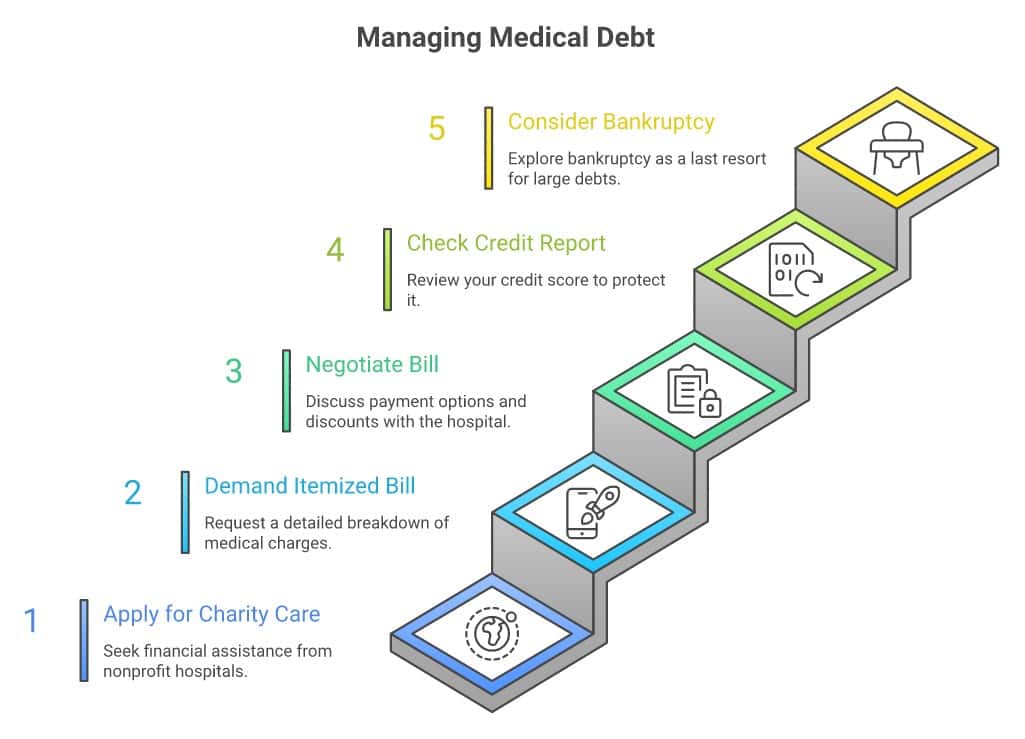
Whether or not a program like Connecticut’s ever reaches you, here’s the order I’d work through:
- Apply for hospital charity care first. The 501(r) policy above. This is the single most overlooked move, and it can erase a bill entirely.
- Demand an itemized bill and check it. Medical billing error rates are notoriously high. Ask for a line-by-line itemized statement and dispute anything you didn’t receive or can’t identify.
- Don’t assume the debt is collectible — or that it’s hurting your credit the way you think. The three major credit bureaus voluntarily stopped reporting medical debts under $500 back in 2023. A broader federal rule to remove all medical debt from credit reports was finalized in early 2025 but then vacated by a federal court in mid-2025 — so the picture is mixed and changing. Pull your credit report and see what’s actually there before you pay to “protect your score.”
- Negotiate. Hospitals expect it. The “sticker price” on a medical bill is almost never what insurers actually pay. Ask for the cash-pay or self-pay rate, then ask for a discount on top of that. Many hospitals will cut a bill substantially for a lump sum or a no-interest payment plan.
- Check whether your state has its own program or law. A growing number of states have passed medical-debt protections or run debt-cancellation partnerships. Search “[your state] medical debt assistance” — and if you’re in a state with hospital charity-care laws on the books, those can be stronger than the federal floor.
If the Bills Are Bigger Than Any of This Can Fix
Sometimes the medical debt is just too large — a long hospitalization, a chronic illness, a six-figure surgery. When charity care and negotiation can’t close the gap, I want you to know the option the hospital will never mention: medical debt is unsecured debt, and unsecured debt is fully dischargeable in bankruptcy. There’s no special “medical bankruptcy,” but medical bills are among the easiest debts to wipe out completely in a Chapter 7. For someone facing a number with no realistic path to pay it, that’s not failure — it’s the fresh start the system was built to provide. If you’re not sure where your situation falls, the Find Your Path quiz walks through your real options based on your actual numbers.
The Daily Money Brief — Free, at 10 AM
Money you may be owed, scams to dodge, and the fine print decoded — the consumer money news that affects your wallet, every weekday.
Key Takeaways
- Programs like Connecticut’s can’t be applied for — they find you. Don’t wait on one.
- Nonprofit hospitals are federally required (Section 501(r)) to offer financial assistance and screen you before collections. Ask for it by name.
- Always get an itemized bill, check it for errors, and negotiate — the sticker price is rarely the real price.
- Medical debt’s effect on your credit is mixed and shifting; check your report before paying to “protect your score.”
- When the bill is too big to fix, medical debt is fully dischargeable in bankruptcy.
The Bottom Line
If you’re staring at a medical bill that feels impossible, take a breath: you have more rights than the hospital is telling you, and almost none of them require you to wait for a program to rescue you. Start with one phone call asking for the financial assistance policy by name — that single call has erased entire bills for people who assumed they were stuck. You didn’t choose this debt, and you are not obligated to pay a number nobody ever proved you owed. Connecticut’s good news is a reminder that medical debt isn’t permanent — and the tools to fight yours are already in your hands. Send this to anyone you know drowning in hospital bills; the call they’re afraid to make might be the one that sets them free.
Frequently Asked Questions
Can I apply to have my medical debt erased like the Connecticut residents?
No — and this is the key misunderstanding. Programs like Connecticut’s, run through the nonprofit Undue Medical Debt, buy bundles of debt and erase it in the background. There’s no application and no way to sign up. That’s exactly why you shouldn’t wait for one; focus on the tools you can use directly, starting with hospital charity care.
What is hospital charity care and how do I get it?
Under IRS Section 501(r), every nonprofit hospital must have a written financial assistance policy and screen you for it before pursuing aggressive collections. Income limits are often generous — sometimes up to 400% of the poverty level. Call the hospital’s billing office, say “I’d like to apply for your financial assistance policy,” and ask them to hold collections while it’s reviewed. You can ask even after the bill is in collections.
Is medical debt still on my credit report?
It’s mixed. The major credit bureaus voluntarily stopped reporting medical debts under $500 in 2023. A broader CFPB rule to remove all medical debt from credit reports was finalized in early 2025 but vacated by a federal court in mid-2025, so it never took effect. Pull your own credit report to see what’s actually being reported before you pay anything specifically to protect your score.
Should I negotiate a medical bill or just pay it?
Negotiate. The amount on a medical bill is rarely what insurers actually pay for the same care. Ask for an itemized statement, check it for errors, then ask for the self-pay or cash rate and a discount on top of that. Many hospitals will substantially reduce a bill for a lump-sum payment or set up a no-interest plan.
Can bankruptcy erase medical debt?
Yes. Medical debt is unsecured debt, and it’s among the easiest debt to discharge completely in a Chapter 7 bankruptcy. There’s no separate “medical bankruptcy,” but when a bill is simply too large for charity care or negotiation to fix, bankruptcy can wipe it out entirely and protect your retirement accounts in the process.
This is what I’m seeing after three decades of watching people fight medical bills they never should have paid in full. Take it as one informed perspective — but only you know your full situation, and only you can decide what’s right. Use this as input, not instruction. Nobody gets to tell you what to do with your money, including me. If this helped, send it to someone you love who’s lying awake over a hospital bill; one phone call asking for charity care could change everything.
If you were a Labcorp patient before 2019, there’s also a concrete step you can take right now: the Labcorp $35 million AMCA data breach settlement is accepting claims through September 3, 2026 — and the data stolen includes exactly the kind of medical billing information that creates phantom collections.
Dealing With Debt? Understanding your options is the first step. See how all your debt relief options compare — including ones most sites won’t tell you about. The Find Your Path quiz gives a recommendation based on your actual numbers, and the Scam-O-Meter checks any company’s complaint history before you sign. Federal Reserve research shows bankruptcy filers recover faster than those who don’t file.



