

If you’re a Spectrum customer, there’s a good chance your name, address, phone number, and email are now sitting in a hacker’s database. Charter Communications — the company behind Spectrum — confirmed a data breach this spring. And here’s the part most people get backward: the real danger isn’t what you think it is.
When folks hear “data breach,” they panic about identity theft — someone opening credit cards in their name, draining their bank account. So they rush to freeze their credit. But in this case, that’s mostly wasted motion. Let me explain what actually happened, and what the genuine threat is.
The danger from this breach isn’t a stranger opening a credit card in your name. It’s the phone call that already knows your name.
What You Need to Know
On April 1, 2026, a hacking group called ShinyHunters tricked a Charter employee into handing over login credentials — a scam called “vishing,” where the attacker calls pretending to be tech support. Once inside, they exported customer data from Charter’s systems. Charter confirmed the breach on May 26, 2026.
Each weekday I send one short email: one money story that caught my attention, why it might matter to you, and one manageable thing you can do with it. A couple of minutes, and a dad joke.
In the latest issue (Oct 9): Does Financial Literacy Make Financial Sense?
Free. I sell nothing. Unsubscribe any time.
The hackers claimed they stole over 40 million records. That number is almost certainly inflated — Charter only has about 32 million customers total, so 40 million records would exceed their entire customer base. Independent security researchers found a confirmed floor of at least 4.9 million unique individuals in the leaked data, with some estimates running to 13 million. Charter hasn’t confirmed a specific count.
The Daily Money Brief — Free, at 10 AM
Money you may be owed, scams to dodge, and the fine print decoded — the consumer money news that affects your wallet, every weekday.
A class action lawsuit (Case No. 3:26-cv-00850) was filed June 1, 2026 in federal court in Connecticut, alleging Charter failed to protect customer data adequately. It’s an allegation in the early stages — no court has ruled on whether Charter did anything wrong.
Here’s what was actually exposed: names, email addresses, home and work addresses, phone numbers, and account details. According to Charter’s own statement, no Social Security numbers, passwords, or payment card information were taken. That distinction changes everything about what you should do next.
Why You Need to Know It
In over 30 years of helping people with money problems, I’ve watched the scam industry get smarter every single year. And the most dangerous thing a scammer can have isn’t your Social Security number — it’s your trust. A breach like this hands them the exact tool they need to earn it. I made this same point about the Crunchyroll leak — the leaked data itself is rarely the disaster; what scammers do with it is.
Think about it. When a scammer cold-calls you and gets your name wrong, asks which bank you use, fumbles your address — your guard goes up. But when the caller already knows your name, your real address, your phone number, and that you’re a Spectrum customer? That call sounds legitimate. That’s the whole game.
The breach didn’t expose data that lets someone be you at the bank. It exposed data that lets someone fool you on the phone. Expect a wave of calls, texts, and emails over the coming months that look exactly like they’re from Spectrum — “We noticed suspicious activity on your account,” “Your bill is overdue,” “Click here to claim your data breach settlement.” They’ll know just enough about you to be convincing.
The mistake people are about to make: Rushing to freeze their credit and then assuming they’re protected. A credit freeze is a great tool — but it stops someone from opening accounts using your SSN. Your SSN wasn’t in this breach. Freezing your credit here is like installing a deadbolt on a door the burglar was never going to use, while leaving the window wide open. The window is the phishing call.
Things to Consider
Most data breach advice is copy-paste boilerplate: freeze your credit, sign up for monitoring, change your passwords. That advice exists because most breaches — like the Stellantis/Chrysler breach — do leak Social Security numbers or other sensitive data. This one didn’t — at least not according to what’s been confirmed. So the standard playbook mostly doesn’t fit.
That doesn’t mean do nothing. It means do the right thing instead of the reflexive thing. The right thing here is to assume that anyone contacting you about your Spectrum account — or about “your data breach” — might be a scammer using stolen information to sound real.
And if you want the extra peace of mind of a credit freeze anyway? Go ahead — it’s free and it never hurts to have one. Just don’t let it lull you into thinking the threat is handled. The threat is a phone call, and no credit freeze stops a phone call.
What to Think About Doing
- Treat every “Spectrum” contact as unverified. If you get a call, text, or email about your account, don’t respond to it directly. Hang up or close it, then reach Spectrum yourself through the number on your actual bill or by typing their website address in by hand. A real company is fine with you calling them back.
- Never click links in breach-notification emails. Scammers are already sending fake “Charter data breach — claim your settlement” emails. Any real settlement notice will come long after the lawsuit is resolved, and you’ll be able to verify it independently. Don’t click.
- Watch for the “account verification” trap. No legitimate company will call you and ask you to “verify” your password, PIN, or full Social Security number. If a caller asks, that’s your signal it’s a scam — hang up. This is the same playbook the scammers posing as the sheriff’s office use: a familiar, authoritative identity to lower your defenses.
- Tell the vulnerable people in your life. If you have an elderly parent or anyone who tends to trust a confident voice on the phone, this is the breach to warn them about. Scammers target people who’ll believe a caller who “already knows who they are.”
- Freeze your credit if you want the belt-and-suspenders protection. It’s free at all three bureaus and protects you against future breaches that do leak your SSN. Just don’t mistake it for protection against this one.
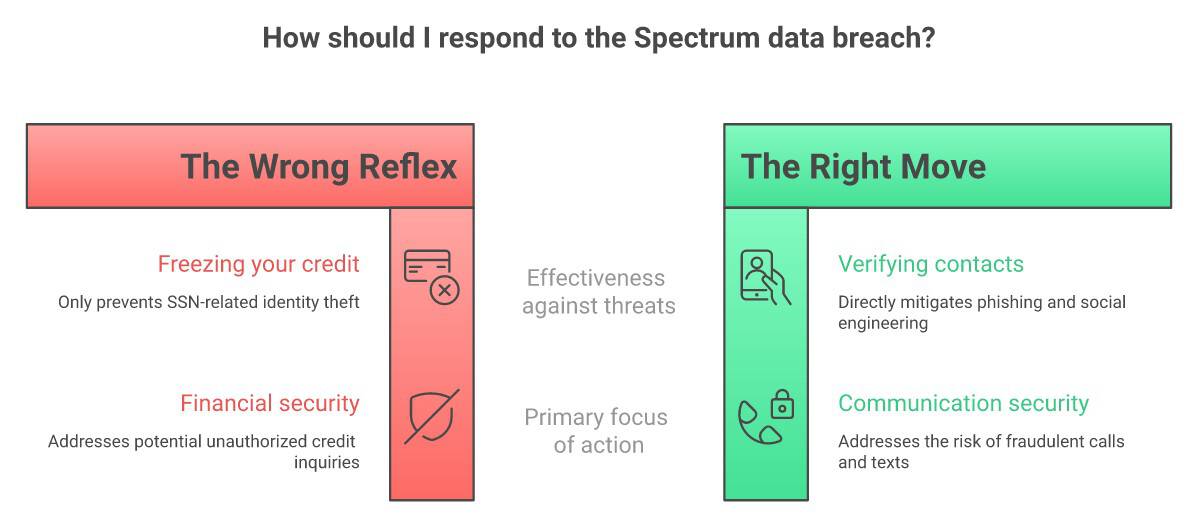
Myth: “A data breach means I need to freeze my credit immediately or someone will steal my identity.”
Reality: It depends entirely on what was leaked. Identity theft requires your Social Security number or financial account data. This breach leaked contact information — which fuels phishing scams, not direct identity theft. Match your response to the actual exposure, not to the word “breach.” (If your SSN has been exposed in a different breach and accounts are already being opened, that’s a different emergency with a different playbook.)
This is what I’m seeing after more than 30 years of watching how scams evolve. Take it as one informed perspective — but only you know your full situation. The point isn’t to scare you. It’s to make sure that when the convincing phone call comes, you recognize it for what it is. Use this as input for your decisions, not a directive. Nobody gets to tell you what to do — not me, not a caller who happens to know your name.
If someone you know is a Spectrum customer, send them this — especially anyone who tends to trust a phone call. The best defense against a scammer who knows your name is knowing they might call before they do.
Dealing With Debt? Understanding your options is the first step. See how all your debt relief options compare — including ones most sites won’t tell you about. The Find Your Path quiz gives a recommendation based on your actual numbers, and the Scam-O-Meter checks any company’s complaint history before you sign. Federal Reserve research shows bankruptcy filers recover faster than those who don’t file.



