

Fact-checked by Steve Rhode, consumer debt expert since 1994 • Last reviewed July 6, 2026 • Every claim below links to a primary source.
If you cosigned a loan and the borrower stopped paying, here is exactly what to do right now.
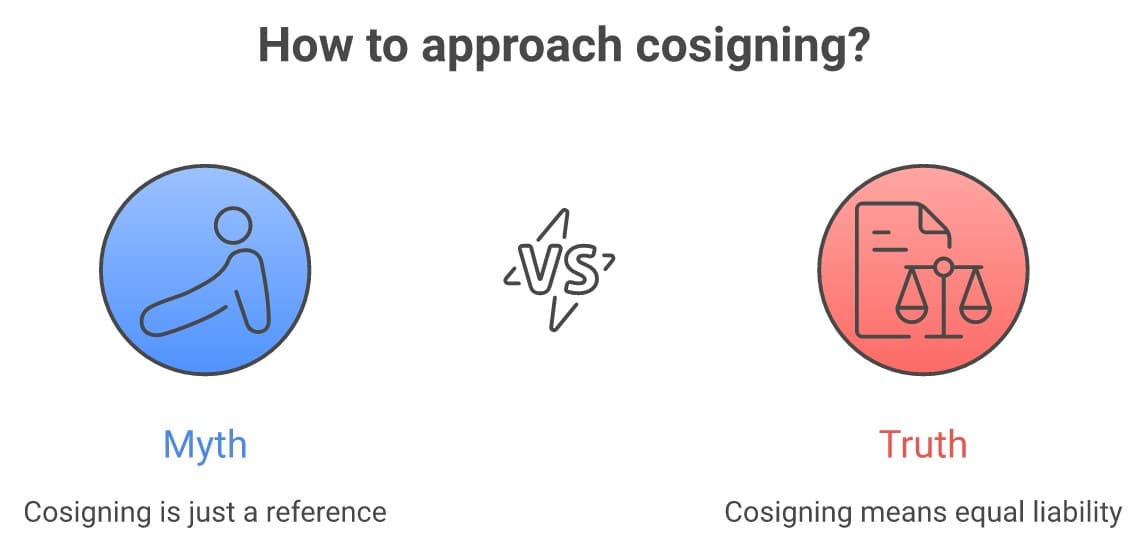
The verdict: Myth. A cosigner is not a reference or a character witness — you are equally and immediately responsible for the entire debt from the moment you sign. As the CFPB puts it, co-signers are “equally responsible for and legally obligated to repay the loan.” That matters because the lender can come after you first, and the debt can quietly block your own next loan even if every payment is made on time.
Each weekday I send one short email: one money story that caught my attention, why it might matter to you, and one manageable thing you can do with it. A couple of minutes, and a dad joke.
In the latest issue (Oct 9): Does Financial Literacy Make Financial Sense?
Free. I sell nothing. Unsubscribe any time.
I have to tell you about this. There’s a whole genre of loan-advice videos going around right now telling people that cosigning is no big deal — that you’re “basically just a reference,” and as long as your friend or your kid makes the payments, it never touches you. The pitch usually sounds something like this:
“He just needs me to cosign — I’m basically a reference. As long as he pays, it never affects me.”
I couldn’t let that sit. It’s one of the most expensive misunderstandings in all of personal finance, and if you believed it — and a lot of good-hearted people do — let me walk you through what’s actually going on.
Well, Actually…
Here’s the part those videos leave out: when you cosign, you don’t stand behind the borrower — you stand beside them, as an equal. The Federal Trade Commission thought this was such a common and costly misunderstanding that it wrote a warning the government requires many lenders to hand you, on its own separate page, before you sign. It’s called the Notice to Cosigner, and here is exactly what it says (16 CFR § 444.3):
“The creditor can collect this debt from you without first trying to collect from the borrower. The creditor can use the same collection methods against you that can be used against the borrower, such as suing you, garnishing your wages, etc. If this debt is ever in default, that fact may become a part of your credit record.” — FTC Notice to Cosigner, 16 CFR § 444.3
Read that first line again: the lender can come after you without ever trying the borrower first. You’re not the backup plan — you can be the first phone call. And notice something important the videos never mention: this can hurt you even if your friend never misses a payment. Because the loan is legally yours too, lenders count it against you when you go to borrow for yourself.
“I’m basically a reference — a cosigner is just the backup if the borrower doesn’t pay.”
A cosigner is equally and immediately liable for the full debt from signing day. The CFPB is blunt: “As a co-signer, you are taking full responsibility to pay back the loan.” The FTC-mandated notice confirms the lender can collect from you “without first trying to collect from the borrower.”
“As long as they pay on time, cosigning never affects me.”
It affects you the day you sign. As the FTC explains, “Your liability for the loan may prevent you from getting credit, even if the main borrower pays on time and you aren’t asked to repay the loan.” That’s because lenders count the cosigned loan among your total debts — your overall debt load — when they weigh you for your own mortgage or car loan. And on many loans, the borrower’s missed payments land on your credit report too (CFPB).
Free Tool — Contract Decoder: Have a contract from a debt relief company? The free Contract Decoder analyzes it for red flags, hidden fees, and problematic terms — before you sign anything. Decode My Contract →
Why You Were Told This
Two reasons, and neither one is looking out for you. First, the person asking you to cosign genuinely needs it — they were turned down on their own, which is the lender’s way of saying the loan is risky. “Just vouch for me” feels smaller and kinder than “take on my entire debt,” so that’s how the ask gets framed, often sincerely. Second, the lender is thrilled to have you: your signature is a second person they can collect from, which is the whole point. Nobody in that room is paid to slow you down and explain the risk — which is exactly why the FTC had to force the warning onto paper.
What to Actually Do Before You Cosign
- Assume you will pay the whole thing. Only cosign if you could comfortably absorb the entire debt yourself. If that answer is no, the loving thing is to say no — and offer help you can afford instead.
- Get access to the account in writing. Ask the lender to send you the statements and to alert you the moment a payment is late — not 90 days later when your credit is already damaged.
- Ask about a cosigner release. Some private student and personal loans let a cosigner apply to be removed after a stretch of on-time payments (CFPB). Know the terms before you sign, not after.
- Read the Notice to Cosigner if you get one. Finance companies and many non-bank lenders are required to give it to you by federal rule (16 CFR § 444.3). Banks and federal credit unions were subject to parallel rules that were repealed under Dodd-Frank, though regulators still expect them to provide similar disclosure. Whether or not you receive the notice, the legal risks are identical — no warning does not mean no liability.
Steve’s Take
In over 30 years I’ve watched cosigning end more relationships than almost anything else in personal finance — because it turns love into a lien. A parent cosigns for a child, the child struggles, and now the parent’s retirement is on the hook and Thanksgiving is tense. Here’s the reframe I offer: you can love someone completely and still not cosign. Saying “I can’t take on this debt, but I’m in your corner” protects both of you — your finances and the relationship. Cosigning isn’t a favor you do with a signature. It’s a debt you take on with your whole future.
Frequently Asked Questions
If I cosign and they pay every bill on time, does it still hurt me?
It can. The cosigned loan counts as part of your overall debt load when a lender weighs you for your own mortgage or car loan, so it can lower how much you qualify for — even if the borrower never misses a payment. The FTC says so directly: your liability for the loan may prevent you from getting credit even if the main borrower pays on time.
Can the lender come after me before going after the borrower?
Yes, on a standard consumer cosigner agreement. The FTC Notice to Cosigner states the creditor “can collect this debt from you without first trying to collect from the borrower.” (A rare instrument labeled a “guaranty of collection” can require them to try the borrower first — but standard cosigner contracts do not.)
Will their late payments show up on my credit report?
On many co-signed loans, yes — the CFPB confirms that late or missed payments on a co-signed loan can appear on both the co-signer’s and the borrower’s credit history. (The FTC’s required notice uses the word “default,” but the CFPB’s guidance is broader.) Ask your specific lender how it reports.
Is cosigning the same as being an authorized user?
No, and the difference is huge. An authorized user can use an account but generally isn’t legally liable for the debt. A cosigner is fully liable. If someone tells you cosigning is “like being added to the card,” they’re describing two very different things.
Can I get my name off a loan I already cosigned?
Sometimes. Some private student and personal loans offer a cosigner release after a period of on-time payments, or the borrower can refinance the loan into their own name alone. A verbal promise from the borrower does nothing — it takes the lender’s action to remove you.
Does this apply to federal student loans?
Traditional cosigning is a private-loan thing. Federal student loans don’t use cosigners the same way (a federal PLUS loan uses an “endorser,” and federal loans have their own collection rules). Everything here about cosigner liability refers to private loans — private student loans, auto loans, and personal loans.
This is one informed perspective after over 30 years of watching how these play out — take it as input for your decision, not the decision itself. Only you know your full situation and the person asking. Nobody, including me, gets to make this call for you.
The bottom line: Cosigning isn’t vouching — it’s taking on the entire debt as your own, from day one, with your credit and your paycheck on the line. If someone you know is about to cosign because they think they’re “just a reference,” send them this before they sign.
Dealing With Debt? Understanding your options is the first step. See how all your debt relief options compare — including ones most sites won’t tell you about. The Find Your Path quiz gives a recommendation based on your actual numbers, and the Scam-O-Meter checks any company’s complaint history before you sign. Federal Reserve research shows bankruptcy filers recover faster than those who don’t file.



