

If you just got the news that your job at Microsoft’s Xbox division is ending — or you’re bracing for it — I want to talk to you directly, because the next week matters more than most people realize. On July 6, 2026, Microsoft announced it is cutting about 4,800 jobs across the company, with the Xbox gaming division hit hardest — roughly 3,200 gaming jobs eliminated over the coming year and several studios being closed or spun off. After 30 years of helping people through exactly this kind of shock, here’s the honest truth: the biggest financial mistakes after a layoff don’t happen months later. They happen in the first two weeks, while you’re still stunned.
What You Need to Know
According to CNBC and other outlets, Microsoft is trimming about 2% of its global workforce, and gaming is absorbing the deepest cut — on the order of 20% of the Xbox workforce over the fiscal year. That’s thousands of talented people, many of them well-paid, suddenly facing a gap in income they never planned for.
Here’s what I’ve learned watching this happen to thousands of people: a good salary does not protect you from a layoff’s financial damage. In some ways it makes the fall steeper, because the lifestyle, the mortgage, and the monthly obligations were all built on that paycheck. The good news is that the first-week moves that protect you are the same whether you made $50,000 or $250,000.
Why You Need to Know It
The window to protect yourself is before the money runs low, not after. Creditors, benefit programs, and even your own stock options all have clocks running the moment your employment ends — and most of those clocks work against you if you wait. The instinct after a layoff is to freeze, or to panic and make a big irreversible move. Both are costly. Deliberate action in the first week is what separates people who bounce back from people who spend years digging out.
The Daily Money Brief — Free, at 10 AM
Money you may be owed, scams to dodge, and the fine print decoded — the consumer money news that affects your wallet, every weekday.
Each weekday I send one short email: one money story that caught my attention, why it might matter to you, and one manageable thing you can do with it. A couple of minutes, and a dad joke.
In the latest issue (Oct 14): Do you want the money back you left behind?
Free. I sell nothing. Unsubscribe any time.
The single most expensive mistake I see: cashing out a 401(k) in the first month of panic. Pull money from a retirement account before age 59½ and you typically lose a big chunk to taxes and a 10% penalty — often 30% or more gone instantly — plus the decades of growth that money would have earned. There are almost always better bridges (severance, unemployment, hardship forbearance) to cross first. Don’t torch your future to survive this month until you’ve exhausted the other options.
If you received UI benefits during the layoff and now got an overpayment notice, see the unemployment overpayment crisis guide — you have appeal rights and possibly a complete waiver.
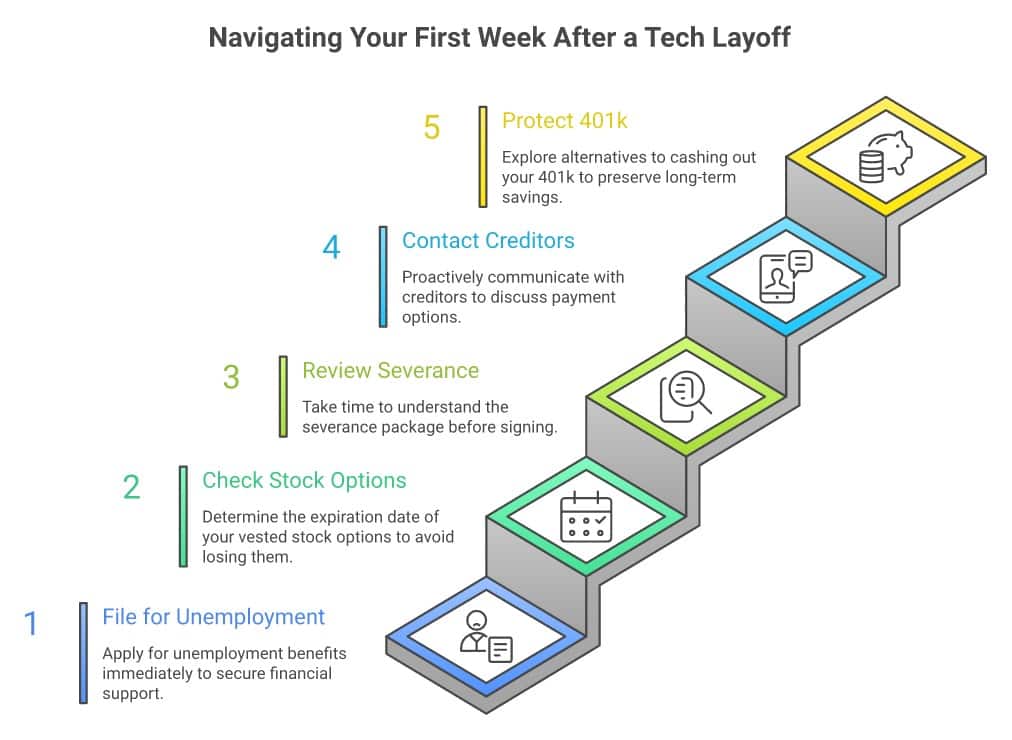
Things to Consider — Especially If You’re a Tech Worker
Layoffs in tech come with a few wrinkles that a general layoff guide won’t warn you about:
- Your stock options have a countdown. Unvested RSUs generally vanish when you leave. Vested stock options often come with a short window — commonly around 90 days — to exercise them before they expire. Find your exact deadline in your grant documents this week, before it slips by unnoticed in the chaos.
- Don’t sign the severance agreement the same day. If you’re over 40, federal law generally gives you 21 days to consider a severance/release agreement (and 45 days in a group layoff), plus 7 days to revoke after signing. The terms are often more negotiable than they look. Read it carefully — ideally with an employment attorney — before you sign away any rights.
- Ask about WARN Act notice. Large layoffs may trigger the federal WARN Act, which can entitle affected workers to 60 days of notice or pay. Ask your HR contact whether it applies to you.
- File for unemployment the same day you’re eligible. Benefits don’t backdate in most states, and delays cost you real money. A high salary doesn’t disqualify you — file.
- Sometimes the right first move is to breathe, not to slash. If you have severance and a cushion, you may have more runway than the panic is telling you. Do the math before you make a drastic cut — forward-looking math beats reactive fear every time.
Free Tool — Contract Decoder: Have a contract from a debt relief company? The free Contract Decoder analyzes it for red flags, hidden fees, and problematic terms — before you sign anything. Decode My Contract →
What to Think About Doing — This Week
- File for unemployment immediately. Same day you’re eligible. Don’t wait to see if you land something first.
- Find your RSU and stock-option deadlines. Dig out the grant documents today. The exercise window is short and unforgiving.
- Don’t sign severance on the spot. You likely have 21 to 45 days. Use them. Consider an employment attorney for anything with a big number attached.
- Call your creditors before you miss a payment. Ask about hardship forbearance now — the ask is far easier before a late mark hits your credit than after. Mortgage servicers, card issuers, and auto lenders all have hardship programs most people never ask about.
- Protect your retirement. Make cashing out the 401(k) the last resort, not the first.
- If the debt was already tight, get a clear read on your options. A layoff can turn a manageable situation into a scary one fast. You have more paths than you think — and figuring out which one fits your numbers shouldn’t cost you anything.
I wrote a step-by-step guide for exactly this moment — what to do first when you’ve lost your job and can’t pay your bills — including which debts to pay first and what income collectors legally can’t touch. And if you’re staring at a severance agreement right now, here’s what to check before you sign it.
If you know someone at Xbox — or anywhere else — who just got hit, send them this. A calm, specific checklist in the first shocked week can save someone thousands of dollars and months of stress. That’s worth a two-minute forward.
This is what I’m seeing after 30 years of helping people through job loss and debt. Take it as one informed perspective — but only you know your full situation. Use this as input for your decision, not a directive. Nobody gets to tell you what to do with your money. Not me, not anyone.
Dealing With Debt? Understanding your options is the first step. See how all your debt relief options compare — including ones most sites won’t tell you about. The Find Your Path quiz gives a recommendation based on your actual numbers, and the Scam-O-Meter checks any company’s complaint history before you sign. Federal Reserve research shows bankruptcy filers recover faster than those who don’t file.



