

Written by Steve Rhode, consumer debt expert since 1994 • Last updated July 10, 2026
Quick Answer: A collector is trying to collect an old debt — often called “zombie debt.” Here is the single most important thing to know first: in most states a collector can still call or write you about an old debt, but once the statute of limitations has passed they cannot legally sue you or threaten to sue (12 CFR § 1006.26(b)). The trap: making a partial payment or even admitting the debt is yours can restart the clock in some states and revive their right to sue. So don’t pay, don’t promise to pay, and don’t confirm anything until you know how old the debt is.
What Just Happened
Old debts don’t just disappear. When you stop paying a debt, the original creditor often sells it — for pennies on the dollar — to a debt buyer. That debt buyer may sell it again. Years later, a collector you’ve never heard of buys a spreadsheet of these forgotten accounts and starts working the phones. That’s why you’re getting a call about something you’d half-forgotten existed.
If that same collector also contacted a family member about the debt, that’s a separate issue with its own rules — see A Debt Collector Called My Family About My Debt. Here’s What to Do Right Now.
Every state sets a time limit — the statute of limitations — on how long a creditor or collector has to sue you over a debt. Once that window closes, the debt is “time-barred.” The debt doesn’t vanish, but the collector loses the most powerful tool they have: the ability to take you to court and win a judgment.
The Mistake You’re About to Make: Saying “yes, that’s my debt” or sending a small “good faith” payment to make the calls stop. In some states, a partial payment or a written acknowledgment that you owe an old debt may restart the statute of limitations — handing the collector back the right to sue you on a debt that was legally too old to enforce. State law varies a lot here: in most states that allow the clock to restart, it takes a payment or a written acknowledgment, and simply saying “I remember that” on a phone call usually does not restart it — but the rules differ by state, so the safe move is to stay silent about the debt until you know its age. The kind offer to “settle for just $50 today” is often a trap to reset the clock. Don’t pay or confirm anything until you know the debt’s age. I wrote a separate fact-check on this exact advice: why a small good-faith payment is not automatically harmless.
Free Tool — Statute of Limitations Checker: Dealing with old debt? The free Statute of Limitations Checker tells you if the collection clock has expired in your state — including the zombie debt and clock-restarting traps collectors use. Check My Status →
Your Options Right Now
What to Do in the Next 48 Hours
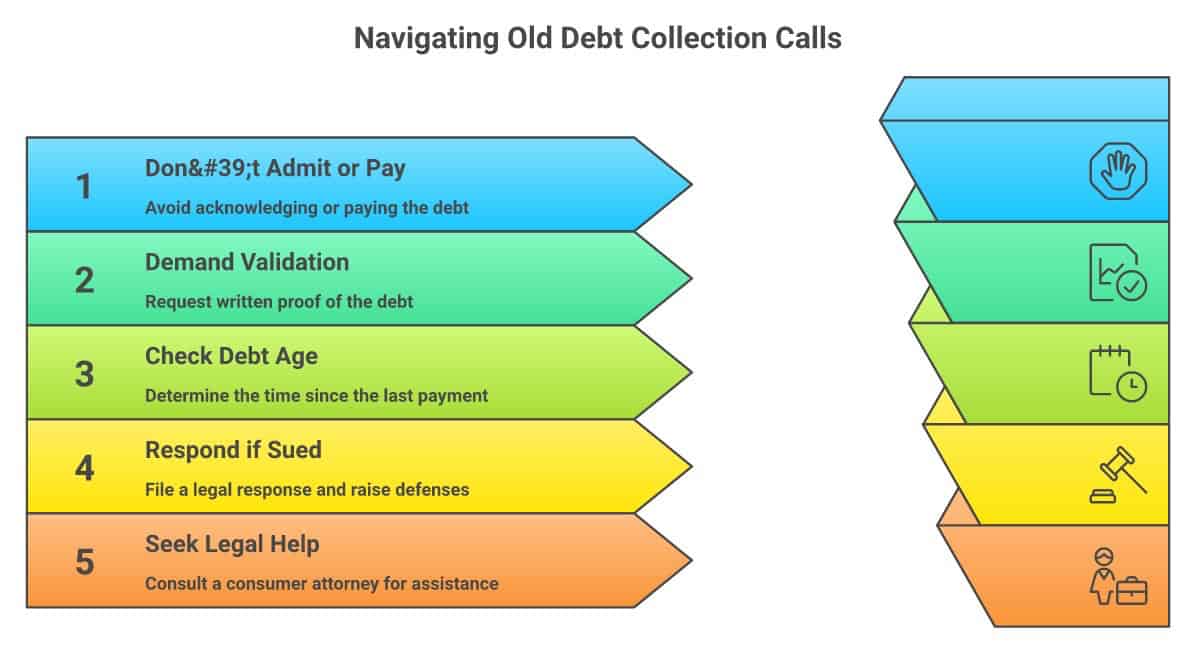
- Don’t admit the debt is yours and don’t pay a dime yet. Be polite but say only: “Send me everything in writing.” Anything you say confirming the debt can be used to restart the clock.
- Demand written validation. Within five days of first contact, a collector must send validation information. You then have 30 days from when you receive that validation notice to send a written dispute demanding proof they own the debt, the amount, and the original creditor (15 U.S.C. § 1692g) — and once you dispute in writing, the collector must stop collecting until they verify. Send it certified mail and keep a copy. Use the free Debt Validation Letter Generator. If the 30 days have already passed, see what that does and does not change.
- Find out how old the debt is. The clock generally runs from your last payment or last activity — not from when the collector called. Check your state’s limit and debt type with the free Statute of Limitations Checker. If it’s past the limit, the debt is time-barred.
- If they sue you, DO NOT ignore it — file a response and raise the statute of limitations as a defense. This is the one that ruins people. The time-barred defense is not automatic — if you don’t show up and raise it, the court can still enter a default judgment against you on a debt they could never have won on. Answer the lawsuit.
- Get free help if you’re sued. A consumer attorney through NACA can raise the defense for you, and if the collector sued knowing the debt was time-barred, that’s an FDCPA violation you may be able to counter-sue over. Or talk to Damon Day for free. Damon Day, an independent debt coach and my co-host on the Get Out of Debt Guy podcast, whom you can reach at DamonDay.com — I receive no payment for this referral.
Free Tool — Debt Validation Letter Generator: Being contacted by a debt collector? The free Debt Validation Letter Generator creates a personalized FDCPA validation letter in seconds — forcing the collector to prove the debt is real before they can continue. Generate My Letter →
How to Actually Stop It — Your Paths
- Prove it’s time-barred and it stops having teeth. Once you establish the debt is past your state’s limit, the collector cannot sue or threaten to sue. Many will move on to easier targets. You can send a written demand that they stop contacting you (an FDCPA cease-contact request), and they must stop except to confirm they’re ending contact or to notify you of a specific legal action.
- Dispute it if it’s not yours or the amount is wrong. Debt buyers work off messy spreadsheets. If validation doesn’t prove they own your debt for the right amount, dispute it in writing — they must stop collecting until they verify.
- Negotiate only with eyes open — and get it in writing first. If you genuinely want to resolve a time-barred debt (for your own peace of mind), understand that even discussing payment can restart the clock in some states. Never pay until you have a written agreement, and consider getting a written statement that the payment does not revive the debt.
- What WON’T work: Paying a small amount “just to make it stop.” That’s the move most likely to backfire — it can wake a dead debt back up and expose you to a lawsuit you were already protected from.
What You Need to Know About Your Rights
Under the CFPB’s Regulation F, a debt collector must not bring or threaten to bring a legal action to collect a time-barred debt. This applies even if the collector didn’t know the debt was too old — the CFPB affirmed it’s a strict rule. It even reaches time-barred mortgage foreclosure actions.
| What the collector CAN do | What the collector CANNOT do | Your move |
|---|---|---|
| Call and write asking you to pay | Sue or threaten to sue after SOL passes | Don’t confirm or pay; demand validation |
| Report certain debts within credit-reporting time limits | Use false or deceptive threats of legal action | File a CFPB complaint if they threaten to sue |
| Offer to “settle” the old debt | Trick you into reviving it without saying so | Never pay to restart the clock; get it in writing |
Note: Statute-of-limitations rules vary widely by state and by the type of debt (credit card, written contract, medical, auto). Some states even treat a written acknowledgment differently from a payment. See the full zombie debt guide for the deeper state-by-state and tax-trap details.
If a collector threatens to sue you on a debt you believe is time-barred, file a complaint with the CFPB and your state attorney general. If you need legal help but can’t afford an attorney, find free legal aid through LSC.gov.
Steve’s Take
I filed bankruptcy in 1990, so I know the particular dread of a phone call about money you thought was long behind you. Here’s what I want you to hear: an old debt calling is not an emergency — it’s a test of whether you’ll accidentally hand a collector back the power they already lost. I’ve watched people, in a moment of guilt, send a $25 payment to “do the right thing” and wake up a dead debt into a live lawsuit. The math beats the shame every time. Slow down, get it in writing, learn the debt’s age, and don’t let a stranger with a spreadsheet talk you out of protection the law already gave you.
If the debt in question was actually discharged in your bankruptcy (not just old), the rules are different and stronger — see A Creditor Won’t Stop Collecting After My Bankruptcy Discharge. Here’s What to Do Right Now. for how to enforce your discharge for free.
Frequently Asked Questions
A collector is calling about a really old debt — can they still make me pay?
They can ask, but in most states they can’t force you. Once the statute of limitations has passed, a collector can still call or write, but they cannot legally sue you or threaten to sue (12 CFR § 1006.26(b)). You are not required to pay a time-barred debt, and paying can actually work against you.
If I make a small payment, will it make the calls stop?
It might stop the calls — but it can also restart the statute of limitations. The CFPB warns that a partial payment or acknowledging you owe an old debt may restart the time period, reviving the collector’s right to sue. In the states that allow a restart, it takes a payment or a written acknowledgment — an oral statement on a call usually does not — but state law varies, so the safest approach is to make no payment and confirm nothing until you know the debt is time-barred. Never pay a time-barred debt to make calls stop without understanding this risk.
How do I know if my debt is too old to be sued over?
The clock generally runs from your last payment or last activity on the account, and the length depends on your state and the type of debt. Use the free Statute of Limitations Checker to estimate whether your debt is time-barred.
The collector is threatening to sue me — is that legal?
If the debt is time-barred, no. Under Regulation F, a collector must not sue or threaten to sue on a time-barred debt, and the CFPB says this applies even if they didn’t know the debt was too old. A threat to sue on a time-barred debt may be a violation you can report and even counter-sue over.
I got served with a lawsuit over an old debt — what do I do?
Do not ignore it. The statute-of-limitations defense is not automatic — if you don’t show up and raise it, the court can enter a default judgment against you even on a debt they could never have won on. File a response and raise the time-barred defense, and get a consumer attorney through NACA if you can.
Does the debt disappear once the statute of limitations passes?
No. Time-barred means they can’t sue you over it, but the debt technically still exists and a collector can still ask you to pay. It’s the enforceability in court that goes away, not the debt itself.
Can they keep it on my credit report forever?
No — credit reporting has its own separate time limit (generally about seven years for most negative items), which is different from the statute of limitations on suing. A debt can be past the suing limit but still appear on your report, or vice versa. Don’t confuse the two clocks.
Can I just make them stop calling?
Yes. You can send a written request telling the collector to stop contacting you. Under the FDCPA, once they receive it they must stop, except to confirm they’re ending contact or to notify you of a specific action. Send it certified mail and keep a copy.
One more thing — everything I share here is based on 30 years of helping people through exactly this. But my advice is input for your decision, not the decision itself. Only you know your full situation. Talk to an attorney, look at your numbers, and make the choice that serves your future.
Important: This guide is for informational purposes only and is not legal advice. Statute-of-limitations laws vary significantly by state and by debt type, and your situation may have details that change your options. For legal advice specific to your case, consult an attorney licensed in your state. NACBA can help you find a bankruptcy attorney, NACA can connect you with a consumer attorney, or talk to Damon Day for free about your situation. Damon Day, an independent debt coach and my co-host on the Get Out of Debt Guy podcast, whom you can reach at DamonDay.com — I receive no payment for this referral.
Key Takeaway: A call about an old debt is not an emergency — but your response matters enormously. Don’t confirm the debt, don’t pay to make it stop, learn its age with the Statute of Limitations Checker, and if you’re ever sued, answer and raise the time-barred defense. The people who slow down and check the clock keep the protection the law already gave them.
The Bottom Line
If a collector’s call about an old debt made your stomach drop, take a breath — you did nothing wrong by falling behind years ago, and the law built in a time limit precisely because old debts get messy, resold, and misremembered. The system already handed you a shield; the only way to drop it is to pay or admit the debt before you know how old it is. Learn the clock, keep your protection, and don’t let a stranger’s guilt trip cost you a lawsuit you were already safe from. If someone you know is getting calls about an old debt, send them this page — one wrong “good faith” payment can undo years of legal protection, and most people have no idea. Start with the Statute of Limitations Checker or the Find Your Path quiz. And if the “debt” a collector is calling about is actually court-ordered criminal restitution rather than an old bill, the rules work differently — see what actually protects you when restitution goes to a collection agency.
Dealing With Debt? Understanding your options is the first step. See how all your debt relief options compare — including ones most sites won’t tell you about. The Find Your Path quiz gives a recommendation based on your actual numbers, and the Scam-O-Meter checks any company’s complaint history before you sign. Federal Reserve research shows bankruptcy filers recover faster than those who don’t file.
Right now you are dealing with the thing in front of you, and that is exactly where your attention belongs. When it is handled — and it will be — there is a next stage, and it is the one I most enjoy writing about.
In the latest issue (Nov 13): The shelf price isn't always what you pay
Each weekday I send one short email: one story that caught my attention, why it might matter to you, and one manageable thing you can do with it. It is free, I sell nothing, and I take no money from any company I write about.



