

Quick Answer: Talking about debt-related mental health issues helps because 39.71% of people seeking debt help scored in the severe range of a depression screen, with many considering suicide as bankruptcy seems like failure. Financial PTSD compounds the problem by preventing clear thinking, making professional guidance crucial for those overwhelmed by debt.
People with problem debt are likely to be depressed. My own study in 2001 found that of those people who reached out for help 39.71% scored in the severe range of a depression screen and another 9.56% scored in the moderate range. Women tended to be more likely to show symptoms of depression than men.
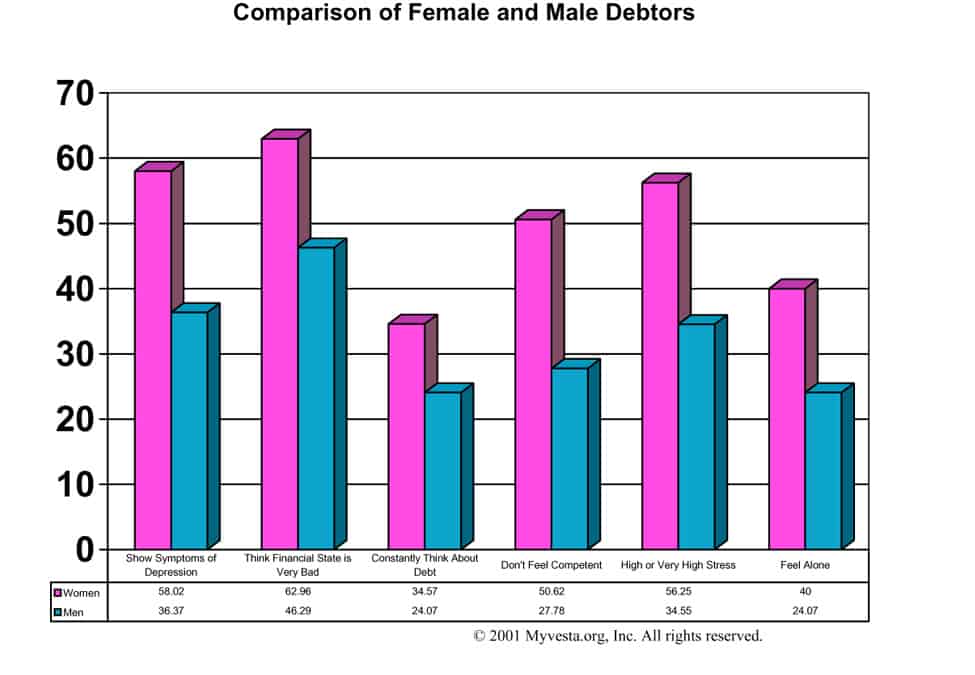
You can read more about this study at Survey Finds Debt Equals Depression For Many: Women at risk to suffer with financial depression.
In my experience, once people are generally feeling blue, hopeless, or depressed about their financial situation it is not a huge step for some to be scared or afraid about bankruptcy and contemplate suicide to deal with their situation.
Each weekday I send one short email: one story that caught my attention, why it might matter to you, and one manageable thing you can do with it. A couple of minutes, and a dad joke.
In the latest issue (Nov 12): A 10% cap on your credit card rate? Here's what's real.
Free. I sell nothing. Unsubscribe any time.
I’ve seen more people with student loan debt reach out to me and express their frustration and desire to kill themselves over their debt. It’s a tragedy.
But it does not end there. People who are living through financial problems are also more likely to suffer from Financial PTSD. Yes, this is a real condition. You can learn more about it here.
In Financial PTSD, the symptoms, like depression, are more likely to lead those suffering with a significantly low ability to clearly see their situation for what it really is and not what they think it really is.
The pure tragedy is when people actually do commit suicide over their debt because they look at bankruptcy as an unhealthy way out of their situation. Popular media and some personal finance experts try to talk people out of bankruptcy for a number of self-serving reasons and because they simply don’t understand the truth and reality of modern bankruptcy.

A good bankruptcy attorney is not a legal technician but someone who can literally save lives. And in conjunction with appropriate mental health treatment for the underlying depression and Financial PTSD, a bankruptcy is a flat out lifeline to a new and better life.
Over the years I think I’ve seen all sorts of life tragedies created by problem debt. From the solitary suicide to the killing of the spouse so they don’t have to confess their debt, or the killing of the entire family to avoid the perceived shame of debt. There is no shortage of unclear thinking and incorrect actions which end lives rather than repairing them.
If you are lamenting over bankruptcy, get the facts and meet with a local bankruptcy attorney before you decide suicide is the way to deal with your debt. If you are thinking that way I’m clearly telling you, you are wrong.
You can click here to find a local bankruptcy attorney and talk to them for free about your specific situation. Get the facts and then you can make an informed and educated decision if bankruptcy is right for you.
On a scale of 1 to 100 with 100 being the worst and suicide, bankruptcy in all realities is a an 8. It really takes a little bit of effort to move on from bankruptcy and have a much better and safer financial future.

Before You Sign Anything: Run any debt relief contract through the free Contract Decoder to spot hidden fees and unfair terms. Check the company’s complaint history with the Scam-O-Meter.
Compare Your Real Options: Most debt relief companies won’t tell you about all your options — especially the ones they can’t profit from. Credit counseling has a 21-27% completion rate. Settlement resolves about 1% of enrolled debts fully. Chapter 7 bankruptcy generally ends in a discharge for individual filers in more than 99% of cases, excluding cases dismissed or converted (U.S. Courts) — and protects your retirement. Take the Find Your Path quiz for a recommendation based on your actual numbers.



