

Quick Answer: Bad financial advice typically comes from popular gurus who use “authoritative nastiness” and blame individuals for debt problems beyond their control. Author Helanie Olen’s book “Pound Foolish” exposes how figures like Dave Ramsey and Suze Orman create blind followers rather than independent thinkers.
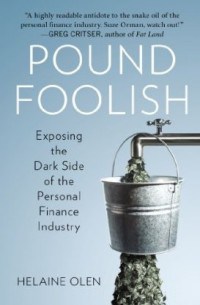 Author Helanie Olen has recently released a new book title Pound Foolish: Exposing the Dark Side of the Personal Finance Industry.
In this book she discusses the blind faith of many to follow the personal finance advice of popular financial gurus without question.
She also talks about the issues surrounding financial literacy and the fallacies about it’s effectiveness.
Each weekday I send one short email: one story that caught my attention, why it might matter to you, and one manageable thing you can do with it. A couple of minutes, and a dad joke.
In the latest issue (Nov 13): The shelf price isn't always what you pay
Free. I sell nothing. Unsubscribe any time.
For me it’s a real breath of fresh air to hear someone question these issues as I have for decades.
I always find it interesting that my message is to question and do research but people latch on to the advice of gurus like Orman and Ramsey, blindly. Even when it makes no sense at all.
As an example, see Dave Ramsey’s Hatred of Bankruptcy and Credit Cards Makes No Logical Sense.
The Olen interview below is worth the investment in time to watch. It will help to open your eyes to the blind trust in bad advice.
Authoritative nastiness is a very interesting term Olen uses for the advice given by financial gurus like Suze Orman, David Bach and Dave Ramsey. The pundits become very set in their ways and blame the individual for the cause of their debt problems. This puts an ufair burden on the individual for matters that are truly beyond their control, leaving them feeling guilty.
I believe that the pundits like Suze Orman, David Bach and Dave Ramsey do offer some good advice, but their fans seem more like true believers rather than independent thinking educated students.
Olen goes on to talk about the lack of proof that financial literacy makes a significant difference and that in fact some financial brands use financial literacy courses as a way to “indoctrinate” young minds to their bank or product.
This is a topic I talked about in Financial Literacy is Not a Vaccine, nor is it a Solution. It is an Excuse.
On why she loathes personal finance Gurus:
“These people are telling us, hey, just buy a few umbrellas and sand bags and no matter what wave comes your way, you’re going to be fine. And, by the way, they’re the ones selling us the sandbags and umbrellas and they don’t often disclose that.”
On why tips aren’t enough to save consumer finances:
“What they’re doing is they’re denying the pressures that are on us. Our salaries have stagnated and fallen for well over a decade now. And what they’re doing is saying, you’re going to be fine if you’re living within your means while they ignore the fact that our heath care costs have gone up at rates beyond inflation, housing has gone up at rates beyond inflation, education has gone up at rates beyond inflation.”
On why finance gurus have so much pull with consumers:
“We’re nuts when it comes to money and all we want is someone to tell us what to do. Most of us don’t want to engage with our money even though we need it, and so the idea is, hey, I’ll just follow this person and they’ll tell me what to do. We also, in this country, have a huge attraction to this sort of tough thinking about money –– where anybody can make it and it’s your fault if you don’t.” – Source
Know Your Rights: If a debt collector is contacting you, you have legal protections. See the complete list of FDCPA violations collectors commit most often. Use the free Debt Validation Letter Generator to demand proof of the debt, or check this collector’s complaint history with the Scam-O-Meter.
Dealing With Debt? Before you pay a collector, understand all your debt relief options — including ones the collector won’t tell you about. If the debt feels unmanageable, take the 2-minute bankruptcy quiz to see if the math favors a fresh start. Federal Reserve research shows filers recover faster than those who don’t file.



I love the book Pound Foolish and love reading everything I find from Helene Olin. It is without ? The single best book on how the liberal mind works. If you want to know why liberal democrat progressives are broke , dumb and blame everything on the rich read this book and and you will see why socialist nations all go broke and starve.
Of course she is right; following anyone’s advice (financial or otherwise) without checking the facts first is indeed foolish. It is also correct that these financial gurus get rich exploiting the average American’s financial ignorance. However, I don’t mind Orman and Ramsey and quite enjoy their shows. The Suze Orman Show does have entertainment value…people earning 10k a month asking if they can afford a $20 beach towel, feeling good about being approved. I like Ramsey’s bluntness, calling a mother who opened credit cards in her child’s name (and ruining that child’s credit) “scum,” which is exactly what she was. His advice to save and live debt free also makes sense. I have lived my whole life that way. Sure, “choosing not to participate in the recession” sounds a bit callous considering the state of the economy. On the other hand, if people have ample savings and enough education to have a decent job, if they don’t spend more on houses and cars than they can afford, they will not be as affected by economic downturns. Being frugal is difficult in a society that values spending, but living below one’s means is the only path to financial independence…and I don’t need any financial expert to tell me that.
Pound Foolish is a must-read. I finished it feeling the same way I felt when I read The Two Income Trap by Elizabeth Warren several years ago: beyond frustrated but much more aware of the pressures facing most American families today.
Thanks for this excellent review Steve! (Unfortunately the video doesn’t play beyond the commercial anymore.)
I’ll tell you what is really frustrating. It’s when you try to explain to people that a lot of the get out of debt advice they’ve heard from the most vocal talking heads is just flat out wrong.
Olen also did a great job on this recent Frontline show worth watching. http://www.pbs.org/wgbh/pages/frontline/retirement-gamble/
It will scare the crap out of you.
Also see http://www.pbs.org/wgbh/pages/frontline/business-economy-financial-crisis/retirement-gamble/helaine-olen-why-your-401k-retirement-plan-is-failing-you/
Yes it was an awesome listen (Love my audiobooks unlimited subscription on the iphone 🙂
She is dead on about most of the advice peddled out there.
Hey Gerri, I am not sure if Steve just fixed it, but the video on this page of the CBS interview seems to be working ok for me.
Thanks Damon – you’re right. Worked now!
This is nice! Someone else on the side of the stretched consumer. Thanks, Steve! (Suse Orman has always scared me to death.)